

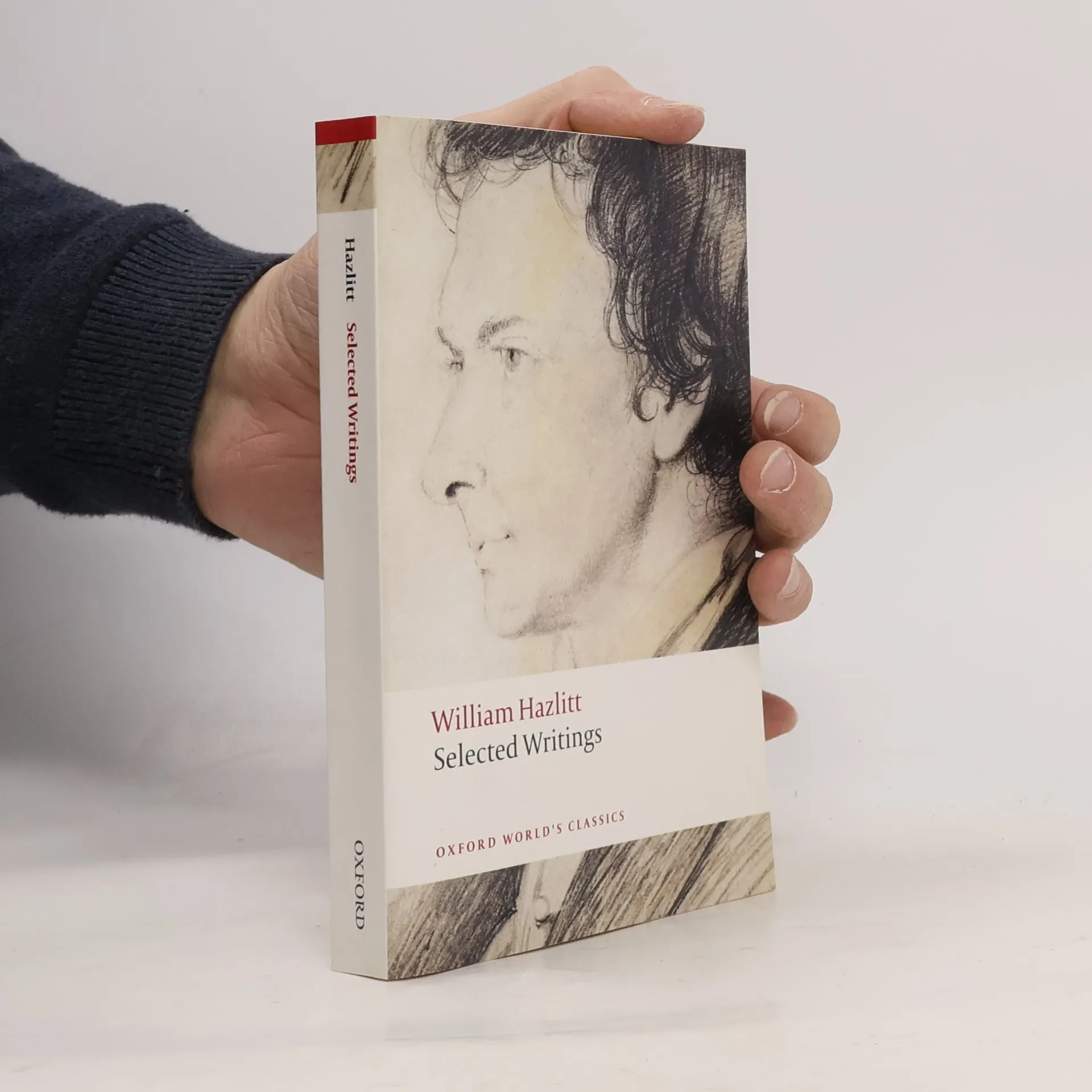
Parameters
- 423 pages
- 15 hours of reading
More about the book
William Hazlitt (1778-1830) developed a variety of identities as a writer: essayist, philosopher, critic of literature, drama, and painting, biographer, political commentator, and polemicist. What unites this variety is his dramatic and passionate intelligence, his unswerving commitment to individual and political liberty, and his courageous opposition to established political and cultural power. Hailed in 1819 as `one of the ablest and most eloquent critics of our nation', Hazlitt was also reviled for his political radicalism by the conservative press of the period. His writing engages with many of the important cultural and political debates of a revolutionary period, and retains its power both to provoke and move the reader.
Book purchase
Oxford World's Classics: Selected Writings, William Hazlitt, Jon Cook
- Language

- Released
- 2009
- Binding
- (Paperback)
Payment methods
We’re missing your review here.
- Title
- Oxford World's Classics: Selected Writings
- Language
- English
- Authors
- William Hazlitt, Jon Cook
- Publisher
- Oxford University Press
- Released
- 2009
- Format
- Paperback
- Pages
- 423
- ISBN10
- 0199552525
- ISBN13
- 9780199552528
- Series
- Tags
- World Literature, Philosophical Topics, 19th century, Great Britain, Collected Works, Criticism, Native Language
- Rating
- 3.8 out of 5
- Description
- William Hazlitt (1778-1830) developed a variety of identities as a writer: essayist, philosopher, critic of literature, drama, and painting, biographer, political commentator, and polemicist. What unites this variety is his dramatic and passionate intelligence, his unswerving commitment to individual and political liberty, and his courageous opposition to established political and cultural power. Hailed in 1819 as `one of the ablest and most eloquent critics of our nation', Hazlitt was also reviled for his political radicalism by the conservative press of the period. His writing engages with many of the important cultural and political debates of a revolutionary period, and retains its power both to provoke and move the reader.