



More about the book
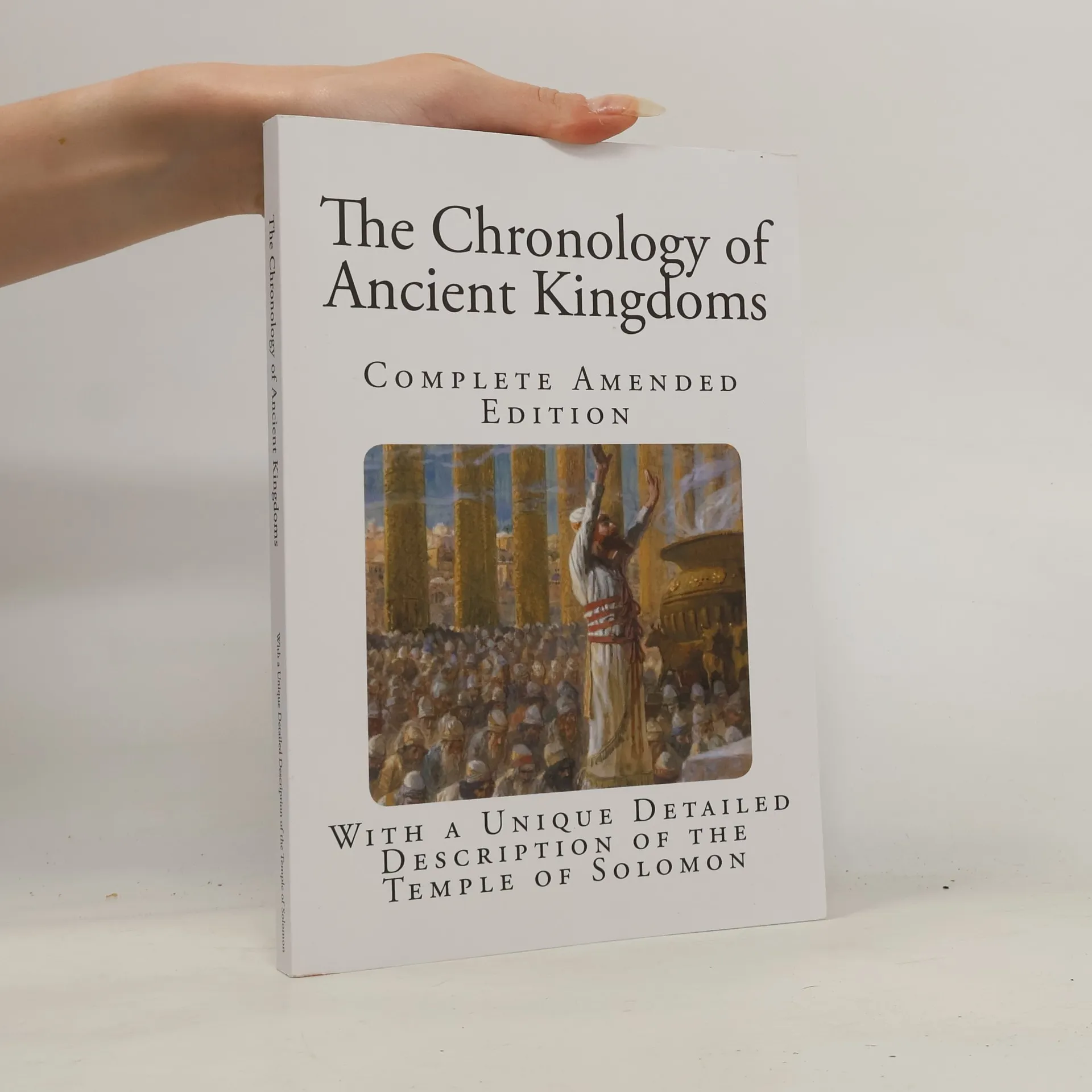
The Chronology of Ancient Kingdoms, by Sir Isaac Newton, presents a comprehensive account of ancient civilizations, including the Temple of Solomon, the early Greeks, the Egyptian Empire, the Assyrian Empire, and the concurrent Babylonians and Medes. It highlights the evolution of Greek literature, noting that prior to Cyrus the Persian's conquest of Asia, Greeks primarily expressed their history through poetry rather than prose. The introduction of prose writing is attributed to Pherecydes Scyrius and Cadmus Milesius. Pherecydes Atheniensis, during Darius Hystaspis's reign, contributed significantly to genealogical records, while Epimenides and Hellanicus also organized their histories through genealogies and priestess successions, respectively. Other historians focused on the kings of Sparta or the archons of Athens. Hippias the Elean compiled a list of Olympic victors shortly before the Persian Empire's decline, and Ephorus, a disciple of Isocrates, created a chronological history of Greece that spanned from the Heraclides' return to Peloponnesus to the siege of Perinthus during Philip II's reign. Notably, the reckoning of events by Olympiads and the enumeration of kings' reigns in years were not yet established practices.
Book purchase
The Chronology of Ancient Kingdoms - Complete Amended Edition, Isaac Newton
- Language

- Released
- 2014
- Binding
- (Paperback)
Payment methods
No one has rated yet.
- Title
- The Chronology of Ancient Kingdoms - Complete Amended Edition
- Language
- English
- Authors
- Isaac Newton
- Publisher
- Createspace
- Released
- 2014
- Format
- Paperback
- Pages
- 234
- ISBN10
- 1494955636
- ISBN13
- 9781494955632
- Series
- Categories
- Tags
- Science
- Description
- The Chronology of Ancient Kingdoms, by Sir Isaac Newton, presents a comprehensive account of ancient civilizations, including the Temple of Solomon, the early Greeks, the Egyptian Empire, the Assyrian Empire, and the concurrent Babylonians and Medes. It highlights the evolution of Greek literature, noting that prior to Cyrus the Persian's conquest of Asia, Greeks primarily expressed their history through poetry rather than prose. The introduction of prose writing is attributed to Pherecydes Scyrius and Cadmus Milesius. Pherecydes Atheniensis, during Darius Hystaspis's reign, contributed significantly to genealogical records, while Epimenides and Hellanicus also organized their histories through genealogies and priestess successions, respectively. Other historians focused on the kings of Sparta or the archons of Athens. Hippias the Elean compiled a list of Olympic victors shortly before the Persian Empire's decline, and Ephorus, a disciple of Isocrates, created a chronological history of Greece that spanned from the Heraclides' return to Peloponnesus to the siege of Perinthus during Philip II's reign. Notably, the reckoning of events by Olympiads and the enumeration of kings' reigns in years were not yet established practices.