

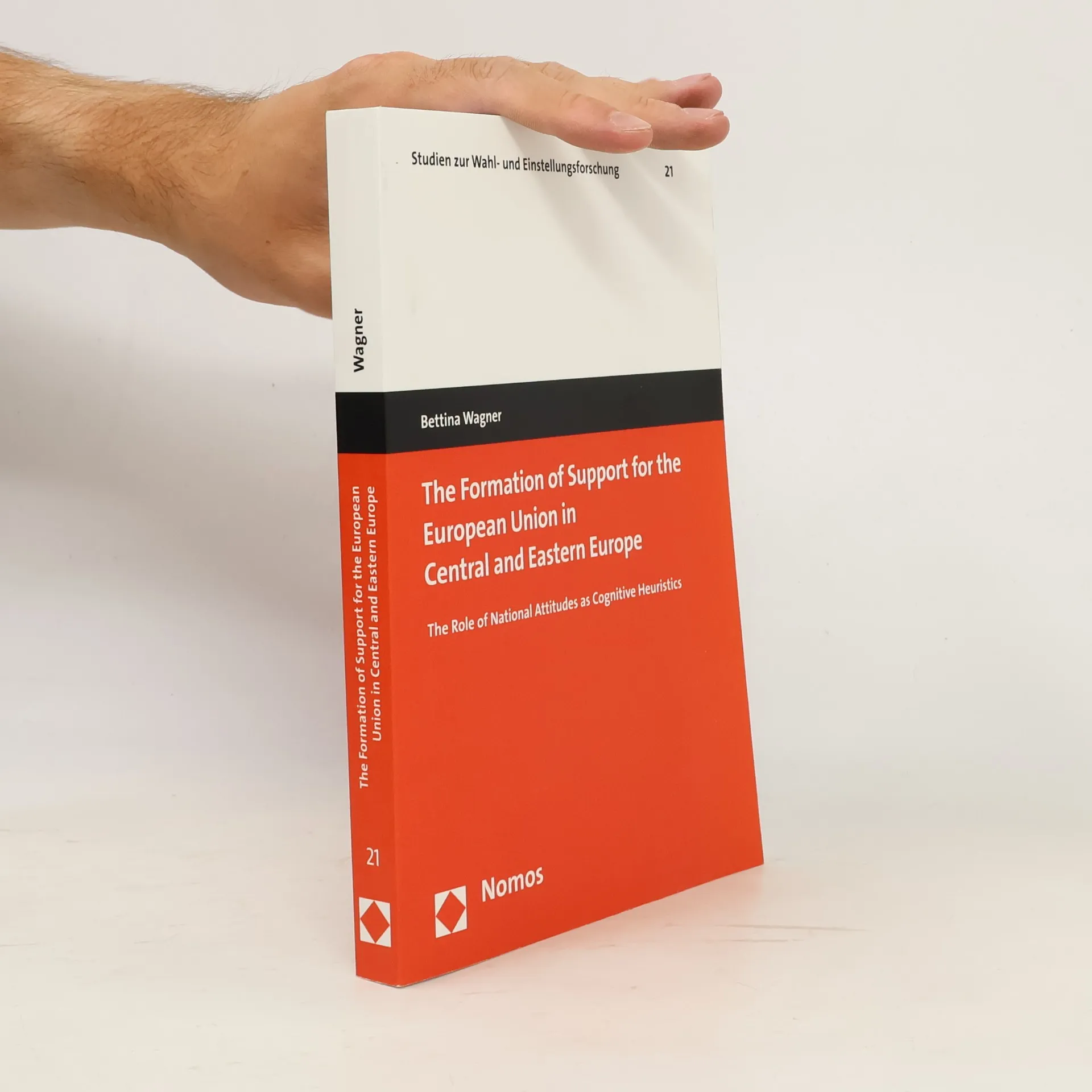


The Formation of Support for the European Union in Central and Eastern Europe
Authors
More about the book
Why do citizens from Central and Eastern Europe support or reject the European Union? It is unlikely that general evaluations of the EU emerge solely from attitudes towards the EU. This is because the EU is a remote and complex political system, especially for citizens from new EU member states. This book identifies and analyzes the opinion formation process that leads to support for or rejection of the EU by Central and Eastern European citizens. A theoretical model is developed on the basis of findings from research on EU support and cognitive psychology. This model is tested empirically using survey data. The results show that citizens use cognitive heuristics when they are asked to evaluate the EU. They rely on existent attitudes towards their own familiar political system, the nation-state, to form opinions about the EU.
Book purchase
The Formation of Support for the European Union in Central and Eastern Europe, Bettina Wagner-Bergelt
- Language

- Released
- 2012
- Binding
- (Paperback)
Payment methods
No one has rated yet.
- Title
- The Formation of Support for the European Union in Central and Eastern Europe
- Language
- English
- Authors
- Bettina Wagner-Bergelt
- Publisher
- Nomos
- Released
- 2012
- Format
- Paperback
- Pages
- 295
- ISBN10
- 3832970967
- ISBN13
- 9783832970963
- Series
- Categories
- Description
- Why do citizens from Central and Eastern Europe support or reject the European Union? It is unlikely that general evaluations of the EU emerge solely from attitudes towards the EU. This is because the EU is a remote and complex political system, especially for citizens from new EU member states. This book identifies and analyzes the opinion formation process that leads to support for or rejection of the EU by Central and Eastern European citizens. A theoretical model is developed on the basis of findings from research on EU support and cognitive psychology. This model is tested empirically using survey data. The results show that citizens use cognitive heuristics when they are asked to evaluate the EU. They rely on existent attitudes towards their own familiar political system, the nation-state, to form opinions about the EU.