

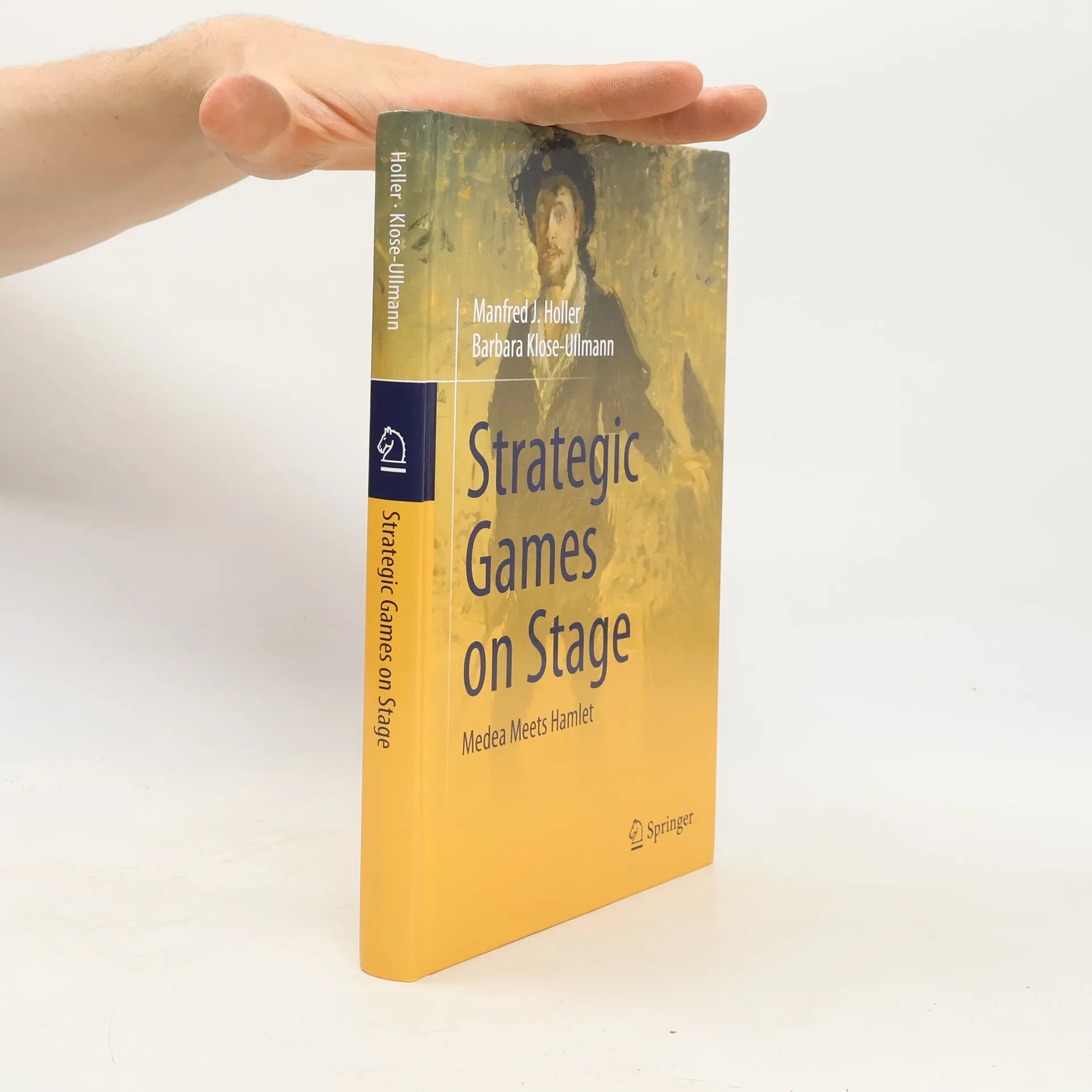


Parameters
- 237 pages
- 9 hours of reading
More about the book
This book illustrates how strategic thinking and game theory can be applied to study and enjoy theater plays. By offering various case studies on plays such as Antigone, Medea, Hamlet, Schiller’s Wallenstein, Ibsen’s Hedda Gabler, Tennessee Williams’ A Streetcar Named Desire, Arthur Miller’s The Crucible, and Elfriede Jelinek’s Rechnitz, the authors analyze the dynamics of player choices, including their misperceptions, deceptions, and various power games. Plays are examined according to their strategic contexts and, if appropriate, analyzed by means of game theory. This book is written for anyone interested in theater and who wants to learn about strategic behavior on stage but also for readers who are looking for an exciting field for applying game theoretical reasoning.
Book purchase
Strategic Games on Stage, Manfred Holler, Barbara Klose Ullmann
- Language

- Released
- 2025
- Binding
- (Hardcover)
Payment methods
No one has rated yet.
- Title
- Strategic Games on Stage
- Subtitle
- Medea Meets Hamlet
- Language
- English
- Authors
- Manfred Holler, Barbara Klose Ullmann
- Publisher
- Springer
- Released
- 2025
- Format
- Hardcover
- Pages
- 237
- ISBN10
- 3031829441
- ISBN13
- 9783031829444
- Series
- Categories
- Tags
- Business, Psychological Topics, Art, Science, Theater, Political Theories, Scientific Theories, Performing Arts, Political Economy, Game Theory, Behavioral Economics
- Description
- This book illustrates how strategic thinking and game theory can be applied to study and enjoy theater plays. By offering various case studies on plays such as Antigone, Medea, Hamlet, Schiller’s Wallenstein, Ibsen’s Hedda Gabler, Tennessee Williams’ A Streetcar Named Desire, Arthur Miller’s The Crucible, and Elfriede Jelinek’s Rechnitz, the authors analyze the dynamics of player choices, including their misperceptions, deceptions, and various power games. Plays are examined according to their strategic contexts and, if appropriate, analyzed by means of game theory. This book is written for anyone interested in theater and who wants to learn about strategic behavior on stage but also for readers who are looking for an exciting field for applying game theoretical reasoning.