

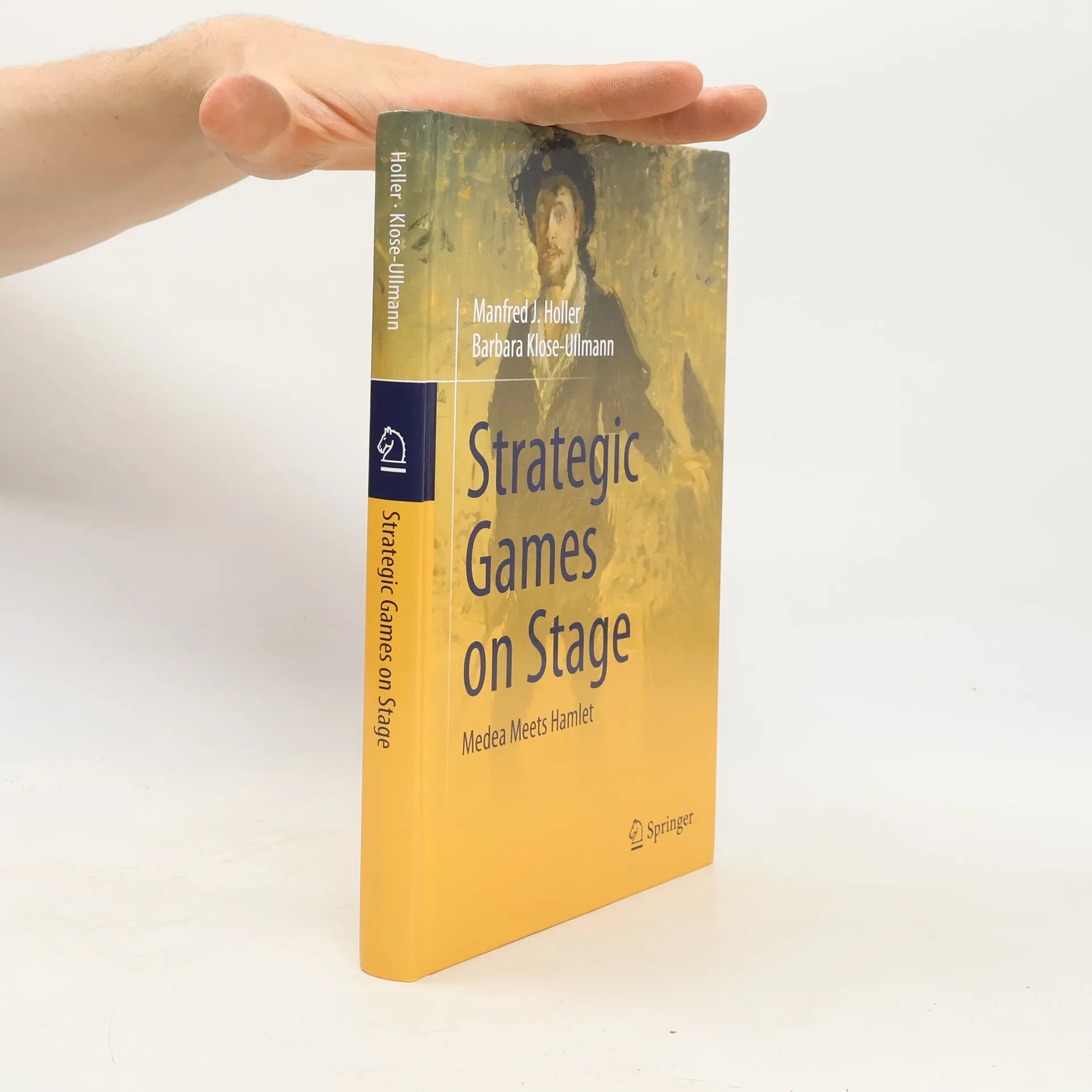
This book illustrates how strategic thinking and game theory can be applied to study and enjoy theater plays. By offering various case studies on plays such as Antigone, Medea, Hamlet, Schiller’s Wallenstein, Ibsen’s Hedda Gabler, Tennessee Williams’ A Streetcar Named Desire, Arthur Miller’s The Crucible, and Elfriede Jelinek’s Rechnitz, the authors analyze the dynamics of player choices, including their misperceptions, deceptions, and various power games. Plays are examined according to their strategic contexts and, if appropriate, analyzed by means of game theory. This book is written for anyone interested in theater and who wants to learn about strategic behavior on stage but also for readers who are looking for an exciting field for applying game theoretical reasoning.
Manfred Holler Books
July 25, 1946

Einführung in die Spieltheorie - 5. Auflage
- 424 pages
- 15 hours of reading
Die vorliegende Einführung gibt einen umfassenden Überblick über den neuesten Stand der Spieltheorie. Die Darstellung legt den Schwerpunkt auf die Vermittlung der grundlegenden Ideen und der intuitiven Konzepte. Das Buch setzt nur solche mathematischen Grundkenntnisse voraus, wie sie von Studenten im Hauptstudium wirtschaftswissenschaftlicher Ausbildung erwartet werden. Anhand von zahlreichen Beispielen wird illustriert, wie sich spieltheoretische Konzepte auf ökonomische Fragestellungen anwenden lassen, und es wird gezeigt, wie spieltheoretische Konzepte neue Einsichten für das Verständnis der Grundlagen ökonomischer Theorie liefern können. Die Neuauflage geht auf aktuelle Entwicklungen der Spieltheorie ein.
Übungsbuch zur Makroökonomik
- 144 pages
- 6 hours of reading