

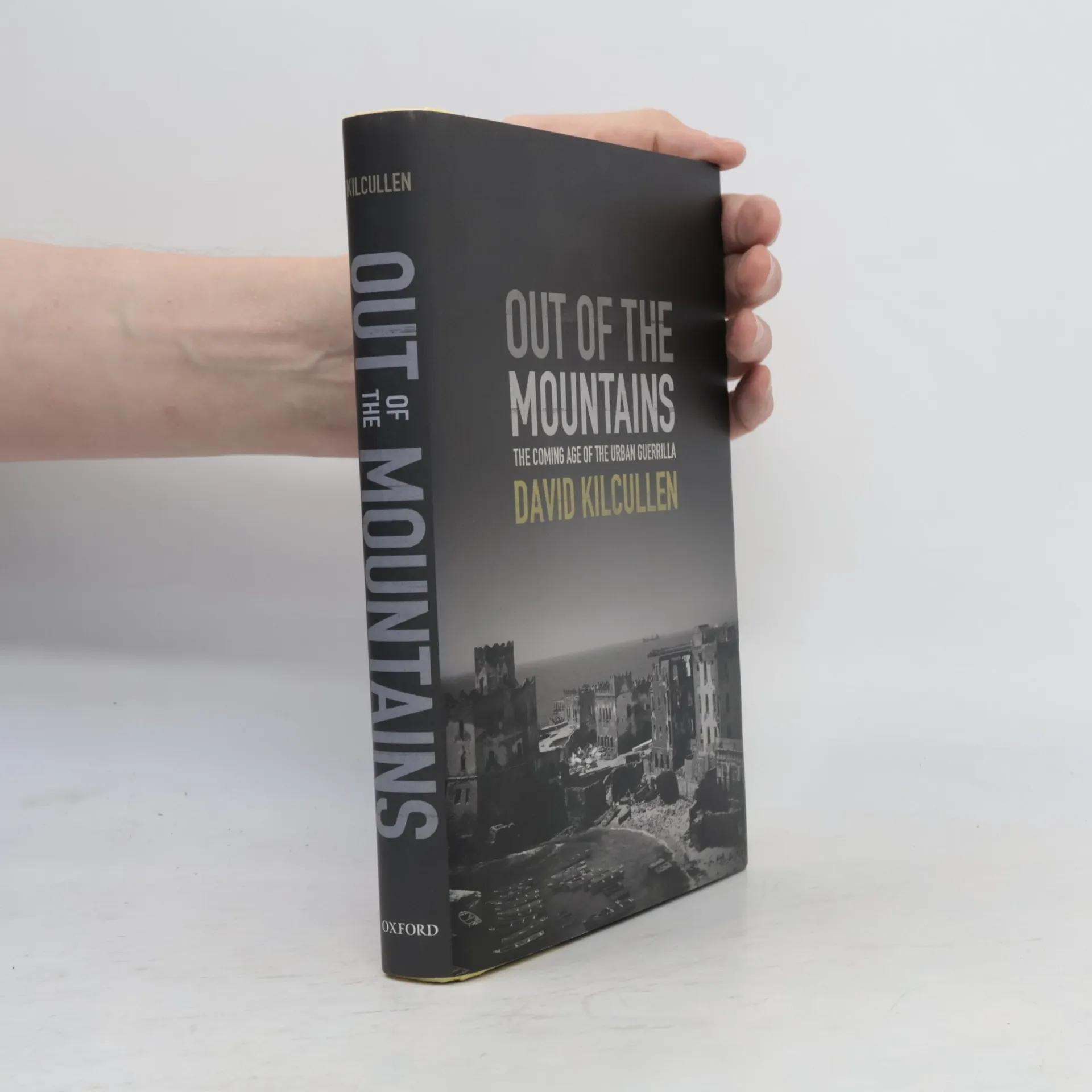


More about the book
When Americans envision modern warfare, they often picture the US military engaging with terrorists in Afghanistan. However, the landscape of global conflict is evolving. David Kilcullen, a leading authority on contemporary and future warfare, presents a transformative perspective on the aftermath of current conflicts. His work examines future conflicts and urban environments, highlighting the challenges and opportunities posed by four significant megatrends: population growth, urbanization, coastal settlement, and interconnectedness. Kilcullen emphasizes the need for cities, communities, and businesses to prepare for a rapidly changing world where conflict, crime, and violence are increasingly prevalent. He posits that future conflicts are likely to emerge in sprawling coastal cities and peri-urban slums across the Middle East, Africa, Latin America, and Asia, suggesting that cities, rather than nations, should be the focal point for understanding these conflicts. Resiliency, rather than stability, becomes the primary goal. Drawing on his extensive fieldwork in urban conflict zones from Kingston to Mumbai, Kilcullen introduces a theory of "competitive control," illustrating how non-state armed groups gain strength from local populations. He argues that addressing these complex issues requires deep local involvement, as neither outsiders nor locals alone can effectively resolve them.
Book purchase
Out of the Mountains, David Kilcullen
- Language

- Released
- 2013
- Binding
- (Hardcover)
Payment methods
No one has rated yet.
- Title
- Out of the Mountains
- Subtitle
- The Coming Age of the Urban Guerrilla
- Language
- English
- Authors
- David Kilcullen
- Publisher
- Oxford University Press
- Released
- 2013
- Format
- Hardcover
- Pages
- 352
- ISBN10
- 0199737509
- ISBN13
- 9780199737505
- Series
- Categories
- Tags
- Politics, Military Fiction, Wars
- Description
- When Americans envision modern warfare, they often picture the US military engaging with terrorists in Afghanistan. However, the landscape of global conflict is evolving. David Kilcullen, a leading authority on contemporary and future warfare, presents a transformative perspective on the aftermath of current conflicts. His work examines future conflicts and urban environments, highlighting the challenges and opportunities posed by four significant megatrends: population growth, urbanization, coastal settlement, and interconnectedness. Kilcullen emphasizes the need for cities, communities, and businesses to prepare for a rapidly changing world where conflict, crime, and violence are increasingly prevalent. He posits that future conflicts are likely to emerge in sprawling coastal cities and peri-urban slums across the Middle East, Africa, Latin America, and Asia, suggesting that cities, rather than nations, should be the focal point for understanding these conflicts. Resiliency, rather than stability, becomes the primary goal. Drawing on his extensive fieldwork in urban conflict zones from Kingston to Mumbai, Kilcullen introduces a theory of "competitive control," illustrating how non-state armed groups gain strength from local populations. He argues that addressing these complex issues requires deep local involvement, as neither outsiders nor locals alone can effectively resolve them.