

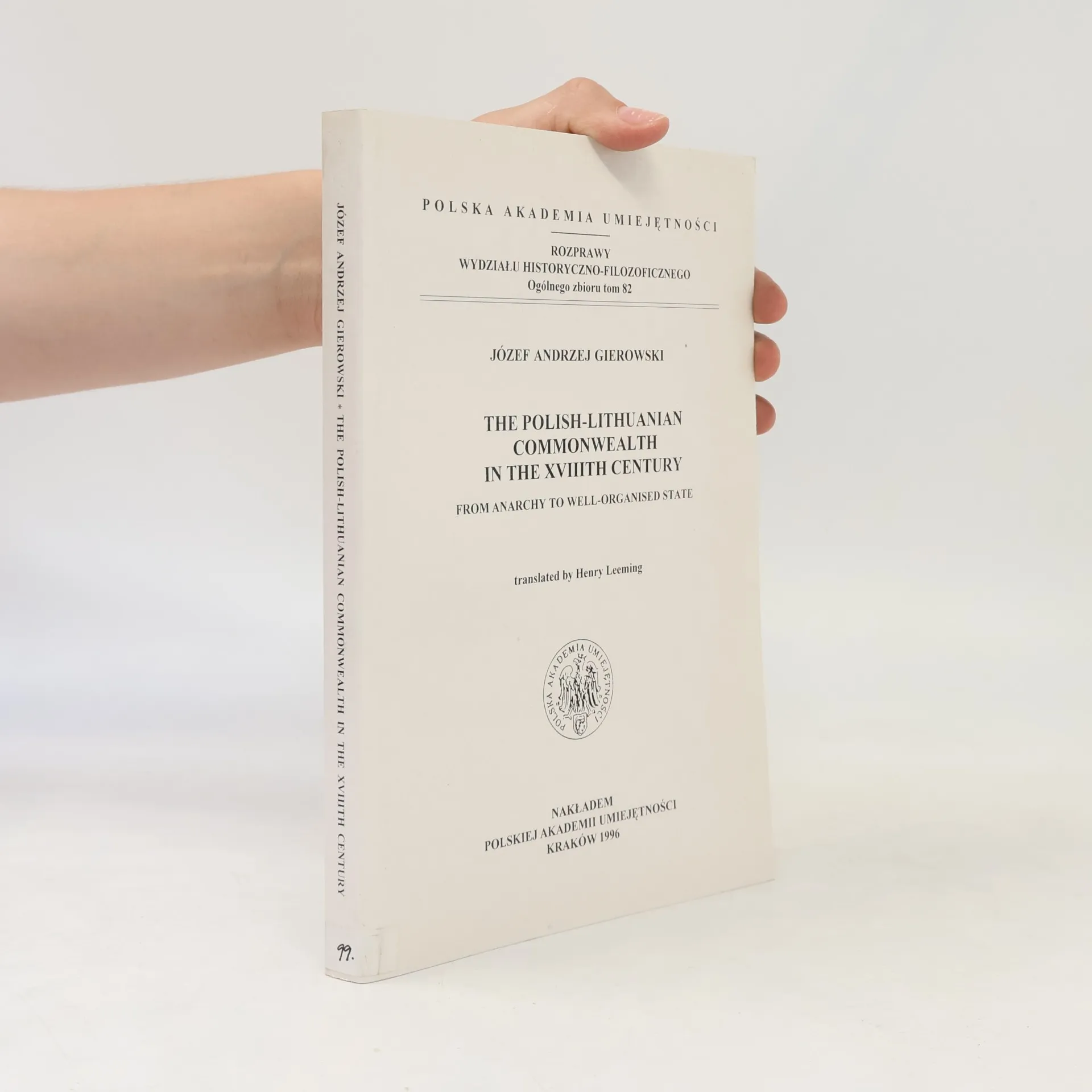
The Polish-Lithuanian Commonwealth in the XVIIIth Century
From Anarchy to Well-Organised State
Parameters
- 282 pages
- 10 hours of reading
More about the book
The Polish-Lithuanian Commonwealth, also known as the Commonwealth of Both Nations, was a federal multiethnic and multireligious union of the Kingdom of Poland and the Grand Duchy of Lithuania, existing from 1386 to 1795. Initially a dynastic union until 1569, it became one of the largest and most powerful states in early modern Europe by the late 16th and early 17th centuries, characterized by democratic and religious tolerance. Militarily, it successfully halted the Teutonic Knights at Grunwald in 1410, countered Ivan IV's Baltic ambitions during the Livonian Wars (1558–1582), and played a crucial role in defeating the Ottoman Empire at Vienna in 1683. Politically, the Commonwealth featured a unique system with an elective monarchy, a bicameral Diet (Sejm) comprising a Senate and a Chamber of Deputies, and a decentralized noble democracy. Despite its unity under a monarch, Poland and Lithuania retained separate armies and treasuries. However, the Commonwealth faced challenges from the Counter-Reformation, a declining agricultural economy reliant on serfdom, rising absolutism among neighboring states, and internal political strife. These issues culminated in military disasters, such as the Cossack Uprising of 1648 and the Swedish Deluge, leading to its eventual decline and disappearance during the Three Partitions of Poland (1772-95) orchestrated by Austria, Prussia, and Russia.
Book purchase
The Polish-Lithuanian Commonwealth in the XVIIIth Century, Józef Andrzej Gierowski, Henry Leeming
- Language

- Released
- 1996
- Binding
- (Paperback)
Payment methods
No one has rated yet.
- Title
- The Polish-Lithuanian Commonwealth in the XVIIIth Century
- Subtitle
- From Anarchy to Well-Organised State
- Language
- English
- Authors
- Józef Andrzej Gierowski, Henry Leeming
- Publisher
- Polish Academy of Sciences
- Released
- 1996
- Format
- Paperback
- Pages
- 282
- ISBN10
- 8386956151
- ISBN13
- 9788386956159
- Series
- Tags
- Description
- The Polish-Lithuanian Commonwealth, also known as the Commonwealth of Both Nations, was a federal multiethnic and multireligious union of the Kingdom of Poland and the Grand Duchy of Lithuania, existing from 1386 to 1795. Initially a dynastic union until 1569, it became one of the largest and most powerful states in early modern Europe by the late 16th and early 17th centuries, characterized by democratic and religious tolerance. Militarily, it successfully halted the Teutonic Knights at Grunwald in 1410, countered Ivan IV's Baltic ambitions during the Livonian Wars (1558–1582), and played a crucial role in defeating the Ottoman Empire at Vienna in 1683. Politically, the Commonwealth featured a unique system with an elective monarchy, a bicameral Diet (Sejm) comprising a Senate and a Chamber of Deputies, and a decentralized noble democracy. Despite its unity under a monarch, Poland and Lithuania retained separate armies and treasuries. However, the Commonwealth faced challenges from the Counter-Reformation, a declining agricultural economy reliant on serfdom, rising absolutism among neighboring states, and internal political strife. These issues culminated in military disasters, such as the Cossack Uprising of 1648 and the Swedish Deluge, leading to its eventual decline and disappearance during the Three Partitions of Poland (1772-95) orchestrated by Austria, Prussia, and Russia.