

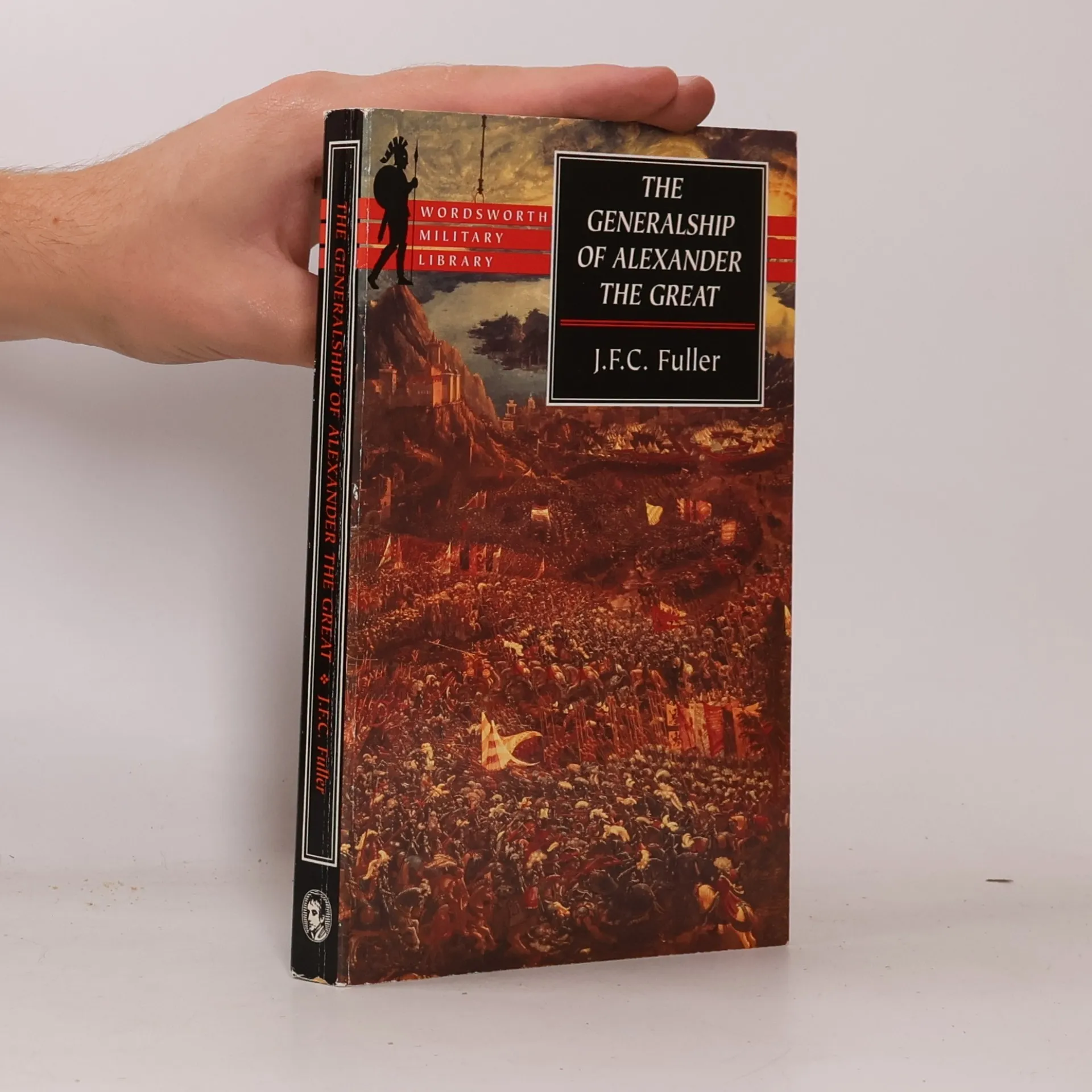


More about the book
At the age of 20, Alexander succeeded his father, Philip of Macedon, and fulfilled his father's plans for freeing the Greeks of Asia Minor from Persian rule. He invaded the Persian Empire with 30,000 infantry and 5000 calvalry and in a series of dazzling campaigns, which included the battles of Issus and Gaugamela, he defeated Darius and was proclaimed King of Asia. His plans to conquer India were resisted by his men, and death cut short the ambitions of one of the greatest soldiers the world has ever known. He was the model for successors as notable as Julius Caesar and Napoleon Bonaparte, and his campaigns are still studied in military academies throughout the world. Major-General Fuller's book looks at the military achievements of one of the world's greatest conquerers.


Book purchase
The Generalship of Alexander the Great, John Frederick Charles Fuller
- Language

- Released
- 1998
- Binding
- (Paperback),
- Book condition
- Very Good
- Price
- €5.29
Payment methods
No one has rated yet.
- Title
- The Generalship of Alexander the Great
- Language
- English
- Publisher
- Wordsworth Editions
- Released
- 1998
- Format
- Paperback
- Pages
- 319
- ISBN10
- 1853266957
- ISBN13
- 9781853266959
- Series
- Categories
- Tags
- Historical Themes, Military Fiction, Wars, Europe, Ancient History, History of Europe, Greece, Strategy
- Description
- At the age of 20, Alexander succeeded his father, Philip of Macedon, and fulfilled his father's plans for freeing the Greeks of Asia Minor from Persian rule. He invaded the Persian Empire with 30,000 infantry and 5000 calvalry and in a series of dazzling campaigns, which included the battles of Issus and Gaugamela, he defeated Darius and was proclaimed King of Asia. His plans to conquer India were resisted by his men, and death cut short the ambitions of one of the greatest soldiers the world has ever known. He was the model for successors as notable as Julius Caesar and Napoleon Bonaparte, and his campaigns are still studied in military academies throughout the world. Major-General Fuller's book looks at the military achievements of one of the world's greatest conquerers.