

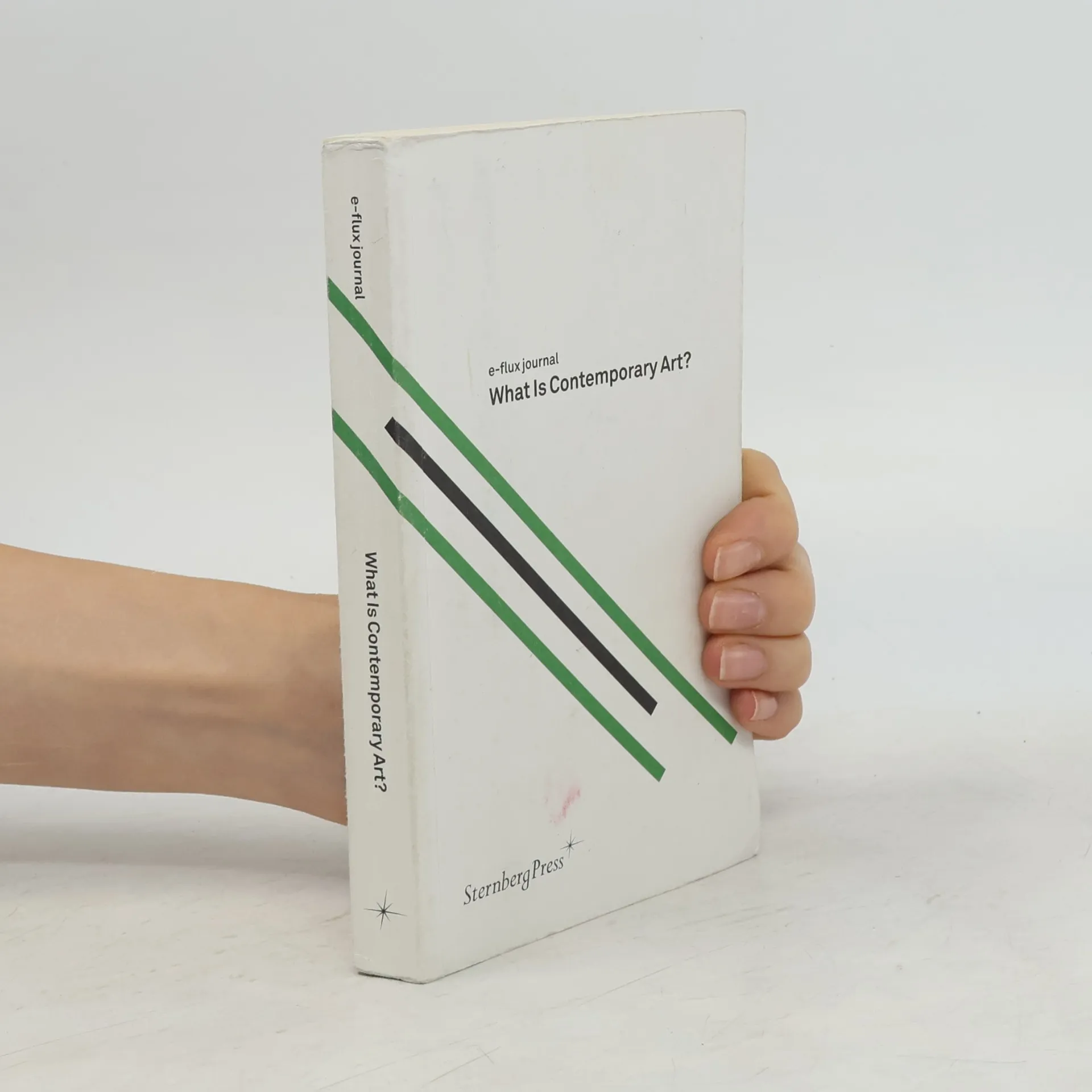
Parameters
- 216 pages
- 8 hours of reading
More about the book
This book originated from a two-part issue of e-flux journal exploring the question: What is contemporary art? It raises the critical issue of why this question is rarely asked, allowing it to linger in the background of discussions about twentieth-century artistic movements. The dominance of a single hegemonic “ism” has overshadowed distinct movements and narratives, prompting inquiry into what it means to operate within this singular framework. The term 'contemporary' is often taken for granted, making further demands for a definition seem unnecessary or outdated. However, this apparent self-evidence can obscure deeper issues, as such large, elusive questions lose their problematic nature and exert influence in subtle ways. The paradox of their unanswerability creates a unique condition where artistic work takes place. This volume challenges the simplicity of the term 'contemporary art,' inviting critics, curators, artists, and writers to reflect on the complexities of this broad category. Contributors include notable figures such as Julieta Aranda, Brian Kuan Wood, Anton Vidokle, and others, each offering insights that deepen the conversation around contemporary art and its implications. The series is edited by Aranda, Wood, and Vidokle, emphasizing collaborative exploration of this vital topic.
Book purchase
E-Flux Journal: What Is Contemporary Art?, Julieta Aranda, Cauauhtemoc Medina, Anton Vidokle, Brian Kuan Wood, e-flux journal
- Language

- Released
- 2010
- Binding
- (Paperback)
Payment methods
No one has rated yet.
- Title
- E-Flux Journal: What Is Contemporary Art?
- Language
- English
- Publisher
- Sternberg Press
- Released
- 2010
- Format
- Paperback
- Pages
- 216
- ISBN10
- 1934105104
- ISBN13
- 9781934105108
- Series
- Categories
- Tags
- Historical Themes, Business, Psychological Topics, Philosophical Topics, Art, Music Theme, Architecture, Education & School System, School, Filmthema, Society, Culture and Society, Feminism, History of Art, Writing, Culture, Happiness, Creativity, 21st Century, Race, Racism, Gender, Criticism, Artists, Marxism, Aesthetics, Surrealism, Activism, Theory of Art, Political Philosophy, Postmodern literature, Critical Theory
- Description
- This book originated from a two-part issue of e-flux journal exploring the question: What is contemporary art? It raises the critical issue of why this question is rarely asked, allowing it to linger in the background of discussions about twentieth-century artistic movements. The dominance of a single hegemonic “ism” has overshadowed distinct movements and narratives, prompting inquiry into what it means to operate within this singular framework. The term 'contemporary' is often taken for granted, making further demands for a definition seem unnecessary or outdated. However, this apparent self-evidence can obscure deeper issues, as such large, elusive questions lose their problematic nature and exert influence in subtle ways. The paradox of their unanswerability creates a unique condition where artistic work takes place. This volume challenges the simplicity of the term 'contemporary art,' inviting critics, curators, artists, and writers to reflect on the complexities of this broad category. Contributors include notable figures such as Julieta Aranda, Brian Kuan Wood, Anton Vidokle, and others, each offering insights that deepen the conversation around contemporary art and its implications. The series is edited by Aranda, Wood, and Vidokle, emphasizing collaborative exploration of this vital topic.