

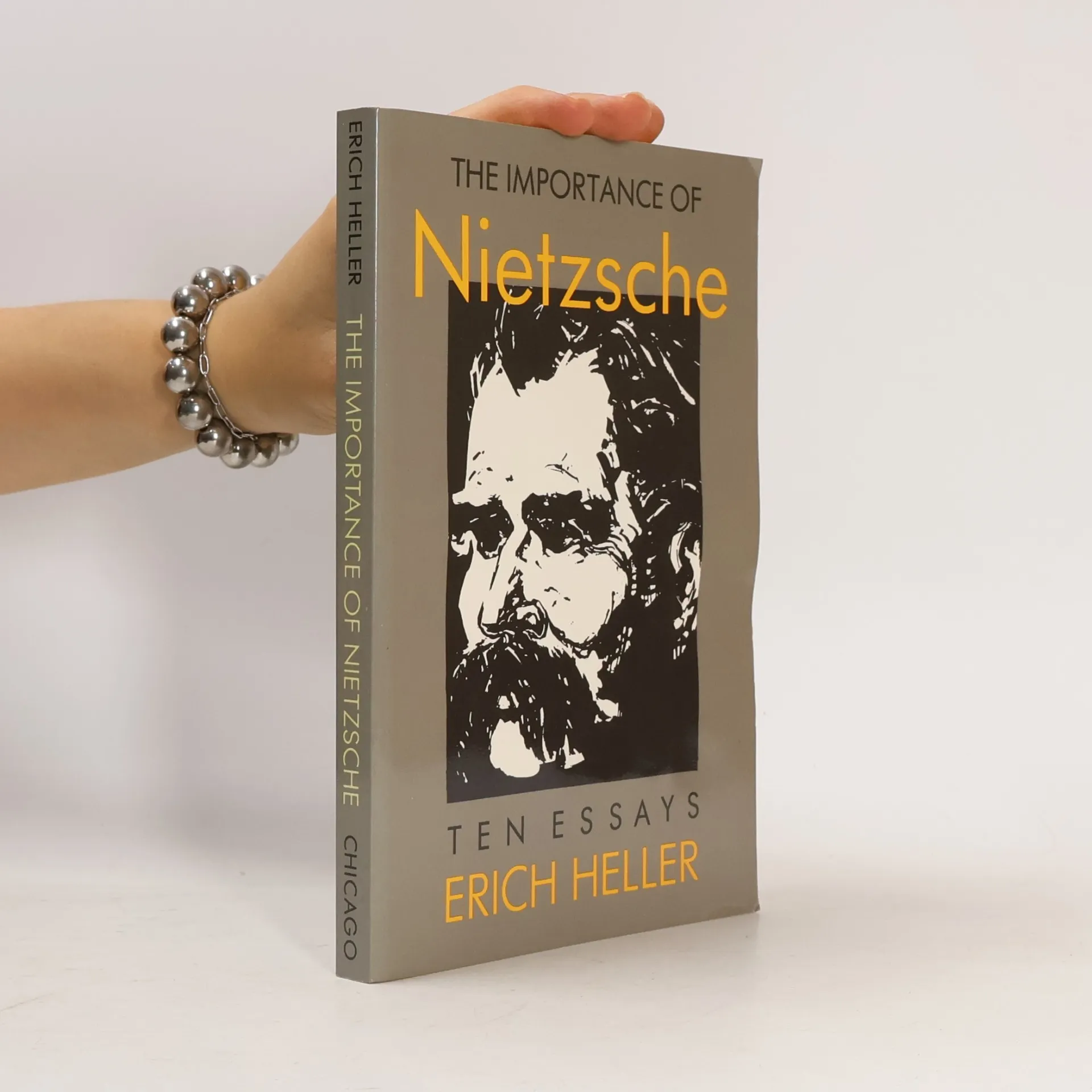
The Importance of Nietzsche
Authors
More about the book
In this collection, a distinguished scholar of German culture presents essays focused on a central figure of his lifelong study: Friedrich Nietzsche. Nietzsche claimed to have broken with traditional thought and anticipated being recognized for heralding a new millennium. While acknowledging his radicalism, the author emphasizes the continuity of Nietzsche's influence within the broader narrative of modern European literature. By examining Nietzsche alongside figures like Goethe, Rilke, Wittgenstein, and Yeats, the essays reveal his ambivalence toward his inherited tradition and his significant impact on subsequent thinkers and writers, including Mann, Musil, Kafka, and Freud. Heller argues that Nietzsche serves a role akin to that of St. Thomas Aquinas for many modern intellectuals, shaping their imaginative and theoretical contemplation of the world without fundamentally altering its Nietzschean structure. The essays collectively illustrate that, despite Nietzsche's iconoclastic nature, he grapples with enduring human concerns. His inquiries remain relevant, with paradoxical answers stemming from the same intellectual roots. Heller's exploration of contradictions, such as the teachings of the Übermensch and Eternal Recurrence, highlights Nietzsche's importance for understanding the disquiet and creativity of the epoch.
Book purchase
The Importance of Nietzsche, Erich Heller
- Language

- Released
- 1988
- Binding
- (Paperback)
Payment methods
No one has rated yet.
- Title
- The Importance of Nietzsche
- Language
- English
- Authors
- Erich Heller
- Publisher
- The University of Chicago Press
- Released
- 1988
- Format
- Paperback
- Pages
- 212
- ISBN10
- 0226326381
- ISBN13
- 9780226326382
- Series
- Categories
- Description
- In this collection, a distinguished scholar of German culture presents essays focused on a central figure of his lifelong study: Friedrich Nietzsche. Nietzsche claimed to have broken with traditional thought and anticipated being recognized for heralding a new millennium. While acknowledging his radicalism, the author emphasizes the continuity of Nietzsche's influence within the broader narrative of modern European literature. By examining Nietzsche alongside figures like Goethe, Rilke, Wittgenstein, and Yeats, the essays reveal his ambivalence toward his inherited tradition and his significant impact on subsequent thinkers and writers, including Mann, Musil, Kafka, and Freud. Heller argues that Nietzsche serves a role akin to that of St. Thomas Aquinas for many modern intellectuals, shaping their imaginative and theoretical contemplation of the world without fundamentally altering its Nietzschean structure. The essays collectively illustrate that, despite Nietzsche's iconoclastic nature, he grapples with enduring human concerns. His inquiries remain relevant, with paradoxical answers stemming from the same intellectual roots. Heller's exploration of contradictions, such as the teachings of the Übermensch and Eternal Recurrence, highlights Nietzsche's importance for understanding the disquiet and creativity of the epoch.