




More about the book
In America, we are obsessed with food and diet, reflecting a struggle between sin and virtue, overeating and self-control—temptations of gluttony. Francine Prose explores this theme with engaging observations on gluttony as a deadly sin. She traces the evolution of our notions of gluttony alongside ideas of salvation and damnation, health and illness, life and death. Prose presents a lively array of references, from Augustine's Confessions to Dante's Inferno, illustrating how gluttony was once viewed as a spiritual matter. Today, however, we have redefined gluttony as an illness, focusing on the dangers of cholesterol and red meat. Modern interpretations suggest that we overeat due to compulsion, self-destructiveness, or to avoid intimacy. Yet, Prose reminds us that gluttony can also signify an affirmation of pleasure and passion. The book concludes with a discussion of M.F.K. Fisher's unique defense of Diamond Jim Brady, a glutton whose stomach was six times the norm. Prose asserts that "the broad, shiny face of the glutton" reflects our hopes, fears, and desires. This insightful exploration invites readers to examine their relationship with gluttony and the deeper meanings behind it.
Book purchase
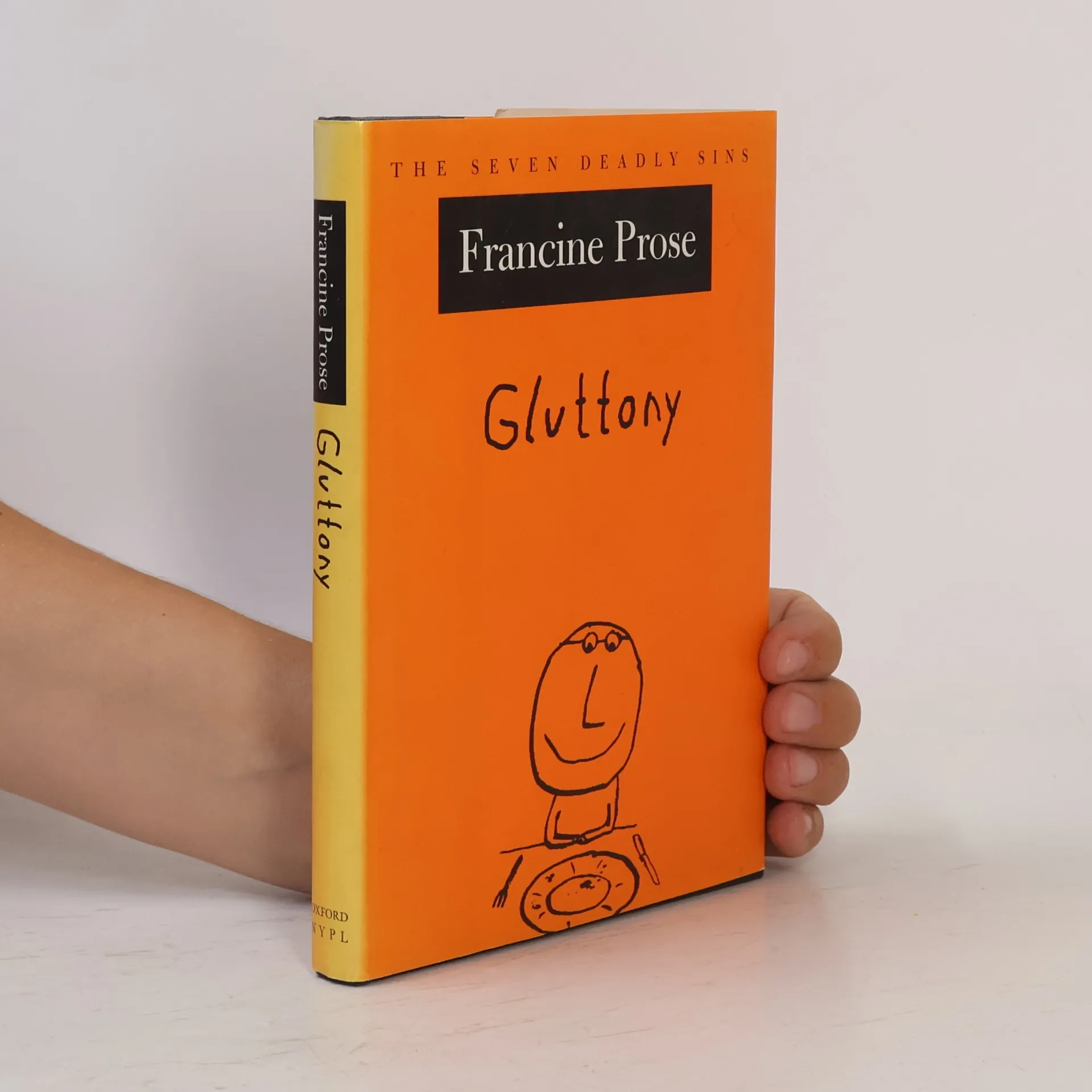
The Seven Deadly Sins: Gluttony, Francine Prose
- Language

- Released
- 2003
- Binding
- (Hardcover),
- Book condition
- Good
- Price
- €2.39
Payment methods
No one has rated yet.
- Title
- The Seven Deadly Sins: Gluttony
- Language
- English
- Authors
- Francine Prose
- Publisher
- Oxford University Press
- Released
- 2003
- Format
- Hardcover
- Pages
- 128
- ISBN10
- 0195156994
- ISBN13
- 9780195156997
- Series
- Tags
- Religious Topics, References & Manuals, Philosophical Topics, USA, Health, Food, Theology, Professional Literature, Culture and Society, Inspiration, Fitness, Ethics
- Description
- In America, we are obsessed with food and diet, reflecting a struggle between sin and virtue, overeating and self-control—temptations of gluttony. Francine Prose explores this theme with engaging observations on gluttony as a deadly sin. She traces the evolution of our notions of gluttony alongside ideas of salvation and damnation, health and illness, life and death. Prose presents a lively array of references, from Augustine's Confessions to Dante's Inferno, illustrating how gluttony was once viewed as a spiritual matter. Today, however, we have redefined gluttony as an illness, focusing on the dangers of cholesterol and red meat. Modern interpretations suggest that we overeat due to compulsion, self-destructiveness, or to avoid intimacy. Yet, Prose reminds us that gluttony can also signify an affirmation of pleasure and passion. The book concludes with a discussion of M.F.K. Fisher's unique defense of Diamond Jim Brady, a glutton whose stomach was six times the norm. Prose asserts that "the broad, shiny face of the glutton" reflects our hopes, fears, and desires. This insightful exploration invites readers to examine their relationship with gluttony and the deeper meanings behind it.