

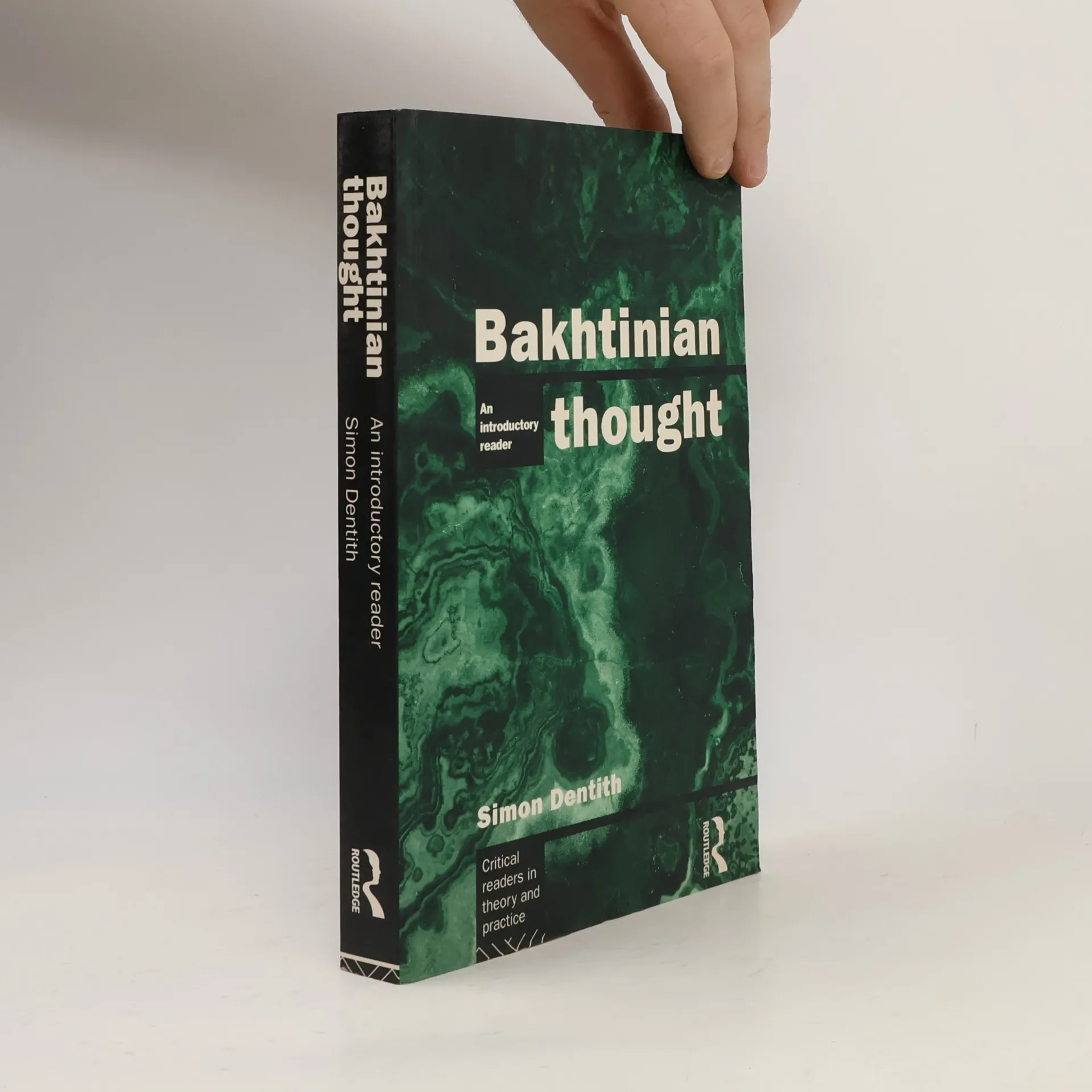

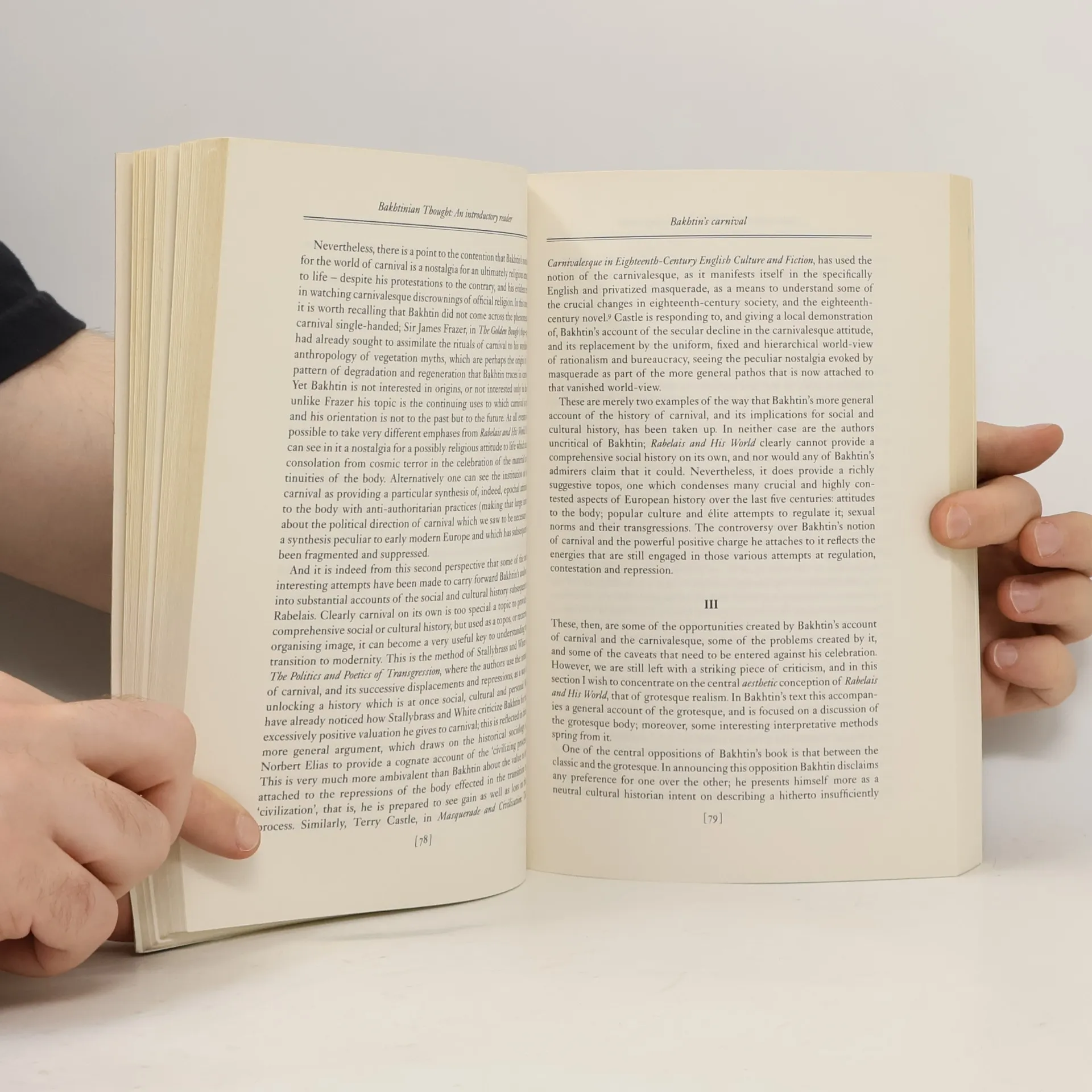

Parameters
- 284 pages
- 10 hours of reading
More about the book
First published in 1994, this work highlights the significance of Mikhail Bakhtin and his contemporaries, who produced influential writings in literary theory, linguistics, and philosophy despite the challenges of Stalinist Russia. Bakhtin's focus on dialogue emphasizes the interplay of power and authority in all forms of expression. The introduction by Simon Dentith offers a clear overview of Bakhtin and his circle, guiding readers through their complex ideas while addressing points of controversy and excitement. This section culminates in a discussion of Bakhtin's contributions to contemporary literary theory debates. The anthology features key writings from Bakhtin, Voloshinov, and Medvedev, drawing from various aspects of their work, making it a valuable resource for readers. Special attention is given to Voloshinov's linguistic insights and Bakhtin's analyses of Dostoevsky and Dickens. This book serves as an accessible entry point for those new to Bakhtin, providing context for understanding his relevance in literature, language, and social history, while allowing direct engagement with the essential writings of this pivotal figure in literary theory.
Book purchase
Critical Readers in Theory and Practice: Bakhtinian Thought, Simon Dentith
- Language

- Released
- 1995
- Binding
- (Paperback)
Payment methods
No one has rated yet.
- Title
- Critical Readers in Theory and Practice: Bakhtinian Thought
- Subtitle
- Intro Read
- Language
- English
- Authors
- Simon Dentith
- Publisher
- Routledge
- Released
- 1995
- Format
- Paperback
- Pages
- 284
- ISBN10
- 0415118999
- ISBN13
- 9780415118996
- Series
- Categories
- Tags
- References & Manuals, Philosophical Topics, 20th century, Linguistics, Russia, Literary Criticism, Writing, Collected Works, Criticism, Soviet Union, Body, Literary Theory, Thinking, Philosophy of Language, Philology, Grotesque
- Description
- First published in 1994, this work highlights the significance of Mikhail Bakhtin and his contemporaries, who produced influential writings in literary theory, linguistics, and philosophy despite the challenges of Stalinist Russia. Bakhtin's focus on dialogue emphasizes the interplay of power and authority in all forms of expression. The introduction by Simon Dentith offers a clear overview of Bakhtin and his circle, guiding readers through their complex ideas while addressing points of controversy and excitement. This section culminates in a discussion of Bakhtin's contributions to contemporary literary theory debates. The anthology features key writings from Bakhtin, Voloshinov, and Medvedev, drawing from various aspects of their work, making it a valuable resource for readers. Special attention is given to Voloshinov's linguistic insights and Bakhtin's analyses of Dostoevsky and Dickens. This book serves as an accessible entry point for those new to Bakhtin, providing context for understanding his relevance in literature, language, and social history, while allowing direct engagement with the essential writings of this pivotal figure in literary theory.