

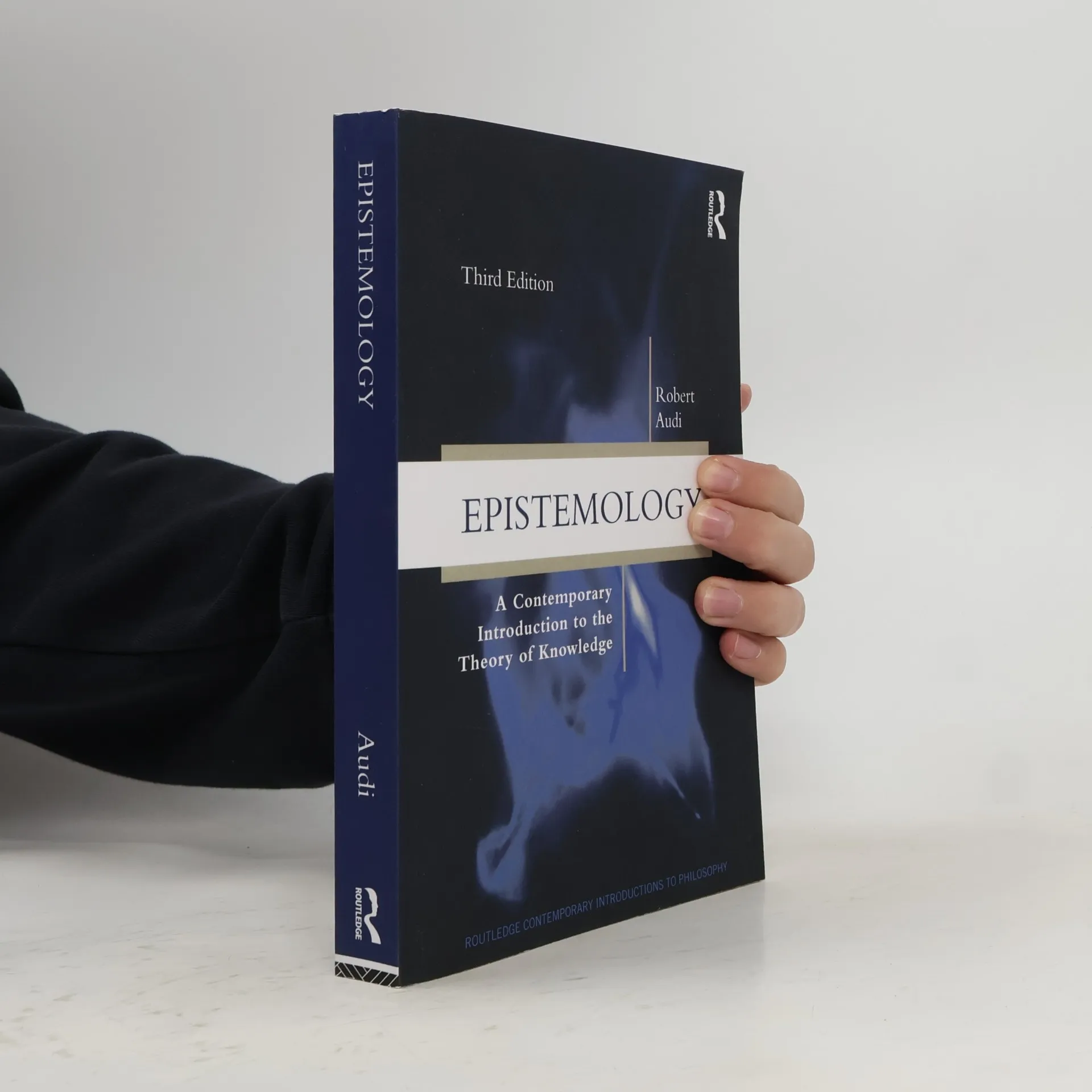



More about the book
Epistemology, the theory of knowledge, examines how we know what we know, the justification for our beliefs, and the standards of evidence we use to uncover truths about the world and human experience. This comprehensive introduction details the core concepts and theories essential for understanding knowledge, covering traditional topics while also delving into emerging areas of research. The third edition includes new sections on the nature of intuition, the skeptical challenge of rational disagreement, and the value problem, which questions why knowledge and justified true belief hold value beyond mere true belief. Updated and expanded, this edition serves as an excellent introduction to a fundamental philosophical field. Key features include a thorough survey of basic concepts and major theories, enhanced discussions on contextualism, perception, scientific hypotheses, self-evidence, testimony, understanding, and virtue epistemology. It also offers an expanded exploration of the relationship between epistemology and related fields like philosophy of mind, philosophy of science, and ethics. The text is designed for clarity and ease of understanding for undergraduates, accompanied by an updated list of key literature and an annotated bibliography.
Book purchase
Routledge Contemporary Introductions to Philosophy: Epistemology, Robert Audi
- Language

- Released
- 2011
- Binding
- (Paperback)
Payment methods
No one has rated yet.
- Title
- Routledge Contemporary Introductions to Philosophy: Epistemology
- Subtitle
- A Contemporary Introduction to the Theory of Knowledge, 3rd Edition
- Language
- English
- Authors
- Robert Audi
- Publisher
- Routledge
- Released
- 2011
- Format
- Paperback
- Pages
- 432
- ISBN10
- 041587923X
- ISBN13
- 9780415879231
- Series
- Description
- Epistemology, the theory of knowledge, examines how we know what we know, the justification for our beliefs, and the standards of evidence we use to uncover truths about the world and human experience. This comprehensive introduction details the core concepts and theories essential for understanding knowledge, covering traditional topics while also delving into emerging areas of research. The third edition includes new sections on the nature of intuition, the skeptical challenge of rational disagreement, and the value problem, which questions why knowledge and justified true belief hold value beyond mere true belief. Updated and expanded, this edition serves as an excellent introduction to a fundamental philosophical field. Key features include a thorough survey of basic concepts and major theories, enhanced discussions on contextualism, perception, scientific hypotheses, self-evidence, testimony, understanding, and virtue epistemology. It also offers an expanded exploration of the relationship between epistemology and related fields like philosophy of mind, philosophy of science, and ethics. The text is designed for clarity and ease of understanding for undergraduates, accompanied by an updated list of key literature and an annotated bibliography.