



Parameters
- 286 pages
- 11 hours of reading
More about the book
This work critiques the reduction of social justice to distributive justice, examining fundamental concepts in justice theories such as impartiality and formal equality. It begins with the perspectives of marginalized groups regarding decision-making, cultural expression, and labor division. Young introduces the concepts of domination and oppression to address issues overlooked by the distributive model. She argues that democratic theorists often fail to create an inclusive participatory framework, as they assume a homogeneous public and neglect institutional arrangements that include those not aligned with white European male norms. Young advocates for a normative theory and public policy that confronts group-based oppression by recognizing and affirming social group differences. Drawing from the culturally diverse landscape of contemporary urban life, she proposes a principle of group representation in democratic settings and supports group-differentiated policies. This innovative analysis is a significant contribution to feminist theory and political thought, linking postmodern critiques of universalism with practical implications for social justice. As noted by Seyla Benhabib, it compellingly articulates the emancipatory potential of postmodernism.
Book purchase
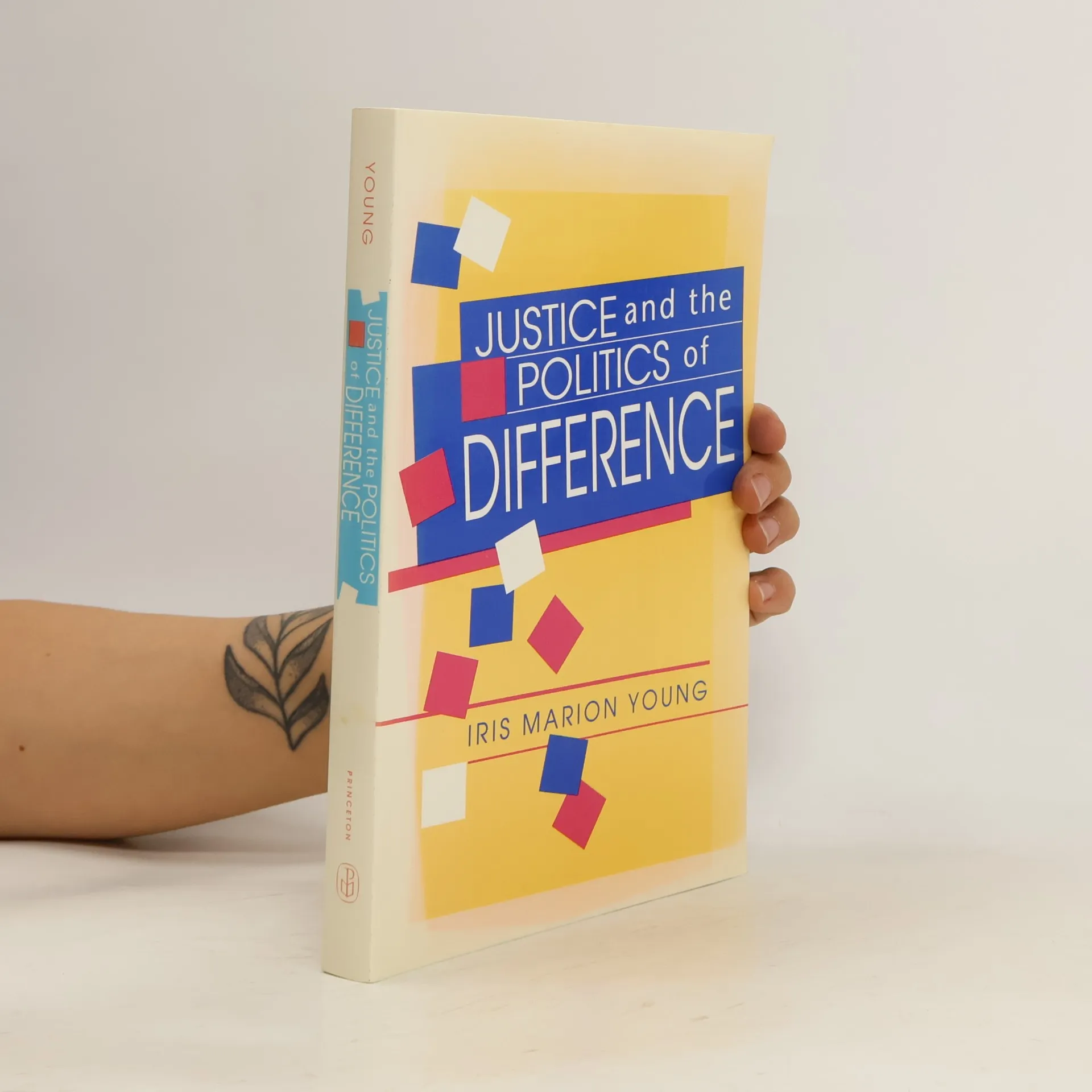
Justice and the Politics of Difference, Iris Marion Young
- Language

- Released
- 1990
- Binding
- (Paperback)
Payment methods
No one has rated yet.
- Title
- Justice and the Politics of Difference
- Language
- English
- Authors
- Iris Marion Young
- Publisher
- Princeton University Press
- Released
- 1990
- Format
- Paperback
- Pages
- 286
- ISBN10
- 0691023158
- ISBN13
- 9780691023151
- Series
- Categories
- Tags
- Philosophical Topics, Politics, USA, Feminism, Political Theories, Social Justice, Women in Politics
- Description
- This work critiques the reduction of social justice to distributive justice, examining fundamental concepts in justice theories such as impartiality and formal equality. It begins with the perspectives of marginalized groups regarding decision-making, cultural expression, and labor division. Young introduces the concepts of domination and oppression to address issues overlooked by the distributive model. She argues that democratic theorists often fail to create an inclusive participatory framework, as they assume a homogeneous public and neglect institutional arrangements that include those not aligned with white European male norms. Young advocates for a normative theory and public policy that confronts group-based oppression by recognizing and affirming social group differences. Drawing from the culturally diverse landscape of contemporary urban life, she proposes a principle of group representation in democratic settings and supports group-differentiated policies. This innovative analysis is a significant contribution to feminist theory and political thought, linking postmodern critiques of universalism with practical implications for social justice. As noted by Seyla Benhabib, it compellingly articulates the emancipatory potential of postmodernism.