

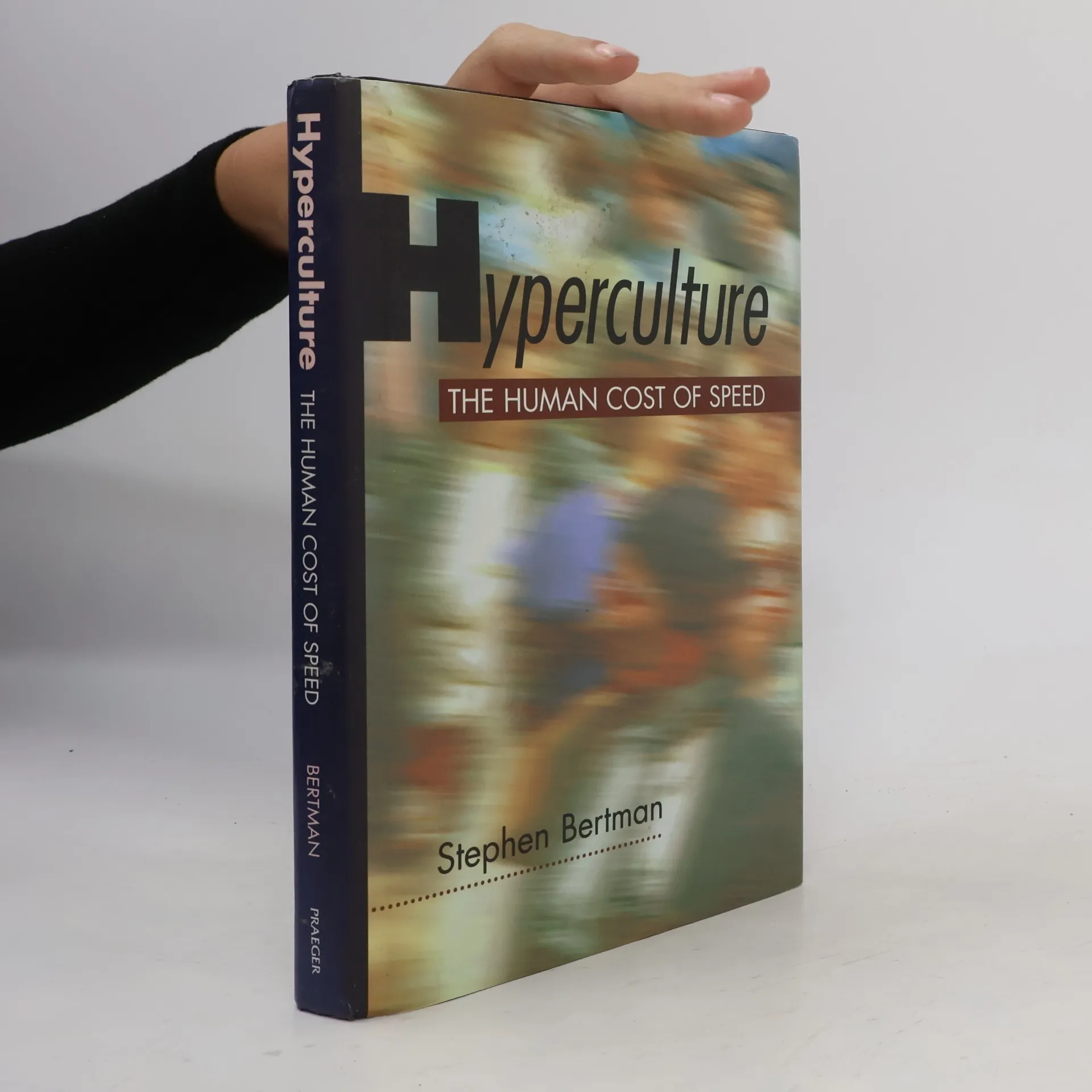


More about the book
The rampant illnesses of our society, including family disintegration, environmental degradation, unchecked commercialism, and relentless stress, are well-known. Stephen Bertman offers a unifying explanation: the accelerated pace of American life is eroding our fundamental values. Building on Alvin Toffler's concept of future shock, Bertman introduces the term hyperculture, describing a chronic distortion of morals and ethics stemming from America's addiction to speed. He argues that the solution requires a drastic slowdown to regain control over the technologies that dominate our lives, ensuring a humane future for ourselves and our children. Bertman posits that we live in a society governed by the power of now, which provides instant gratification while demanding immediate obedience. In adapting our lives to match the speed of electronic technologies, we have sacrificed our spiritual and mental well-being. This rush has disconnected us from historical wisdom and left us unable to contemplate the consequences of our actions, trapping us in a culture of sensationalism and transience that reshapes personal identity and democracy. The book suggests that the remedy lies not in technological advancements but in the radical process of decelerating our lives to reclaim them, a daunting challenge crucial for our happiness and survival.
Book purchase
Hyperculture, Stephen Bertman
- Language

- Released
- 1998
- Binding
- (Hardcover),
- Book condition
- Good
- Price
- €4.09
Payment methods
No one has rated yet.
- Title
- Hyperculture
- Subtitle
- The Human Cost of Speed
- Language
- English
- Authors
- Stephen Bertman
- Publisher
- Praeger
- Released
- 1998
- Format
- Hardcover
- Pages
- 288
- ISBN10
- 0275962059
- ISBN13
- 9780275962050
- Series
- Tags
- Philosophical Topics, USA, Society, Culture and Society, Culture, Popular Culture, Civilization, Social Aspects
- Description
- The rampant illnesses of our society, including family disintegration, environmental degradation, unchecked commercialism, and relentless stress, are well-known. Stephen Bertman offers a unifying explanation: the accelerated pace of American life is eroding our fundamental values. Building on Alvin Toffler's concept of future shock, Bertman introduces the term hyperculture, describing a chronic distortion of morals and ethics stemming from America's addiction to speed. He argues that the solution requires a drastic slowdown to regain control over the technologies that dominate our lives, ensuring a humane future for ourselves and our children. Bertman posits that we live in a society governed by the power of now, which provides instant gratification while demanding immediate obedience. In adapting our lives to match the speed of electronic technologies, we have sacrificed our spiritual and mental well-being. This rush has disconnected us from historical wisdom and left us unable to contemplate the consequences of our actions, trapping us in a culture of sensationalism and transience that reshapes personal identity and democracy. The book suggests that the remedy lies not in technological advancements but in the radical process of decelerating our lives to reclaim them, a daunting challenge crucial for our happiness and survival.