

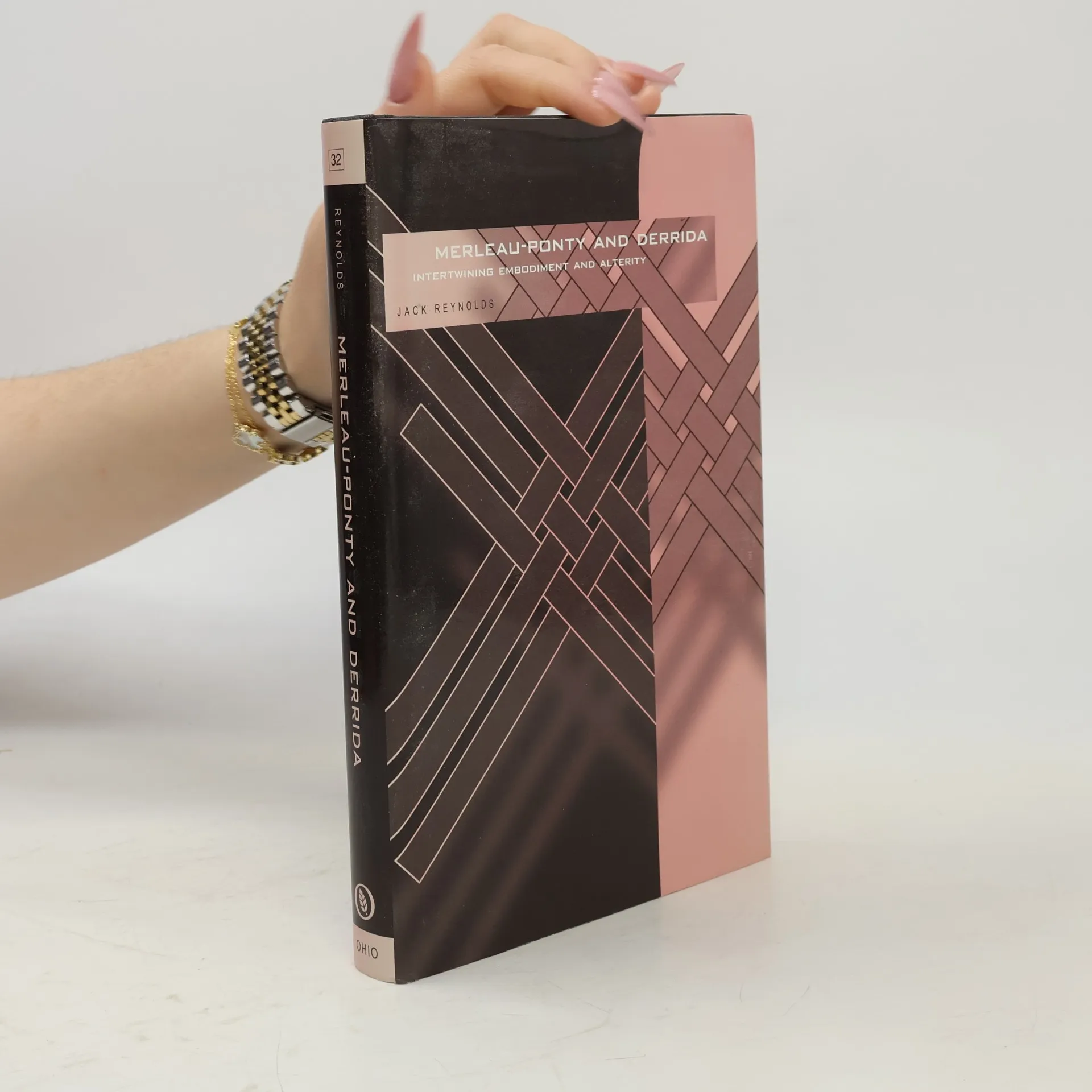


More about the book
While there have been many essays devoted to comparing the work of Maurice Merleau-Ponty with that of Jacques Derrida, there has been no sustained book-length treatment of these two French philosophers. Additionally, many of the essays presuppose an oppositional relationship between them, and between phenomenology and deconstruction more generally. Jack Reynolds systematically explores their relationship by analyzing each philosopher in terms of two important and related issues—embodiment and alterity. Focusing on areas with which they are not commonly associated (e.g., Derrida on the body and Merleau-Ponty on alterity) makes clear that their work cannot be adequately characterized in a strictly oppositional way. Merleau-Ponty and Intertwining Embodiment and Alterity proposes the possibility of a Merleau-Ponty-inspired philosophy that does not so avowedly seek to extricate itself from phenomenology, but that also cannot easily be dismissed as simply another instantiation of the metaphysics of presence. Reynolds argues that there are salient ethico-political reasons for choosing an alternative that accords greater attention to our embodied situation. As the first full-length monograph comparing the philosophers, Merleau-Ponty and Derrida will interest scholars and students in European philosophy and teachers of courses dealing with deconstruction.
Book purchase
Merleau-Ponty and Derrida, Jack Reynolds
- Language

- Released
- 2004
- Binding
- (Hardcover),
- Book condition
- Very Good
- Price
- €37.39
Payment methods
No one has rated yet.
- Title
- Merleau-Ponty and Derrida
- Subtitle
- Intertwining Embodiment and Alterity (Volume 32)
- Language
- English
- Authors
- Jack Reynolds
- Publisher
- Ohio University Press
- Released
- 2004
- Format
- Hardcover
- Pages
- 208
- ISBN10
- 0821415921
- ISBN13
- 9780821415924
- Series
- Categories
- Description
- While there have been many essays devoted to comparing the work of Maurice Merleau-Ponty with that of Jacques Derrida, there has been no sustained book-length treatment of these two French philosophers. Additionally, many of the essays presuppose an oppositional relationship between them, and between phenomenology and deconstruction more generally. Jack Reynolds systematically explores their relationship by analyzing each philosopher in terms of two important and related issues—embodiment and alterity. Focusing on areas with which they are not commonly associated (e.g., Derrida on the body and Merleau-Ponty on alterity) makes clear that their work cannot be adequately characterized in a strictly oppositional way. Merleau-Ponty and Intertwining Embodiment and Alterity proposes the possibility of a Merleau-Ponty-inspired philosophy that does not so avowedly seek to extricate itself from phenomenology, but that also cannot easily be dismissed as simply another instantiation of the metaphysics of presence. Reynolds argues that there are salient ethico-political reasons for choosing an alternative that accords greater attention to our embodied situation. As the first full-length monograph comparing the philosophers, Merleau-Ponty and Derrida will interest scholars and students in European philosophy and teachers of courses dealing with deconstruction.