

More about the book
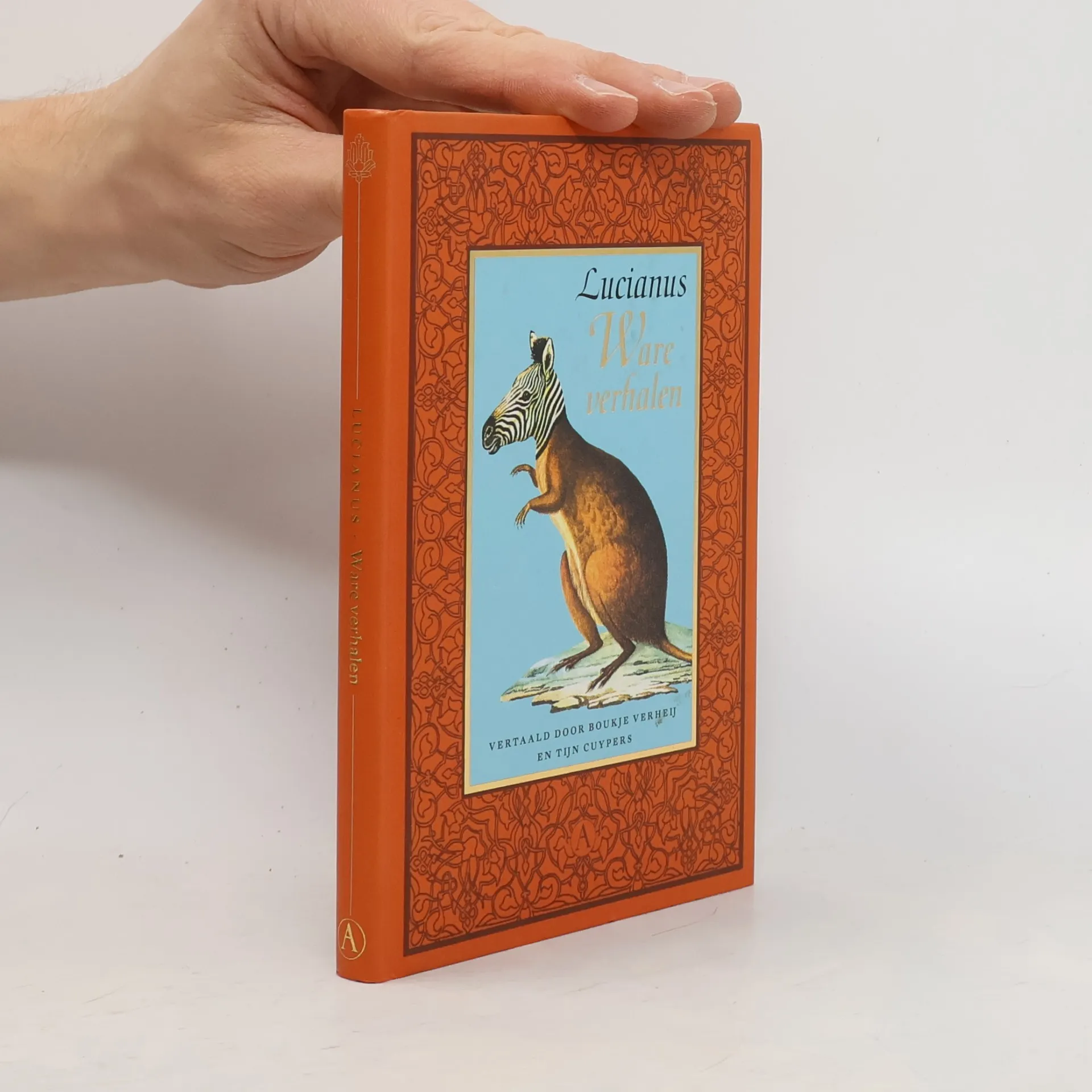
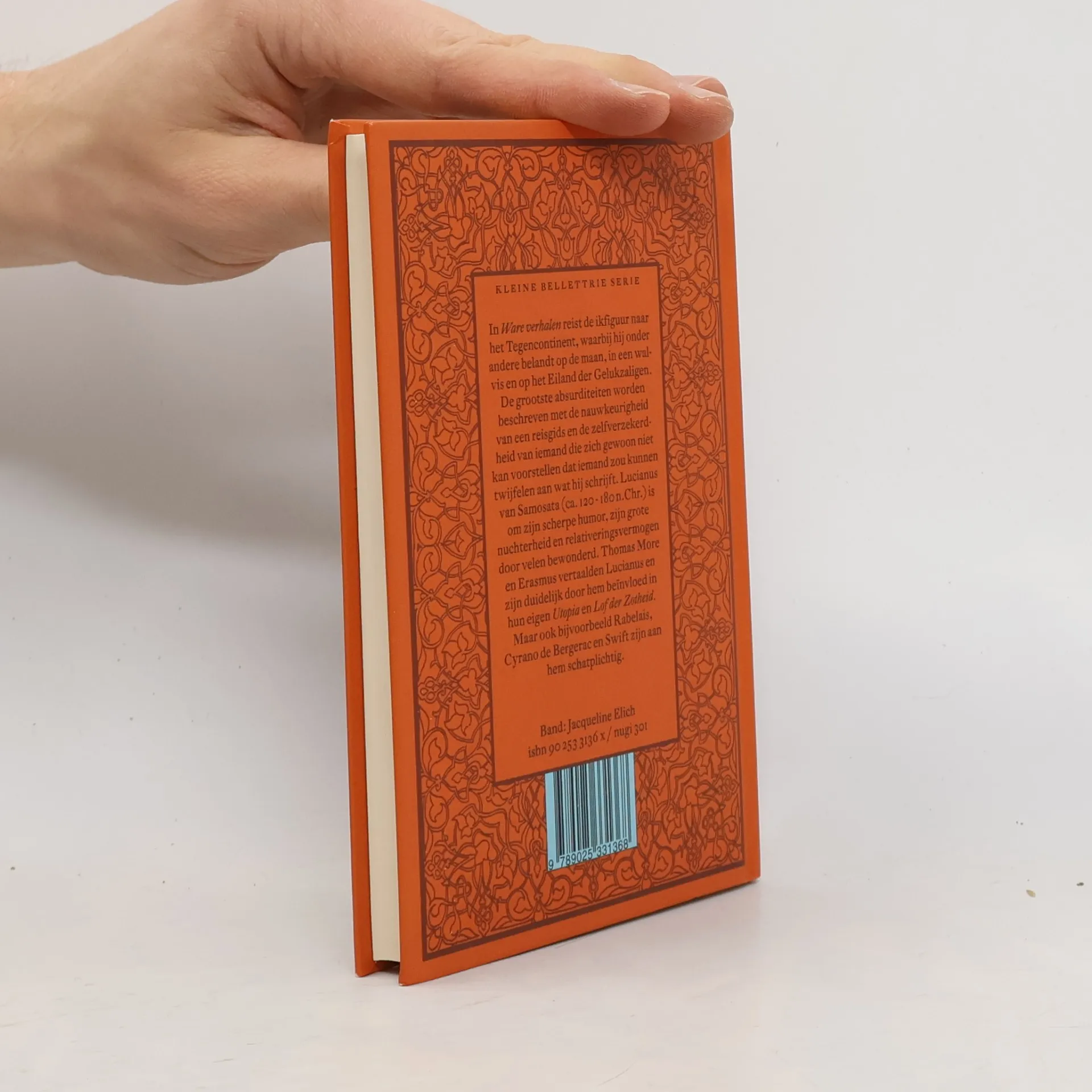
Widely hailed as the first science fiction story, A True Story, by Lucian of Samosata is a voyage to the edges of the universe and reason. The title is the first clue that this will be a tall tale. As much a predecessor of Douglas Adams as Jules Verne, Lucian's fantasy explores not only outer space (where he brokers war and peace between the inhabitants of the sun and moon), but also the Elysian fields, the geography of the Odyssey, and the interior of a giant whale. We get to meet Homer, Pythagoras, Socrates, and other immortals, as well as a host of bizarre creatures. The text is riddled with puns, innuendo, parody and satire; however most of this humor will escape the modern reader. Suffice it to say that this was considered pretty funny in the second century [AD]. The narrative breaks off in the second book. Whether there were more adventures or Lucian just ran out of ideas is unknown.
Language


Book purchase
Ware verhalen, Boukje Verheij, Lucian of Samosata, Tijn Cuypers
- Language

- Released
- 1999
- Binding
- (Hardcover),
- Book condition
- Very Good
- Price
- €15.39
Payment methods
We’re missing your review here.
- Title
- Ware verhalen
- Language
- Dutch
- Authors
- Boukje Verheij, Lucian of Samosata, Tijn Cuypers
- Publisher
- Athenaeum-Polak & Van Gennep
- Released
- 1999
- Format
- Hardcover
- Pages
- 110
- ISBN10
- 902533136X
- ISBN13
- 9789025331368
- Series
- Tags
- Mythology, Ancient History
- Rating
- 3.35 out of 5
- Description
- Widely hailed as the first science fiction story, A True Story, by Lucian of Samosata is a voyage to the edges of the universe and reason. The title is the first clue that this will be a tall tale. As much a predecessor of Douglas Adams as Jules Verne, Lucian's fantasy explores not only outer space (where he brokers war and peace between the inhabitants of the sun and moon), but also the Elysian fields, the geography of the Odyssey, and the interior of a giant whale. We get to meet Homer, Pythagoras, Socrates, and other immortals, as well as a host of bizarre creatures. The text is riddled with puns, innuendo, parody and satire; however most of this humor will escape the modern reader. Suffice it to say that this was considered pretty funny in the second century [AD]. The narrative breaks off in the second book. Whether there were more adventures or Lucian just ran out of ideas is unknown.