

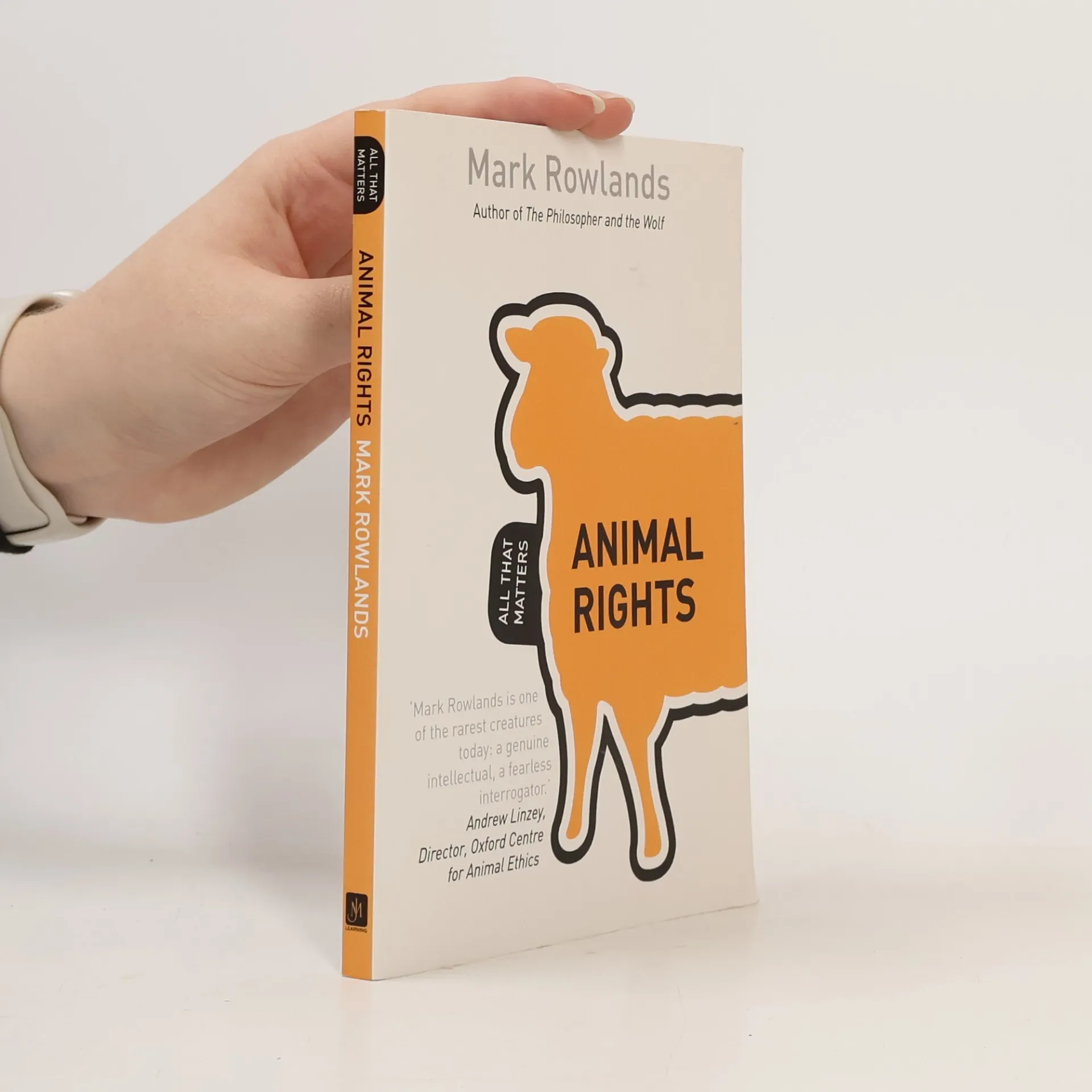


All That Matters: Animal Rights
Authors
More about the book
Animal Rights is a big deal. From animal testing to vegetarianism, and hunting to preservation of fish stocks, it's a topic that's always in the news. Mark Rowlands, author of The Philosopher and the Wolf, is the world's best known philosopher of animal rights. In this, the first introduction he has written to the topic, he starts by asking whether there is anything about humans that makes us psychologically or physiologically distinctive - so that there might be a moral justification for treating animals in a different way to how we treat humans. From this foundation, he goes on to explore specific issues of eating animals, experimentation, pets, hunting, zoos, predation and engineering animals. He ends with a challenging argument of how an improved understanding of animal ethics can and should affect readers' choices.
Book purchase
All That Matters: Animal Rights, Mark Rowlands
- Language

- Released
- 2013
- Binding
- (Paperback),
- Book condition
- Very Good
- Price
- €6.49
Payment methods
No one has rated yet.
- Title
- All That Matters: Animal Rights
- Language
- English
- Authors
- Mark Rowlands
- Publisher
- Hodder & Stoughton
- Released
- 2013
- Format
- Paperback
- Pages
- 147
- ISBN10
- 1444178849
- ISBN13
- 9781444178845
- Series
- Categories
- Tags
- Nature, References & Manuals, Philosophical Topics, Animals, Legal Topics, Science, Society, Veganism, Zoology, Veterinary Medicine, Animal Protection, Animal Rights, Laboratory Techniques, Animal Cruelty
- Description
- Animal Rights is a big deal. From animal testing to vegetarianism, and hunting to preservation of fish stocks, it's a topic that's always in the news. Mark Rowlands, author of The Philosopher and the Wolf, is the world's best known philosopher of animal rights. In this, the first introduction he has written to the topic, he starts by asking whether there is anything about humans that makes us psychologically or physiologically distinctive - so that there might be a moral justification for treating animals in a different way to how we treat humans. From this foundation, he goes on to explore specific issues of eating animals, experimentation, pets, hunting, zoos, predation and engineering animals. He ends with a challenging argument of how an improved understanding of animal ethics can and should affect readers' choices.