

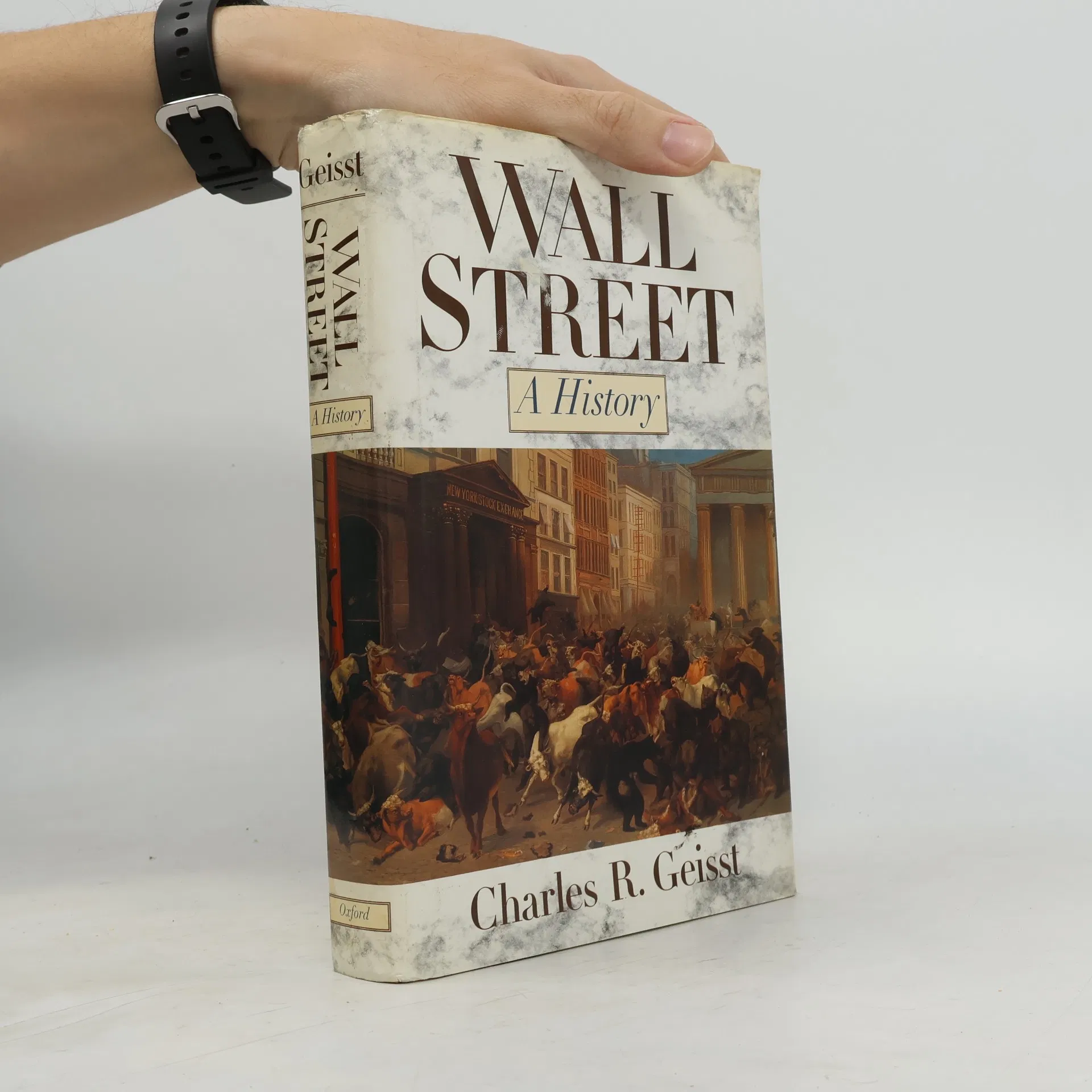


Wall Street
A History
Authors
More about the book
This captivating chronicle explores America's securities industry and its pivotal role in the nation's economic evolution over two centuries, from the post-Revolutionary War era to the recent junk bond frenzy and the 1980s merger mania that led to Drexel Burnham's collapse. The narrative covers key themes, including the westward movement of industry in the early nineteenth century, the emergence of the Robber Barons, and the securities market's impact on industrial growth, particularly through innovative railroad financing and significant investments in technological advancements by Bell and Edison. Geisst highlights the gradual increase in government involvement in Wall Street, illustrating the initial lack of regulation that left many investors vulnerable to corrupt practices. The New Deal ushered in a series of laws, spearheaded by the Securities Exchange Commission, that imposed strict regulations on Wall Street operations. This set the stage for an ongoing debate between advocates of unrestricted market freedom and proponents of regulatory oversight to prevent corruption. The narrative also delves into the colorful characters of "The Street," featuring ruthless figures like Jay Gould, whose market manipulations led to the infamous "Black Friday" crash in 1869, and the rise of influential self-made men such as John Jacob Astor, John D. Rockefeller, and Cornelius Vanderbilt.
Publication

Book purchase
Wall Street, Charles R. Geisst
- Language

- Released
- 1997
- Binding
- (Hardcover),
- Book condition
- Good
- Price
- €8.09
Payment methods
No one has rated yet.
- Title
- Wall Street
- Subtitle
- A History
- Language
- English
- Authors
- Charles R. Geisst
- Publisher
- Oxford University Press
- Released
- 1997
- Format
- Hardcover
- Pages
- 404
- ISBN10
- 0195115120
- ISBN13
- 9780195115123
- Series
- Description
- This captivating chronicle explores America's securities industry and its pivotal role in the nation's economic evolution over two centuries, from the post-Revolutionary War era to the recent junk bond frenzy and the 1980s merger mania that led to Drexel Burnham's collapse. The narrative covers key themes, including the westward movement of industry in the early nineteenth century, the emergence of the Robber Barons, and the securities market's impact on industrial growth, particularly through innovative railroad financing and significant investments in technological advancements by Bell and Edison. Geisst highlights the gradual increase in government involvement in Wall Street, illustrating the initial lack of regulation that left many investors vulnerable to corrupt practices. The New Deal ushered in a series of laws, spearheaded by the Securities Exchange Commission, that imposed strict regulations on Wall Street operations. This set the stage for an ongoing debate between advocates of unrestricted market freedom and proponents of regulatory oversight to prevent corruption. The narrative also delves into the colorful characters of "The Street," featuring ruthless figures like Jay Gould, whose market manipulations led to the infamous "Black Friday" crash in 1869, and the rise of influential self-made men such as John Jacob Astor, John D. Rockefeller, and Cornelius Vanderbilt.