


Explore the latest books of this year!
Bookbot

Cambridge Hegel Translations

This series offers scholarly translations of seminal philosophical works from a towering figure of German idealism. A key strength lies in its commitment to consistent terminology across volumes, ensuring clarity and accessibility for complex ideas. It serves as an essential resource for students, researchers, and anyone seeking a deeper engagement with the foundations of Western thought. The translations preserve the intellectual rigor of the original texts for a contemporary audience.

The Phenomenology of Mind (Two Volumes in One)
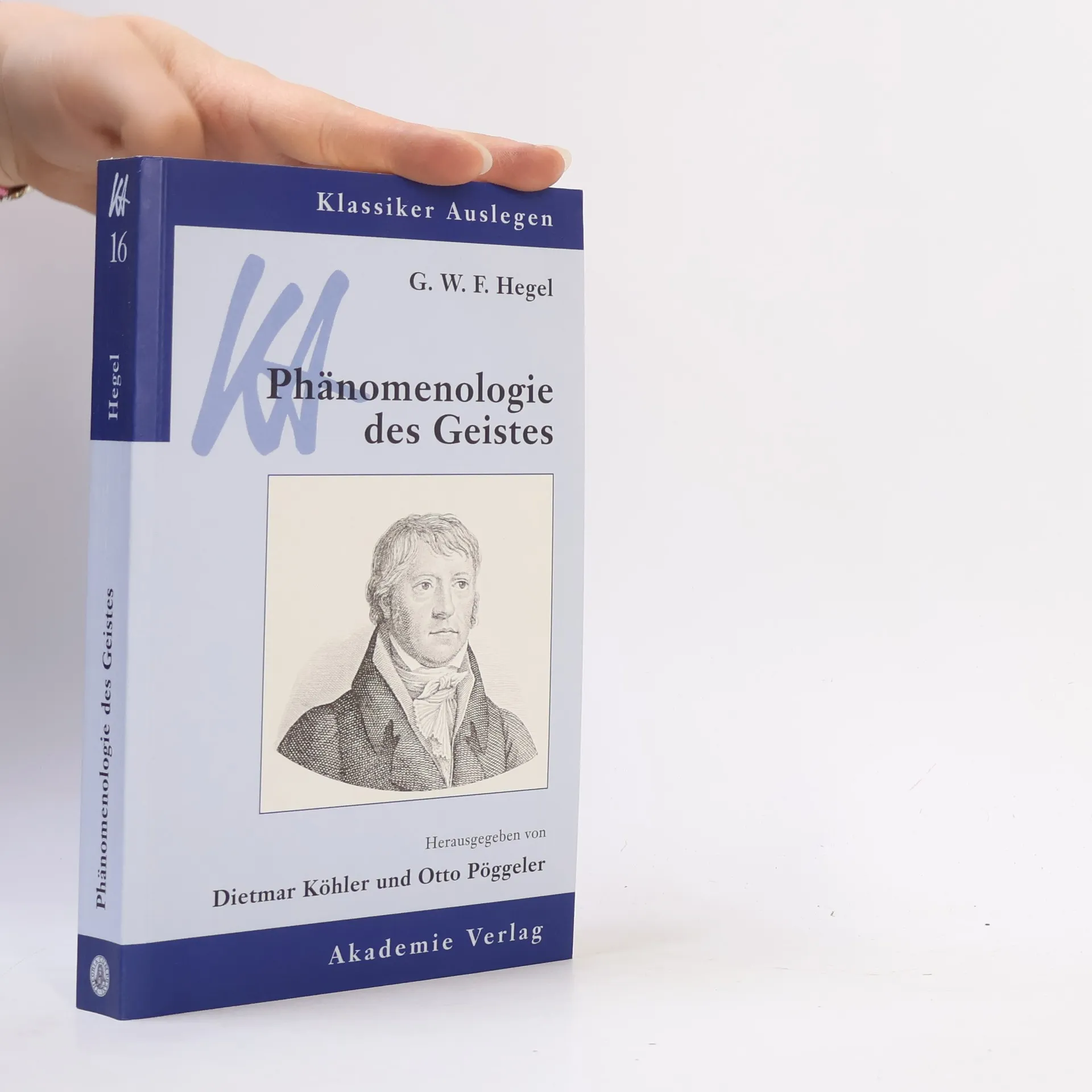
G. W. F. Hegel, Phänomenologie des Geistes
The phenomenology of mind
  • In The Phenomenology of Mind, idealist philosopher Georg Hegel (1770–1831) defied the traditional epistemological distinction of objective from subjective and developed his own dialectical alternative. Remarkable for the breadth and profundity of its philosophical insights, this work combines psychology, logic, moral philosophy, and history to form a comprehensive view that encompasses all forms of civilization. Its three divisions consist of the subjective mind (dealing with anthropology and psychology), the objective mind (concerning philosophical issues of law and morals), and the absolute mind (covering fine arts, religion, and philosophy).

    The phenomenology of mind
    4.0
  • Hegels im Jahr 1807 erschienene „Phänomenologie des Geistes“ kann ohne Zweifel zu den meistdiskutierten Werken der abendländischen Philosophiegeschichte gezählt werden. In ihr gelangt Hegels Philosophieren dazu, die Fülle alles Wissbaren zu einem einheitlichen, systematischen Ganzen zu organisieren. Dabei musste sowohl das Phänomen des Lebens mit dem erkennenden Bewusstsein, beide zusammen aber mit den geschichtlichen Entfaltungen des Geistes vermittelt werden, so dass sich die „Wissenschaft der Erfahrung des Bewusstseins“ zu einer „Phänomenologie des Geistes“ ausgestalten konnte. Zentral für Hegels Idee einer dialektischen Vermittlung ist das Prinzip der Anerkennung; dieses kann aus moderner Perspektive für die Ordnung unterschiedlicher Wissenssphären wie auch für aktuelle Konzeptionen praktischer Philosophie als wegweisend gelten. In den letzten Jahrzehnten sind durch die editorische und entwicklungsgeschichtliche Aufarbeitung des Jenaer Hegel Konzeption und systematischer Aufbau der Phänomenologie erstmals deutlich geworden.

    G. W. F. Hegel, Phänomenologie des Geistes
    4.0
  • Exploring the nature of knowledge and its connection to absolute truth, this philosophical work delves into how the spirit manifests as reality. Hegel argues that knowledge is intertwined with absolute reality, asserting that reality is fundamentally mental and spiritual. Originally published in 1807, this two-volume edition presents a profound intellectual journey that examines the essence of understanding and existence, making it a significant contribution to philosophy.

    The Phenomenology of Mind (Two Volumes in One)