

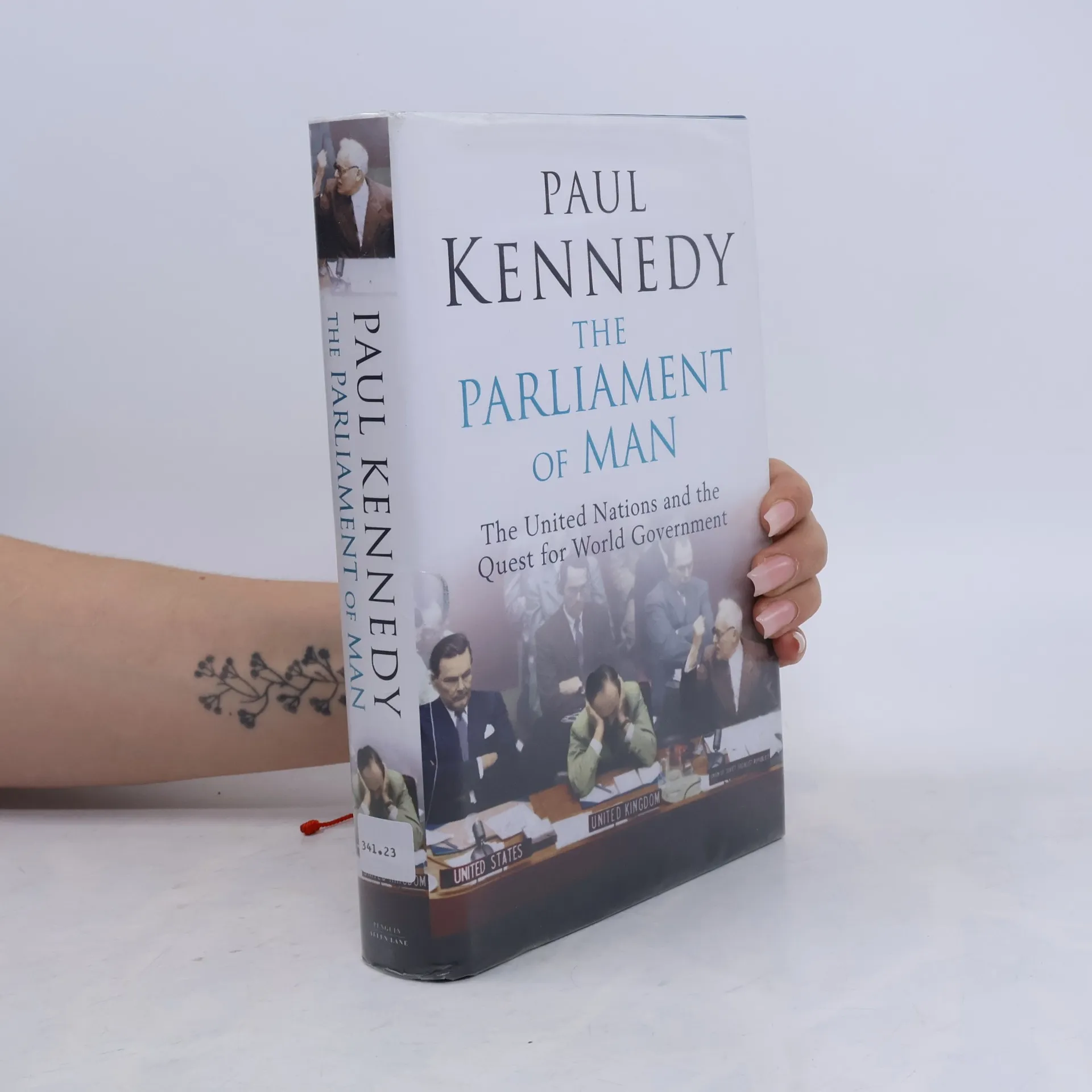


The Parliament of Man
The United Nations and the Quest for World Government
- 384 pages
- 14 hours of reading
“With all its defects, with all the failures that we can check up against it, the UN still represents man’s best-organized hope to substitute the conference table for the battlefield.” –Dwight D. Eisenhower, 1961 The signing of the United Nations Charter in 1945 marked a significant moment in history, as powerful sovereign nations united to form an autonomous organization aimed at preventing war and promoting human rights. Sixty years later, the UN continues its mission, facing challenges and criticism. In this comprehensive history, scholar Paul Kennedy explores the UN’s origins and functions while assessing its effectiveness and future prospects. Drawing on his experience from drafting reports for the UN’s fiftieth anniversary, Kennedy clarifies the roles of its six main bodies: the General Assembly, Security Council, Economic and Social Council, Trusteeship Council, Secretariat, and International Court. He highlights instances where the five permanent members of the Security Council— the United States, the United Kingdom, Russia, China, and France—collaborated to address humanitarian crises, despite political tensions. However, he also notes how lack of cooperation among great powers has hindered efforts like controlling greenhouse gas emissions and addressing the negative impacts of globalization on developing nations. Ultimately, Kennedy illustrates the UN as a fallible but essential institution, emphasizing its critica