

Focusing on identity politics, this study examines the performative aspects of political movements through the lens of women's involvement in Habsburg Galicia around 1900. It highlights the experiences of a Polish woman in the peasant movement, a Ukrainian feminist, and a Jewish Zionist, showcasing how their distinct identities and political actions contributed to broader societal changes. The book offers insights into the intersection of gender, ethnicity, and political activism during a transformative historical period.
Dietlind Hüchtker Books


Ukra¿ne
- 180 pages
- 7 hours of reading
Diese L'Homme-Ausgabe widmet sich der Frauen- und Geschlechtergeschichte in der Ukraine von der Frühen Neuzeit bis in die jüngste Gegenwart und möchte dazu beitragen, dass die innovativen Forschungen ukrainischer Kolleg_innen als integraler Bestandteil der europäischen Historiografie wahrgenommen werden. Dies erscheint in Zeiten des Krieges nicht nur wissenschaftlich, sondern auch geschichtspolitisch wichtiger denn je. Die Ukraine ist das flächenmäßig größte Land Europas, sie ist Teil einer europäischen Verflechtungs- und Transfergeschichte und doch noch immer ein weißer Fleck auf der historiografischen Landkarte westlicher Öffentlichkeiten. Dies gilt auch für die rege feministische Geschichtswissenschaft, die zu wenig oder nur mit großer Verzögerung rezipiert wird.
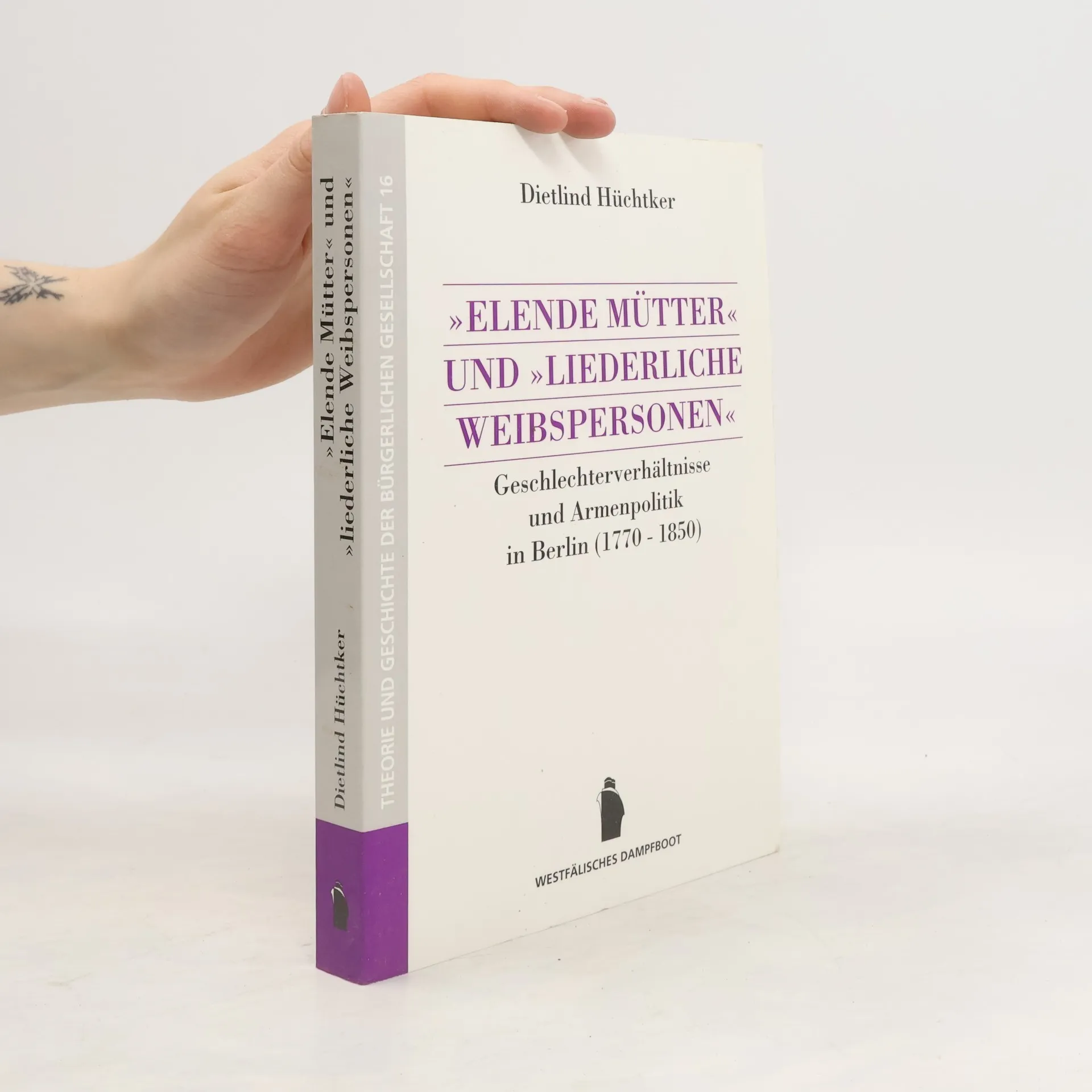
"Elende Mütter" und "liederliche Weibspersonen"
- 310 pages
- 11 hours of reading
Ruralities in the Making: Space – Media/Translation – Materiality
Jahrbuch für Geschichte des ländlichen Raumes/Rural History Yearbook 2022
Rural spaces are relevant to several topics which are currently subject of public debate. Climate change, ecological disasters, reproduction technologies and live-stock breeding, environmental and animal protection movements confront technological feasibility with ethical principles. Rural spaces are thus important arenas in which concepts for the future are negotiated. And here history comes in: the countryside, nature, landscapes, and province formed places and spaces where historical change became perceptible in the past and where the challenges of the future will become visible. The special issue reflects on how to connect these challenges to empirical studies on rurality. It brings together the results of an international and interdisciplinary research group which discussed the potential of three theoretical concepts regarding the meanings of rurality: space, media/translation, and materiality. The empirical studies focus on rural societies in East Central Europe from the early modern times to contemporary developments. By this we break with the frequent tendency to test new research approaches primarily on examples in the “global West” or in metropolitan areas.
Am Beispiel dreier Frauen – einer Aktivistin der polnischen Bauernbewegung, einer ruthenischen Feministin und einer Zionistin – analysiert die Studie politische Bewegungen in Galizien um 1900 als Performance, als Zusammenspiel von Mitwirkenden, Stücken, Bühnen und Auftritten. Die Aktivistinnen konstruierten die Geschichte ihrer Benachteiligung, sie organisierten Räume, in denen eine bessere Zukunft vorgeführt wurde, sie inszenierten ihre Deutungen als historisch begründete Unumgänglichkeit des Wandels. So gelang es ihnen, diese »identity politics« bis in die Narrative der heutigen Geschichtswissenschaft hinein zu etablieren.