

Explore the latest books of this year!
Bookbot

Katy Börner

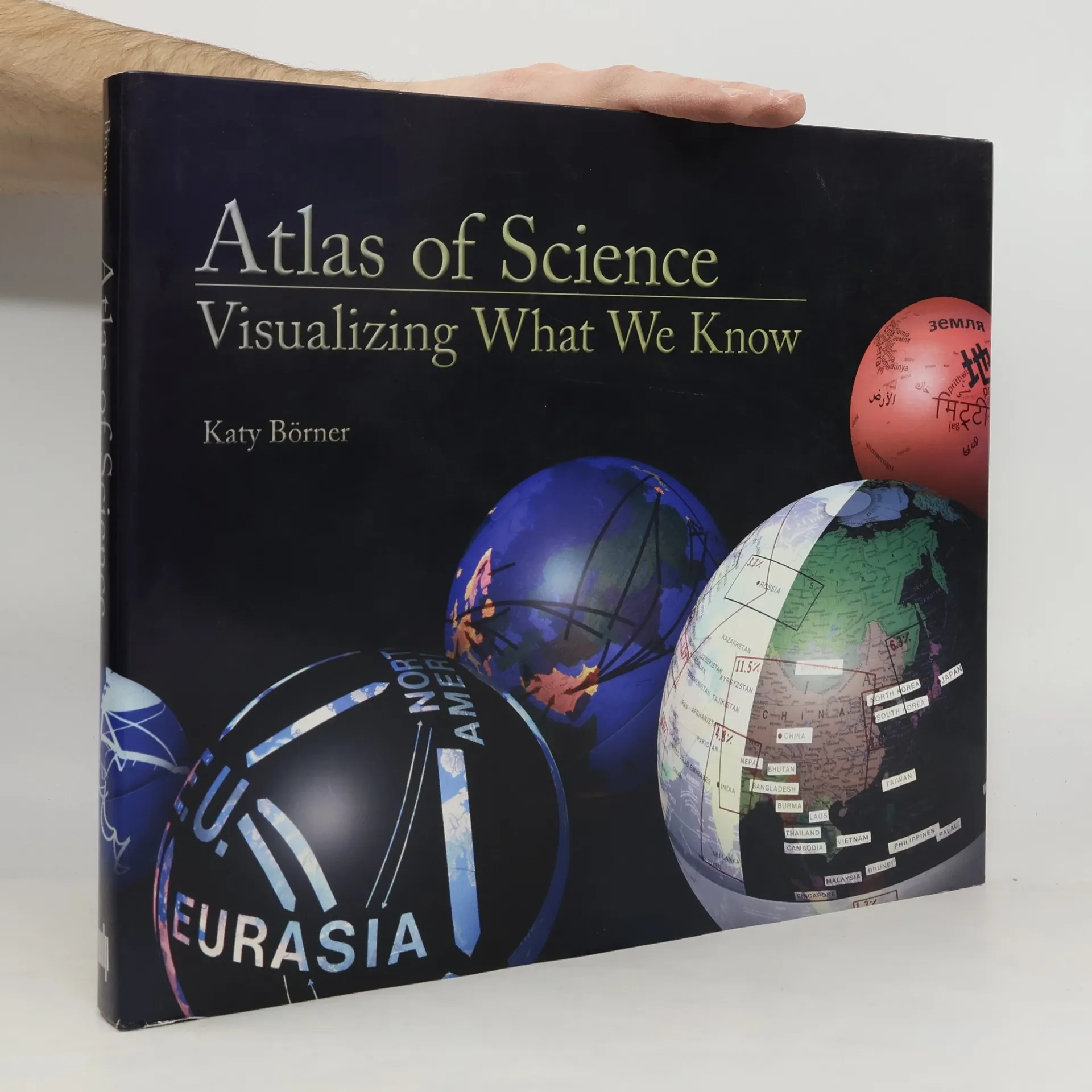
    Atlas of Science
    Atlas of Forecasts
    • Atlas of Forecasts

      • 228 pages
      • 8 hours of reading

      Forecasting the future with advanced data models and visualizations.To envision and create the futures we want, society needs an appropriate understanding of the likely impact of alternative actions. Data models and visualizations offer a way to understand and intelligently manage complex, interlinked systems in science and technology, education, and policymaking. Atlas of Forecasts, from the creator of Atlas of Science and Atlas of Knowledge, shows how we can use data to predict, communicate, and ultimately attain desirable futures.Using advanced data visualizations to introduce different types of computational models, Atlas of Forecasts demonstrates how models can inform effective decision-making in education, science, technology, and policymaking. The models and maps presented aim to help anyone understand key processes and outcomes of complex systems dynamics, including which human skills are needed in an artificial intelligence-empowered economy; what progress in science and technology is likely to be made; and how policymakers can future-proof regions or nations. This Atlas offers a driver's seat-perspective for a test-drive of the future.

      Atlas of Forecasts
      3.4
    • Atlas of Science

      Visualizing What We Know

      • 272 pages
      • 10 hours of reading

      Cartographic maps have long guided our explorations, and science maps can similarly help us navigate the complex landscape of knowledge in science and technology. They enable us to visualize scientific results, making sense of the vast data generated by research today. This work features over thirty full-page science maps, fifty data charts, a timeline of science-mapping milestones, and 500 color images, serving as a visual index to the evolution of modern science and an introduction to "the science of science." Based on the exhibit "Places & Spaces: Mapping Science," it showcases effective mapping techniques. Highlights include Claudius Ptolemy's 1482 Cosmographia World Map, a subway map-style guide to a PhD thesis, a citation relationship map from 2002, a periodic table, a flow visualization of the Wikipedia article on abortion, a globe of global patent distribution, earthquake risk forecasts, and interactive science maps for kids. Each entry tells the story behind the map and includes biographies of its creators. In an age of overwhelming scientific output, science maps illuminate the landscape of our knowledge. Ongoing exhibitions are hosted by the National Science Foundation in Washington, D.C., the Institute for Research Information and Quality Assurance in Bonn, Germany, and Storm Hall at San Diego State College.

      Atlas of Science