

Explore the latest books of this year!
Bookbot

Simon Gleeson

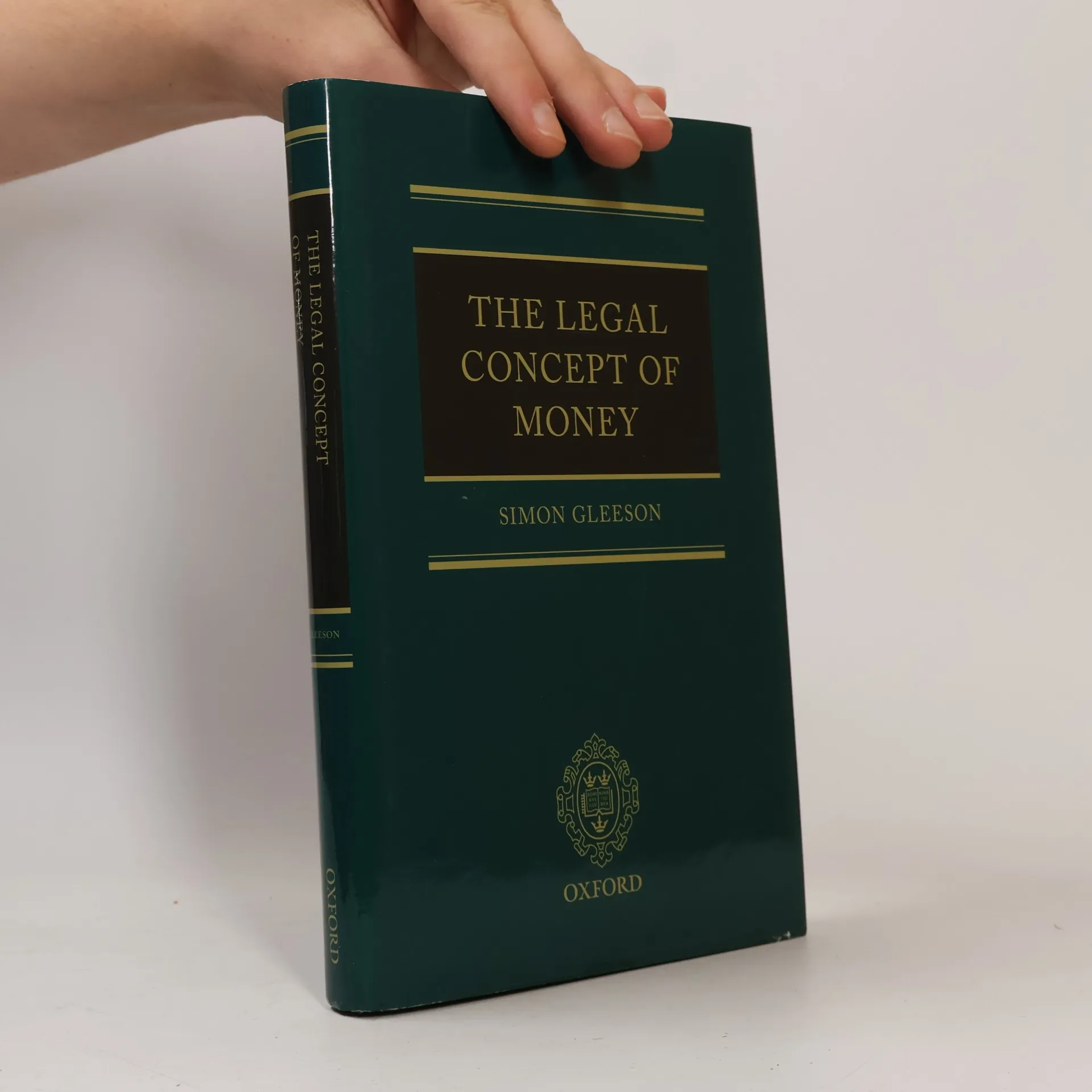
    The Legal Concept of Money
    International Regulation of Banking
    • International Regulation of Banking

      Basel II, Capital and Risk Requirements

      • 424 pages
      • 15 hours of reading

      Financial capital regulation influences nearly every aspect of financial markets, including the structures of financial groups, capital raising methods, and the development of investment strategies like derivatives and securitizations. Despite its significance, capital regulation is often overlooked in legal studies. This book serves as an introduction to the structure of bank financial regulation, aimed at financial lawyers and non-statisticians interested in the regulatory factors that shape contemporary financial transactions. While the regulations rely on complex statistical models, the underlying legal principles can be articulated clearly and systematically. Currently, this area is undergoing significant transition due to the international implementation of the Basel II Accord, which introduces a new framework for bank regulation, prompting banks globally to reassess their structures and business models. This shift will lead to substantial changes and increased complexity in regulatory frameworks. The focus is on the general principles of Basel II and their implementation in the EU through the Capital Requirements Directive, making it relevant for readers in both EU and significant non-EU financial jurisdictions. This work provides a clear and comprehensive introduction to the regulatory drivers that shape financial transactions, serving as an accessible guide for lawyers and bankers alike.

      International Regulation of Banking
    • The Legal Concept of Money

      • 252 pages
      • 9 hours of reading

      This new book explores how money—encompassing coins, notes, credit, and virtual currency—should be defined from legal and economic perspectives. With the rise of electronic payment systems, defining money becomes crucial for global legal, commercial, economic, macro-prudential, and fiscal policymaking. It re-evaluates the concept of 'money' by examining its role in various transactions and the interchangeability of cryptocurrencies and 'quasi-money' with traditional monetary systems. The book begins with a summary of the legal nature of money, clarifying the distinction between money and payment obligations, and outlining the fundamental characteristics of money. It analyzes how the law identifies money through specific transactions, such as the sale of goods involving 'e-currency.' Other scenarios discussed include recovering stolen money, claims for non-delivery, and the functioning of payment obligations. Additionally, the book investigates the role of money within the banking system, assessing how different currencies serve as claims on financial institutions and whether the rise of non-traditional currencies poses a threat to systemic stability. Finally, it aims to develop a conceptual framework for how alternative currencies could function as a medium for saving.

      The Legal Concept of Money