

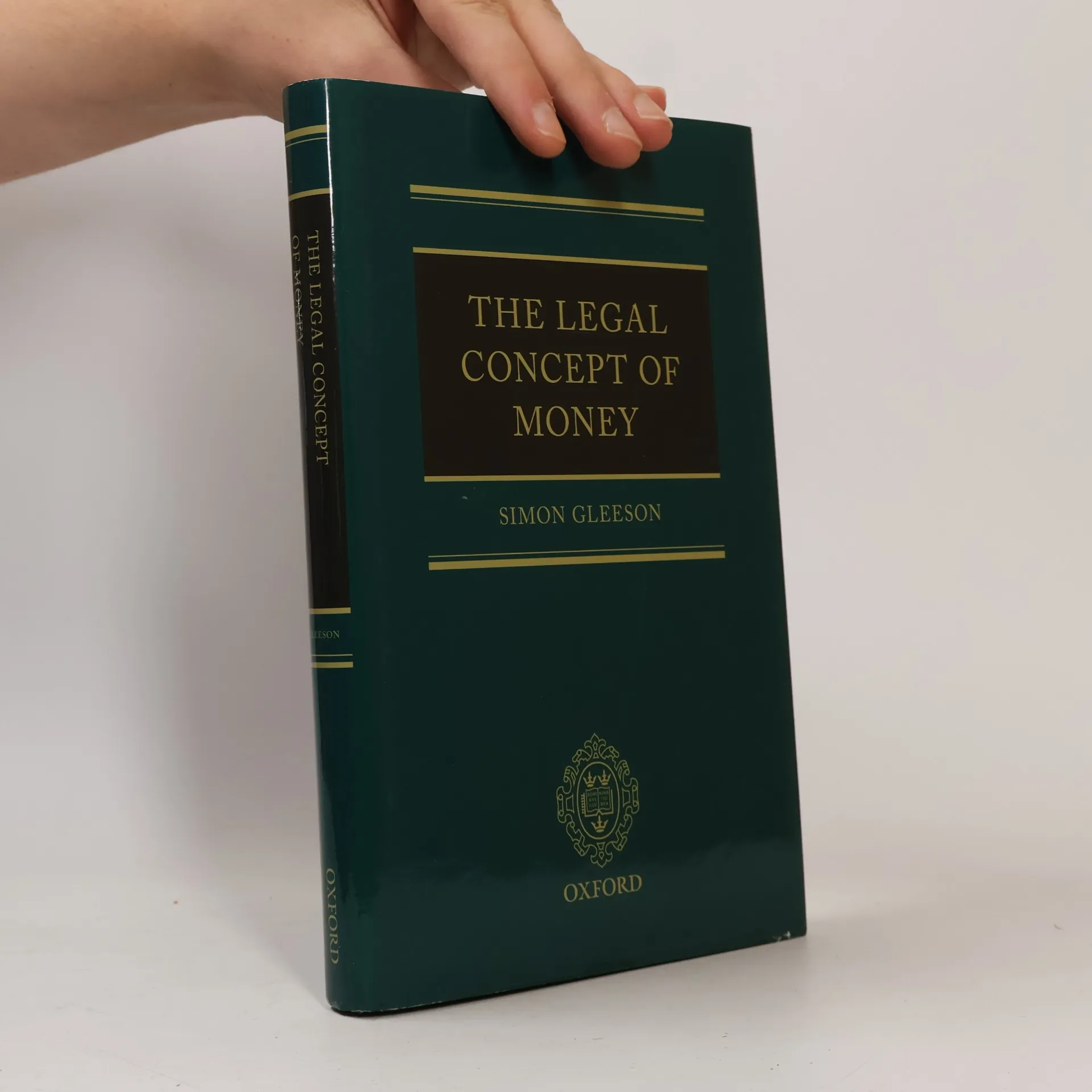


Parameters
- 252 pages
- 9 hours of reading
More about the book
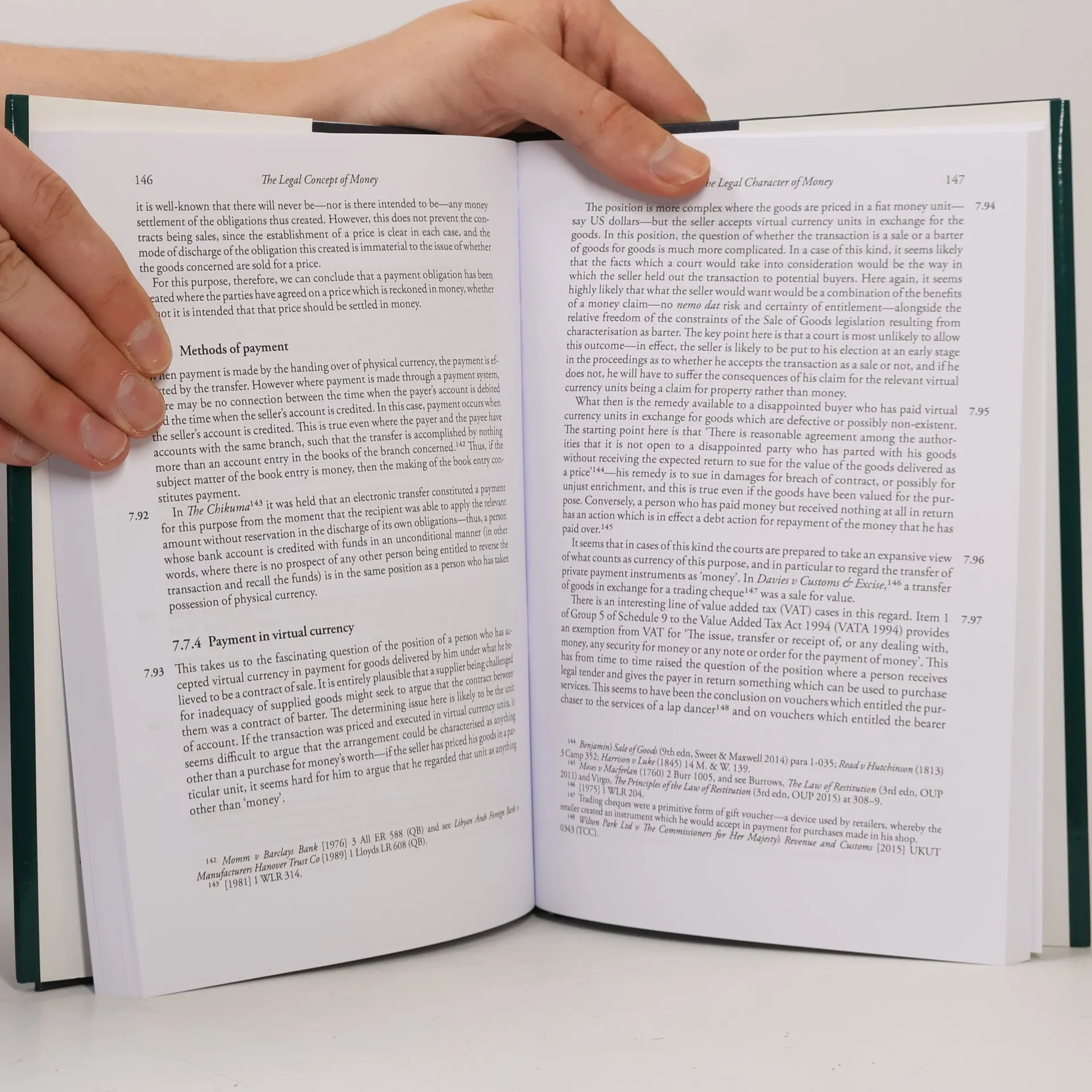
This new book explores how money—encompassing coins, notes, credit, and virtual currency—should be defined from legal and economic perspectives. With the rise of electronic payment systems, defining money becomes crucial for global legal, commercial, economic, macro-prudential, and fiscal policymaking. It re-evaluates the concept of 'money' by examining its role in various transactions and the interchangeability of cryptocurrencies and 'quasi-money' with traditional monetary systems. The book begins with a summary of the legal nature of money, clarifying the distinction between money and payment obligations, and outlining the fundamental characteristics of money. It analyzes how the law identifies money through specific transactions, such as the sale of goods involving 'e-currency.' Other scenarios discussed include recovering stolen money, claims for non-delivery, and the functioning of payment obligations. Additionally, the book investigates the role of money within the banking system, assessing how different currencies serve as claims on financial institutions and whether the rise of non-traditional currencies poses a threat to systemic stability. Finally, it aims to develop a conceptual framework for how alternative currencies could function as a medium for saving.
Book purchase
The Legal Concept of Money, Simon Gleeson
- Language

- Released
- 2018
- Binding
- (Hardcover),
- Book condition
- Very Good
- Price
- €43.39
Payment methods
No one has rated yet.
- Title
- The Legal Concept of Money
- Language
- English
- Authors
- Simon Gleeson
- Publisher
- Oxford University Press
- Released
- 2018
- Format
- Hardcover
- Pages
- 252
- ISBN10
- 0198826397
- ISBN13
- 9780198826392
- Series
- Tags
- Description
- This new book explores how money—encompassing coins, notes, credit, and virtual currency—should be defined from legal and economic perspectives. With the rise of electronic payment systems, defining money becomes crucial for global legal, commercial, economic, macro-prudential, and fiscal policymaking. It re-evaluates the concept of 'money' by examining its role in various transactions and the interchangeability of cryptocurrencies and 'quasi-money' with traditional monetary systems. The book begins with a summary of the legal nature of money, clarifying the distinction between money and payment obligations, and outlining the fundamental characteristics of money. It analyzes how the law identifies money through specific transactions, such as the sale of goods involving 'e-currency.' Other scenarios discussed include recovering stolen money, claims for non-delivery, and the functioning of payment obligations. Additionally, the book investigates the role of money within the banking system, assessing how different currencies serve as claims on financial institutions and whether the rise of non-traditional currencies poses a threat to systemic stability. Finally, it aims to develop a conceptual framework for how alternative currencies could function as a medium for saving.