
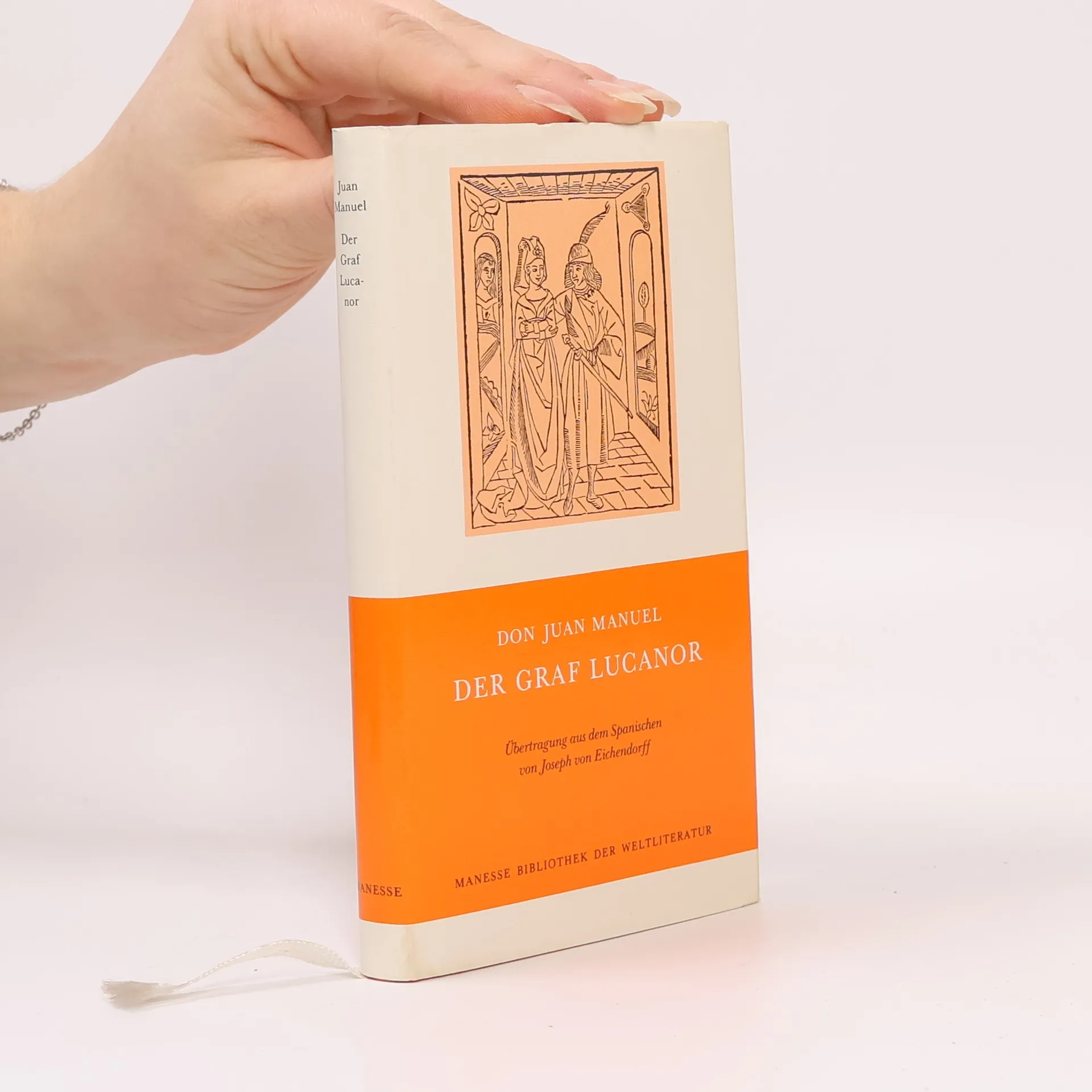
Don Juan Manuel KastilskýBook order (chronological)
Don Juan Manuel stands as a pivotal figure in medieval Castilian prose, known for weaving together moralizing tales and wisdom literature. His writing delves into the intricacies of human conduct and societal expectations, often framed within engaging narratives. Through his collected stories, he offers readers profound insights into ethical dilemmas and the complexities of life, solidifying his legacy as a master storyteller.
Un joven conde plantea a su ayo diversas cuestiones morales y obtiene siempre la misma respuesta: un cuento. Sobre esta estructura -el diálogo entre Lucanor y Petronio- y con un exquisito equilibrio entre el relato y el propósito ejemplarizante, don Juan Manuel construyó un libro ambicioso, depurado y entretenido, que todav
Don Juan Manuel's Tales of Count Lucanor, in Spanish Libro de los ejemplos del conde Lucanor y de Patronio (Book of the Examples of Count Lucanor and of Patronio), also commonly known as El Conde Lucanor, Libro de Patronio, or Libro de los ejemplos (original Old Castilian: Libro de los enxiemplos del Conde Lucanor et de Patronio), is one of the earliest works of prose in Castilian Spanish. It was first written in 1335. The book is divided into four parts. The first and most well-known part is a series of 50 short stories (some no more than a page or two) drawn from various sources, such as Aesop and other classical writers, and Arabic folktales. Story 28, "Of what happened to a woman called Truhana", a version of Aesop's The Milkmaid and Her Pail, was claimed by Max Müller to originate in the Hindu cycle Panchatantra. Tales of Count Lucanor was first printed in 1575 when it was published at Seville under the auspices of Argote de Molina. It was again printed at Madrid in 1642, after which it lay forgotten for nearly two centuries.