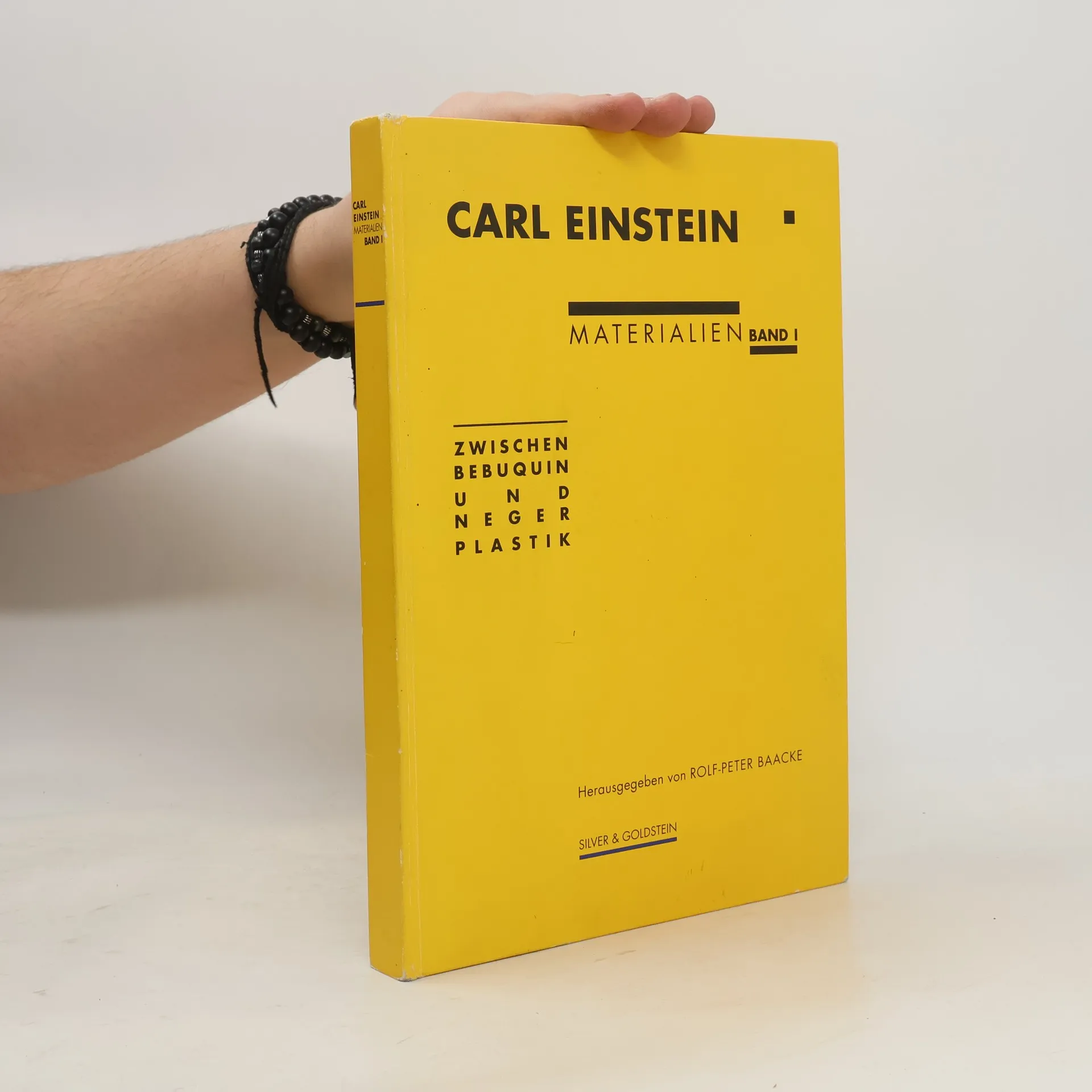
Negro Sculpture (1915) was the first critical response to African sculpture, challenging prejudices and misconceptions around this subject. It quickly became a crucial text for the European avant-garde and today remains indispensable to understanding the shift in discussion towards non-European art taking place at the time.
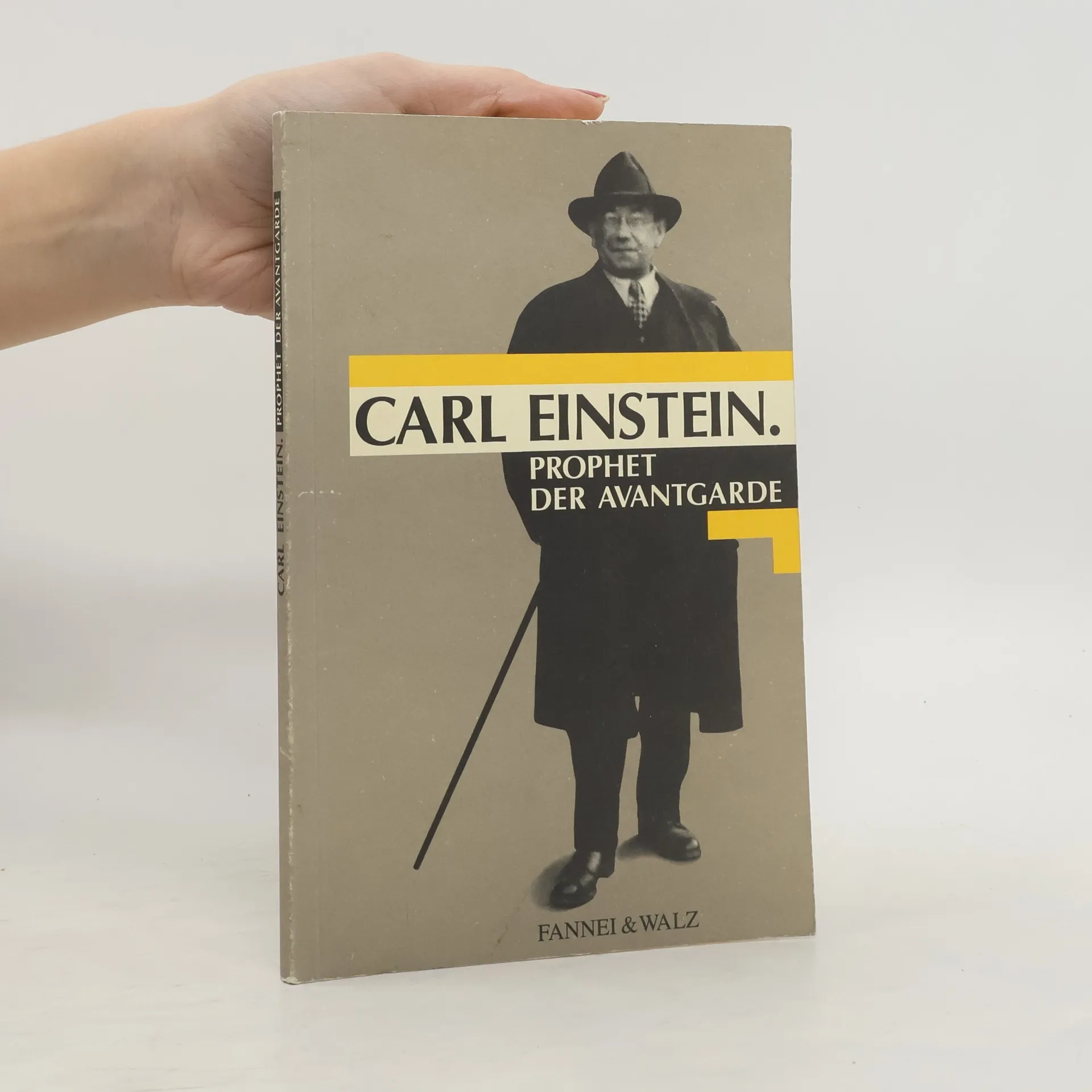
The German art historian and critic Carl Einstein (1885-1940) was at the forefront of the modernist movement that defined the twentieth century. One of the most prolific and brilliant early commentators on cubism, he was also among the first authors to assess African sculpture as art. Yet his writings remain relatively little known in the Anglophone world. With A Mythology of Forms, the first representative collection of Einstein’s art theory and criticism to appear in English translation, Charles W. Haxthausen fills this gap. Spanning three decades, it assembles the most important of Einstein’s writings on the art that was central to his critical project—on cubism, surrealism, Pablo Picasso, Georges Braque, and Paul Klee, and includes the full texts of his two pathbreaking books on African art, Negro Sculpture (1915) and African Sculpture (1921). With fourteen texts by Einstein, each presented with extensive commentary, A Mythology of Forms will bring a pivotal voice in the history of modern art into English.
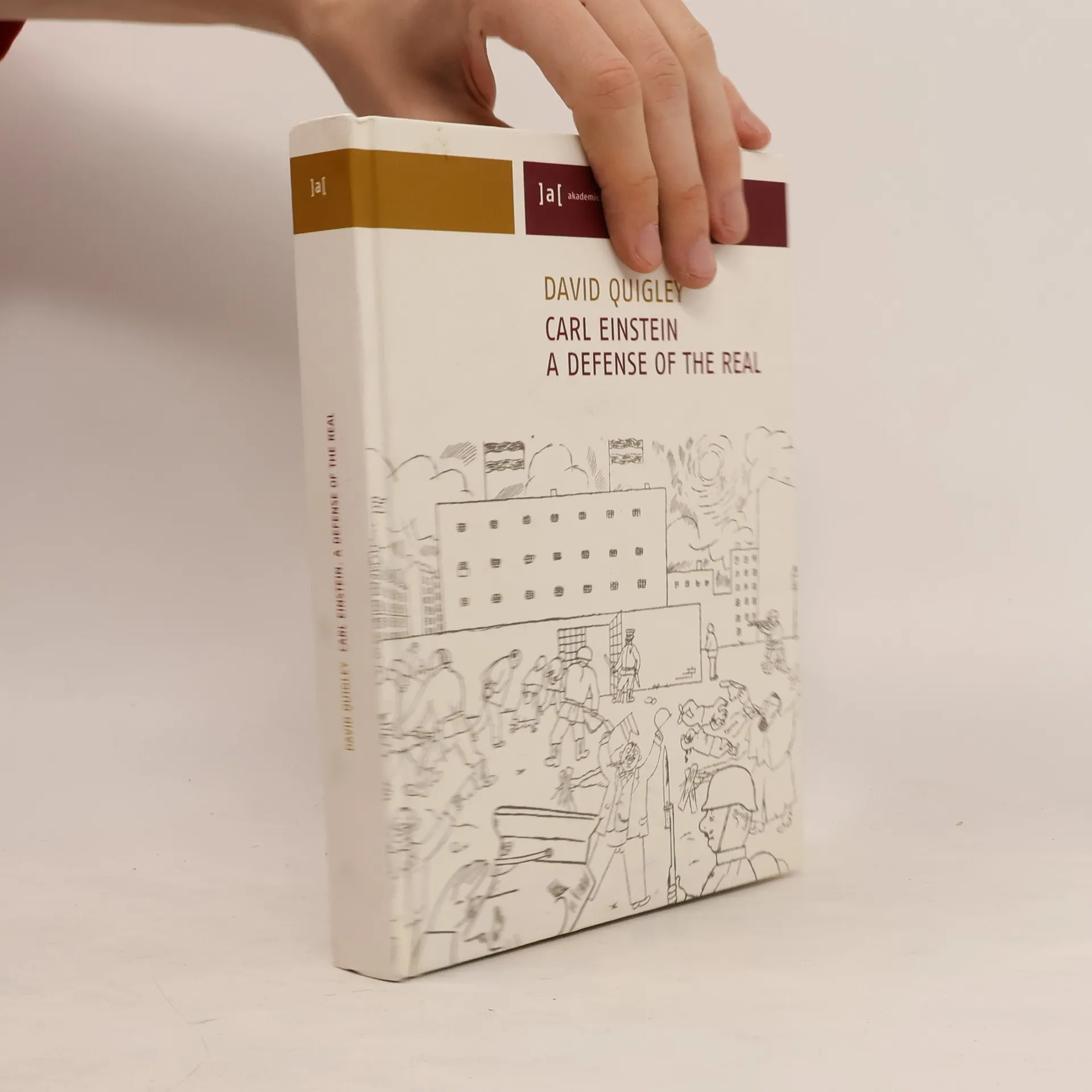
In this intellectual biography an epoch is portrayed: the American writer David Quigley maps out the stages and positions of the radical early twentieth-century German writer and art historian Carl Einstein, who posited political, philosophical and aesthetic arguments for a "new" art as the basis for a "new" society.
Carl Einsteins Korrespondenz bietet einen tiefen Einblick in die Strömungen und Konflikte der europäischen Literatur, Kunst und Politik des 20. Jahrhunderts. Als bedeutender Schriftsteller und Kunstkritiker war er eng mit Größen wie Picasso und Paul Klee verbunden und kämpfte aktiv gegen Reaktion und Faschismus. Die Sammlung umfasst 425 Briefe, die chronologisch geordnet und detailliert kommentiert sind, einschließlich Übersetzungen französischer Texte. Diese Briefe sind eine wertvolle Quelle für sozialgeschichtliche und kunsthistorische Forschungen, die Einsteins unvollendete Projekte und seine Beziehungen zu anderen Künstlern beleuchten.
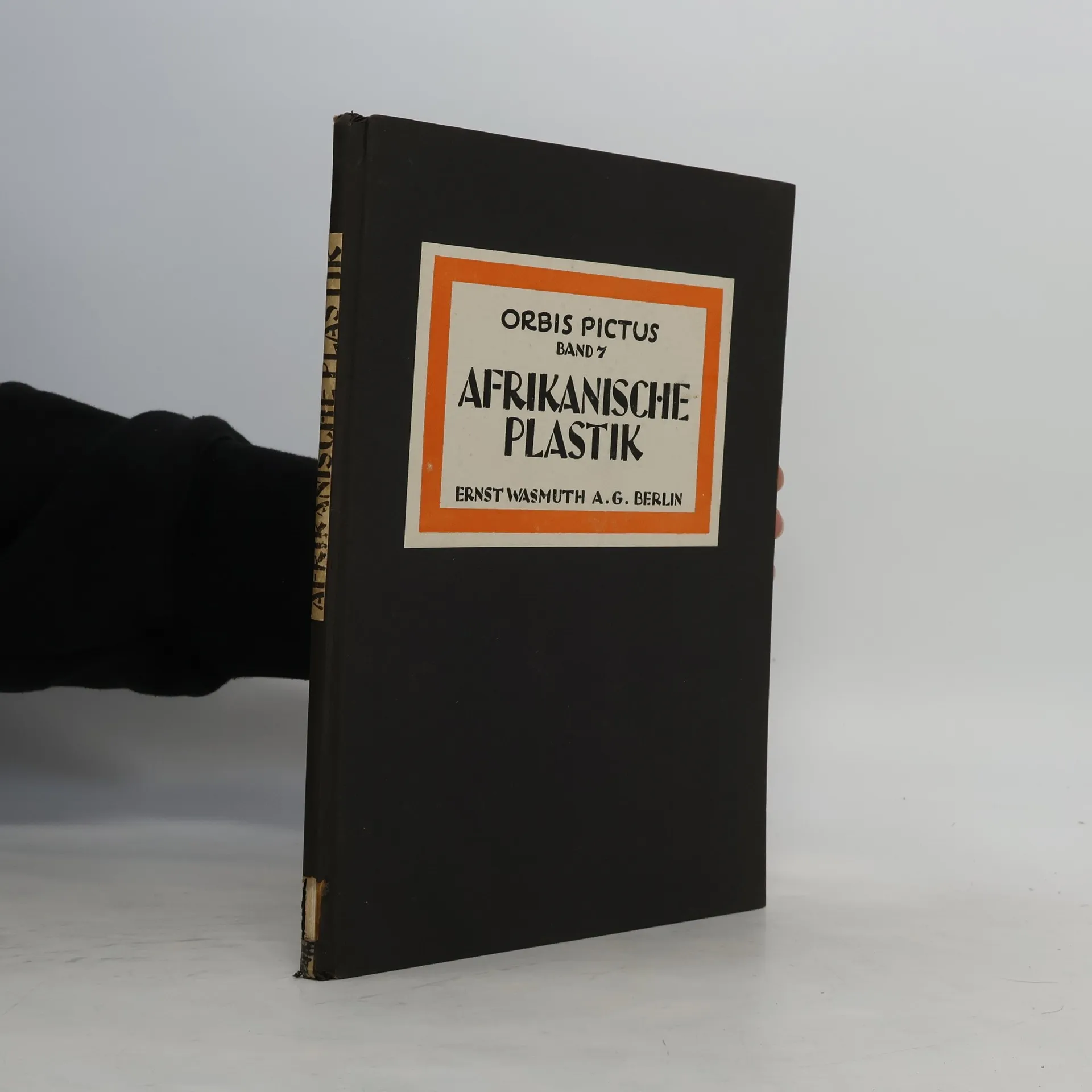
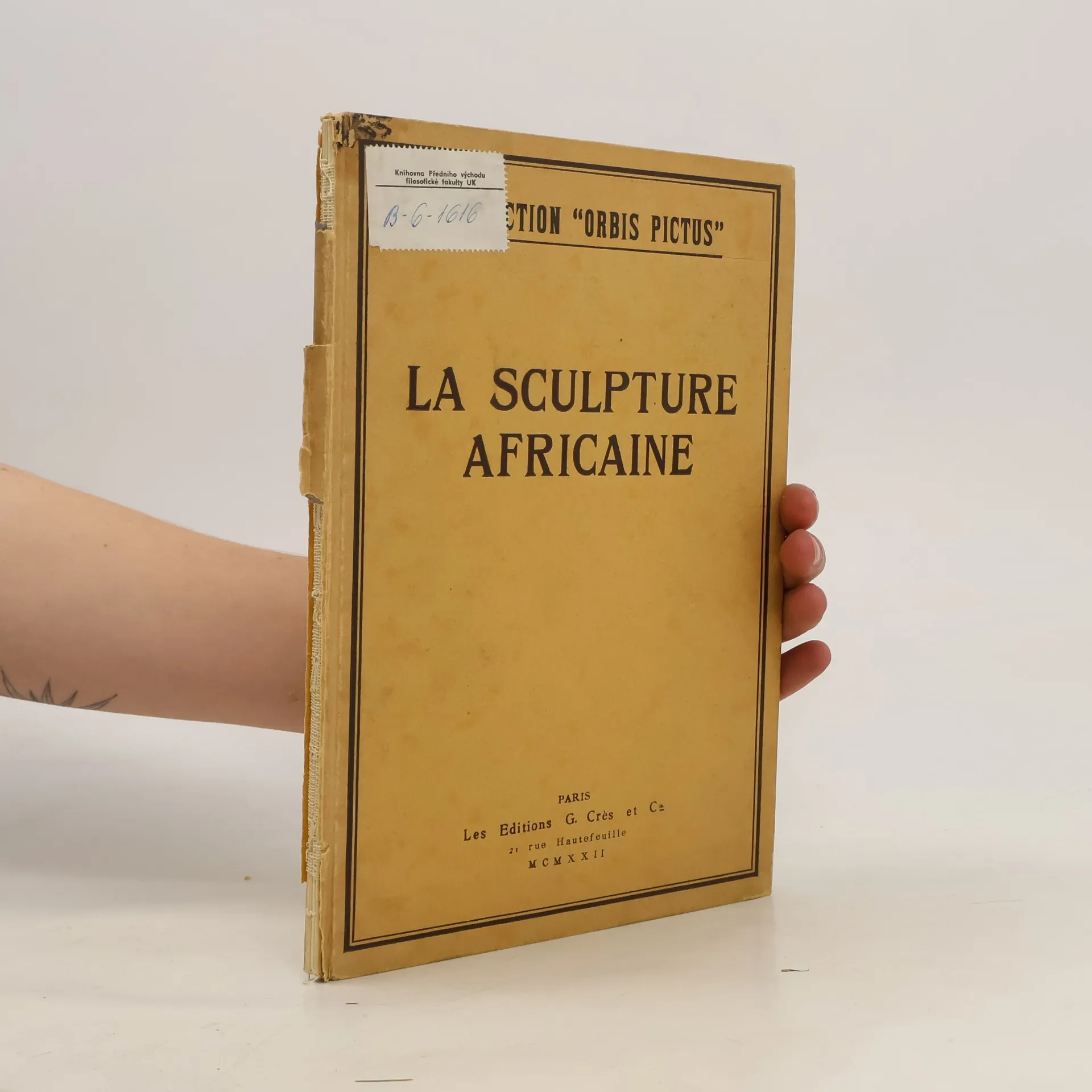
Das 1921 veröffentlichte Werk von Einstein bietet eine faszinierende Analyse der afrikanischen Plastik und wird durch zahlreiche Bilder ergänzt. Es beleuchtet die kulturellen und künstlerischen Aspekte dieser Kunstform und vermittelt Einsteins einzigartige Perspektive auf die ästhetischen Werte und Traditionen Afrikas. Durch die Kombination von Text und visuellen Elementen entsteht ein eindrucksvolles Dokument, das sowohl Kunstliebhaber als auch kulturhistorisch Interessierte anspricht.
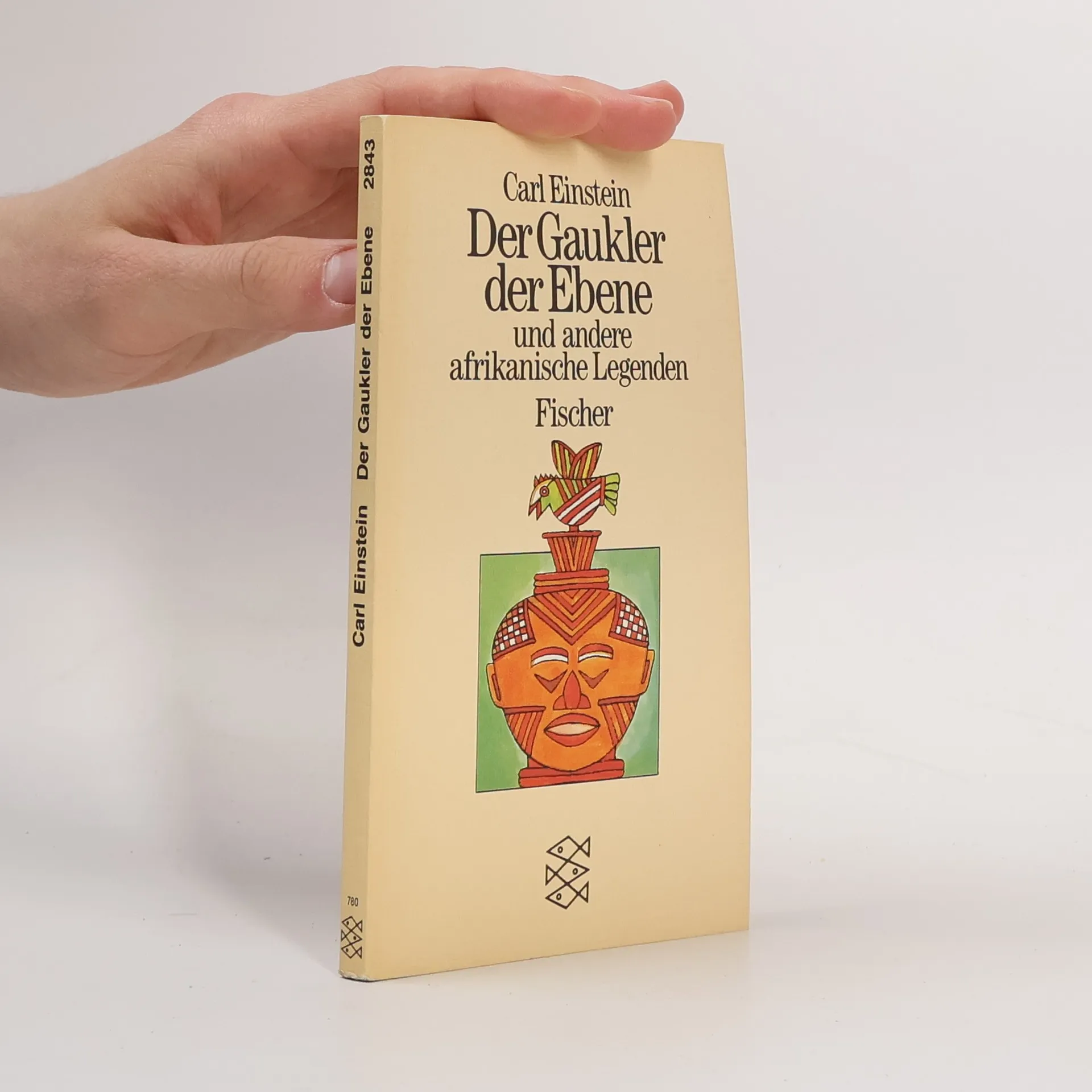
Die Erzählung thematisiert den Dialog zwischen Uwolowu und den Untergöttern über den Tod und die Auferstehung. Ein Huhn fordert ebenfalls das Recht auf Auferstehung, was Uwolowu jedoch ablehnt. Diese Interaktion verdeutlicht die fundamentalen Fragen des Lebens, des Sterbens und der Unsterblichkeit. Die Aussage des Huhns, dass es mit dem Sonnenaufgang kommt, symbolisiert Hoffnung und den Kreislauf des Lebens, während Uwolowus Weigerung die endgültige Natur des menschlichen Todes betont.
Das Verhältnis zwischen jüdischem Messianismus und anarchistischer Utopie ist trotz seiner zahlreichen Berührungspunkte durch eine spannungsreiche Verschiedenheit unterschiedlicher Positionen gekennzeichnet. Es reicht von radikaler Unvereinbarkeit wie bei Gershom Scholem und Gustav Landauer bis hin zu wechselseitiger Befruchtung und Erhellung wie im Fall von Ernst Bloch und Walter Benjamin. Eine mögliche Verbindung dieser Pole steht und fällt mit der Überwindung des traditionellen Gegensatzes zwischen Atheismus und Religion, Materialismus und Spiritualität, Nationalismus und Romantik. Michael Löwy konzentriert sich dabei auf eine Gruppe von deutsch-jüdischen Intellektuellen (u.a. Benjamin, Kafka, Rosenzweig, Buber, Scholem, Löwenthal, Landauer, Bloch, Lukács, Fromm), deren Beiträge zu diesem Thema bis heute weitgehend unabgegolten sind.
Théoricien majeur de l'art moderne, Carl Einstein fut aussi le découvreur de l'art africain, le premier à l'analyser sur le plan formel. Ce faisant, il modifia le regard posé par les Occidentaux sur ces objets en provenance d'Afrique et leur conféra un statut d'art à part entière, en phase avec les cubistes à la recherche de solutions de formulation de l'espace. Cet ouvrage a pour but d'offrir aux lecteurs tous les textes publiés par Carl Einstein sur les arts africains tant en allemand qu'en français, aussi bien en Allemagne qu'en France. Ont été traduits les deux célèbres ouvrages Negerplastik (1915) et Afrikanische Plastik (1921) ainsi que l'article «Exotische Kunst». Les autres écrits avaient été publiés en français dans les revues Documents (cofondée par Carl Einstein, Georges Bataille et Michel Leiris en 1929) et Cahiers d'art. Tous les textes sont ici accompagnés de leurs illustrations d'origine. Ils ont été traduits, annotés et présentés par des spécialistes de l'oeuvre de Carl Einstein et des arts de l'Afrique.
For the first time, Carl Einstein's three most significant texts on African art are compiled in this critical edition. "Negro Sculpture," published in 1915, is the pioneering theoretical work that elevates African art to the same status as other modern art movements. The 1920 essay "Afrikanische Plastik" presents the author's early reflections on the subject. Lastly, "À propos de l'Exposition de la Galerie Pigalle," originally in French, serves as a comprehensive survey of Einstein's ethnological insights. This edition, curated by Liliane Meffre, a noted researcher and translator of Einstein's work, brings together these key texts. "Negro Sculpture" is recognized as a dense and innovative essay that opens unexplored avenues, remaining a masterpiece of the 20th century and a manifesto for modern art, particularly cubism. Complementing this text is a scholarly investigation by Ezio Bassani and Jean-Louis Paudrat on the iconography of the original edition. An excerpt from "Afrikanische Plastik" summarizes Einstein's thoughts on African art, while "À propos de l'Exposition de la Galerie Pigalle," published in 1930, showcases the author's extensive ethnological knowledge.
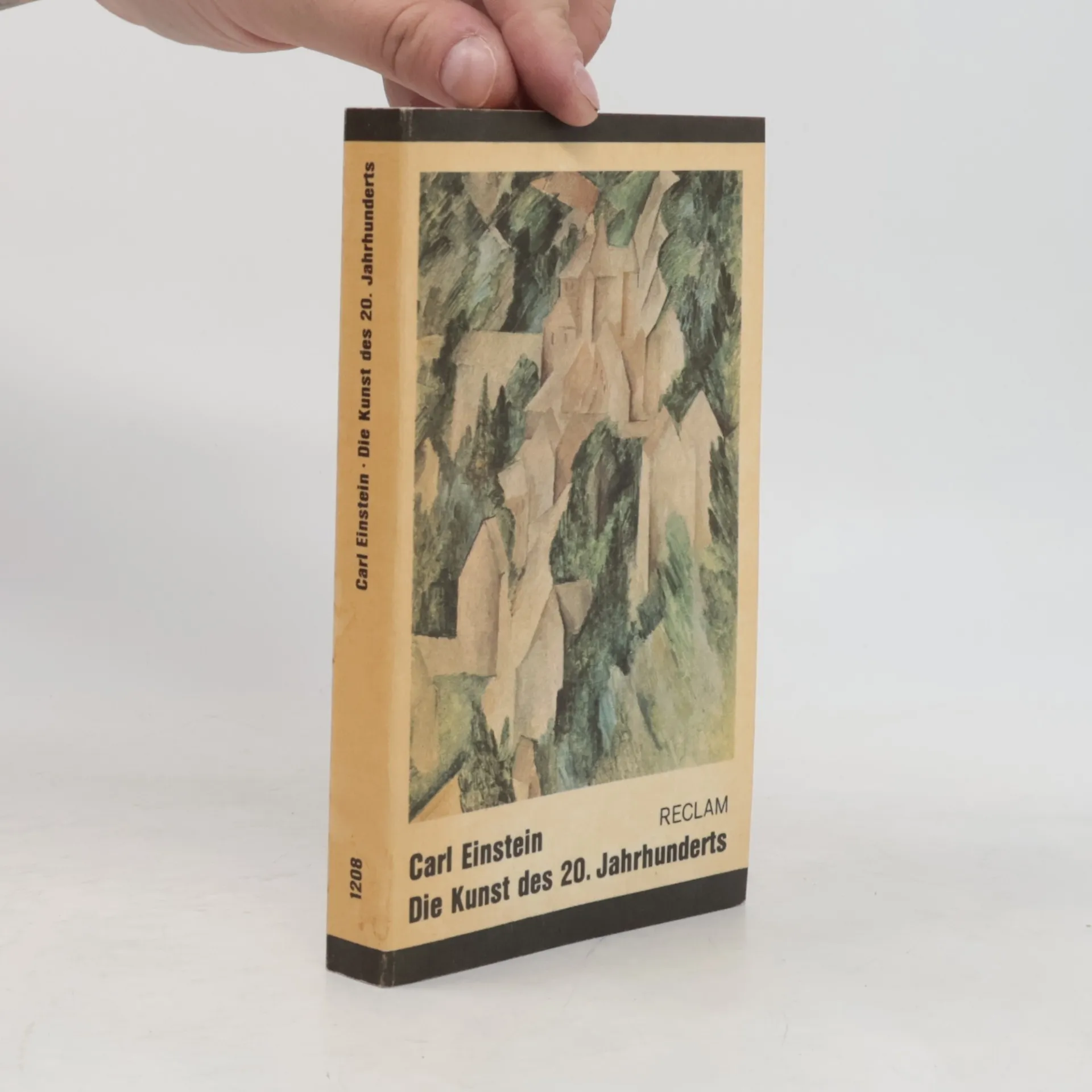
"Bilder sind keine Bibelots, sondern geistige Wirkungen." Carl Einstein, 1931. Inhalt u.a.: Beginn (Matisse, Derain, Modigliani, Kisling, Rousseau, Rouault, Utrillo); Kubismus (Picasso, Braque, Gris, Léger); Futurismus (Boccioni, Severini, Carra, de Chirico); Die Deutschen (Nolde, Brücke, Heckel, Pechstein, Schmidt-Rottluff, Kirchner, Feininger, Hofer, Modersohn-Becker, Marc, Macke, Kandinsky, Klee, Kokoschka, Grosz, Beckmann, Dix); Russen (Chagall, Russen nach der Revolution); Zur Plastik (Maillol, Haller, de Fiori, Lehmbruck, Brancussi, Barlach, Archipenko, Lipchitz, Laurens, Belling). Einstein hat mit Die Kunst des 20. Jahrhunderts "absolut Endgültiges über die Kunst unserer Zeit geschrieben." Daniel-Henry Kahnweiler. Carl Einstein (* 26. April 1885 in Neuwied; † 5. Juli 1940 bei Pau nahe der spanischen Grenze), bedeutender Kunsthistoriker und Schriftsteller, Grenzgänger zwischen Kunst, Literatur und Wissenschaft, durch seinen Lebensweg mit vielen Künstlern der Moderne eng vertraut.
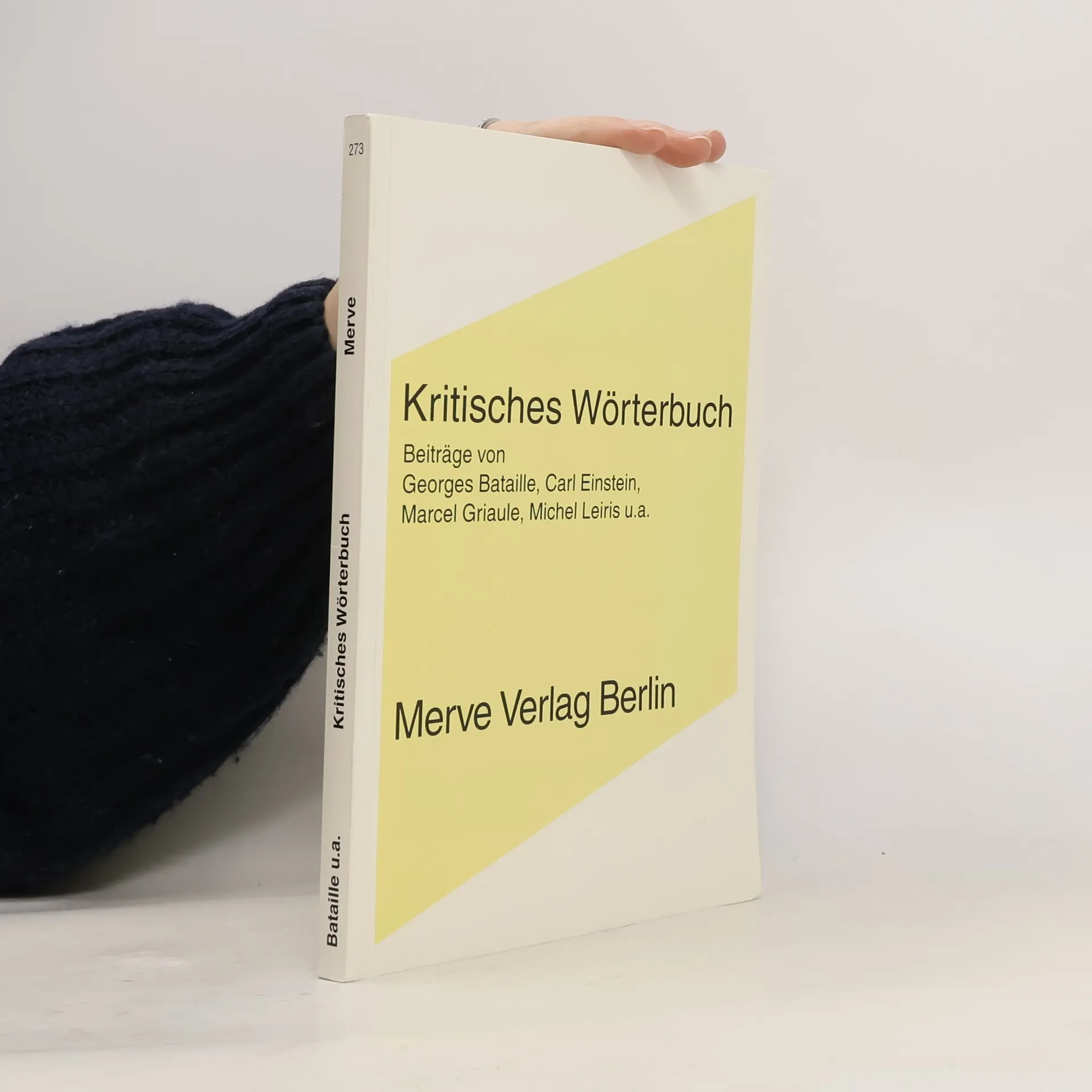
1929 gründete Georges Bataille die Zeitschrift 'Documents', die ein Experimentierfeld für künstlerische und wissenschaftliche Avantgarde war. Das "Kritische Wörterbuch" darin umfasst vielfältige Lemmata und betont, dass ein Wörterbuch den Fokus auf die Verrichtung der Wörter legen sollte, nicht nur auf ihren Sinn.