


This work treats the critical theory of religion of Max Horkheimer, Walter
Benjamin, Friedrich Pollock, Herbert Marcuse, Jurgen Habermas and other
critical theorists who tried to make sense out of the senseless war experience
by exploring the writings of Immanuel Kant and Karl Marx amongst others.
schovat popis
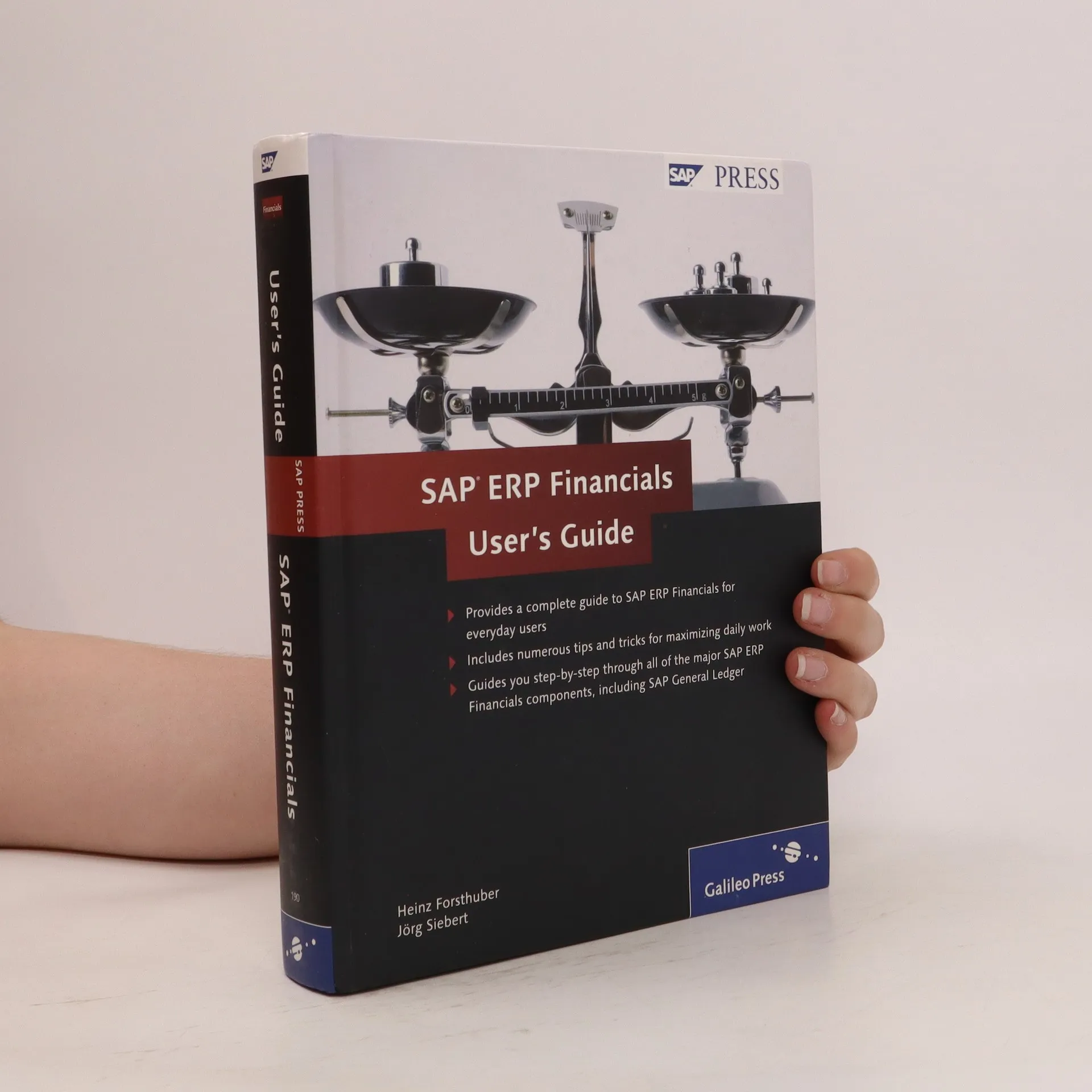
This book provides complete coverage of the SAP General Ledger, including all of the new features such as Document Splitting, Profit Center Accounting, parallel accounting, and Balanced Scorecard. It also includes a complete chapter on the SAP General Ledger's role in reporting for IFRS, including parallel valuation. A must-have for all finance professionals who have migrated or are migrating to the SAP General Ledger, this book is a resource that can be used in both daily work and at the implementation level.

This book focuses on the practical, day-to-day requirements of working with SAP ERP Financials (SAP FI). It guides you through the various Financial Accounting functions documents, account reports, special postings, automatic procedures, accounts receivable accounting, accounts payable accounting, general ledger accounting, closing operations, and asset accounting. Numerous tips and tricks designed to help maximize your daily work are included throughout. For all users of all SAP releases from SAP R/3 4.6 to SAP ERP 6.0.1. Comprehensive coverage of SAP FI Learn how to make the best use of SAP FI in your daily work with comprehensive coverage of SAP General Ledger and more.2. Tips and tricks for daily work Maximize your time with numerous tips and tricks designed to help you get the most out of the most common tasks, features and programs.3. Step-by-step walkthroughs Master even the most complex functions in SAP FI using step-by-step walkthroughs enhanced with screenshots and sample scenarios.4. Up-to-date for SAP ERP 6.0 Understand the new features in SAP FI and SAP Financial Supply Chain Management (FSCM).5. Helpful additional resources Find answers quickly in the appendices, which include menu paths, a full glossary, and a complete index.
Ein systematischer Ansatz zum Management der Führung
383 pages
14 hours of reading
Internationale Großkonzerne setzen zunehmend Führungssysteme ein, d. h. strukturale Einrichtungen, die die Führungskräfte bei ihrer Arbeit im Unternehmen unterstützen. Ziel ist, die Qualität der Führung zu verbessern. Jörg Siebert untersucht, welchen Beitrag diese Richtlinien, Anreizsysteme, Leitbilder, Routinen und Regelwerke zu Stabilität und Wandel leisten. Es wird deutlich, dass Führungssysteme sowohl stabilisieren und damit Ordnung stiften als auch den Wandel fördern und damit die Agilität einer Organisation steigern können. Entscheidend ist, beides in ausgewogener Weise zu realisieren. Auf der Basis der Ergebnisse einer Benchmarking-Untersuchung zur „Leadership Excellence“ in 37 internationalen Großunternehmen werden theoretische und praktische Aspekte aufgezeigt.