

More about the book
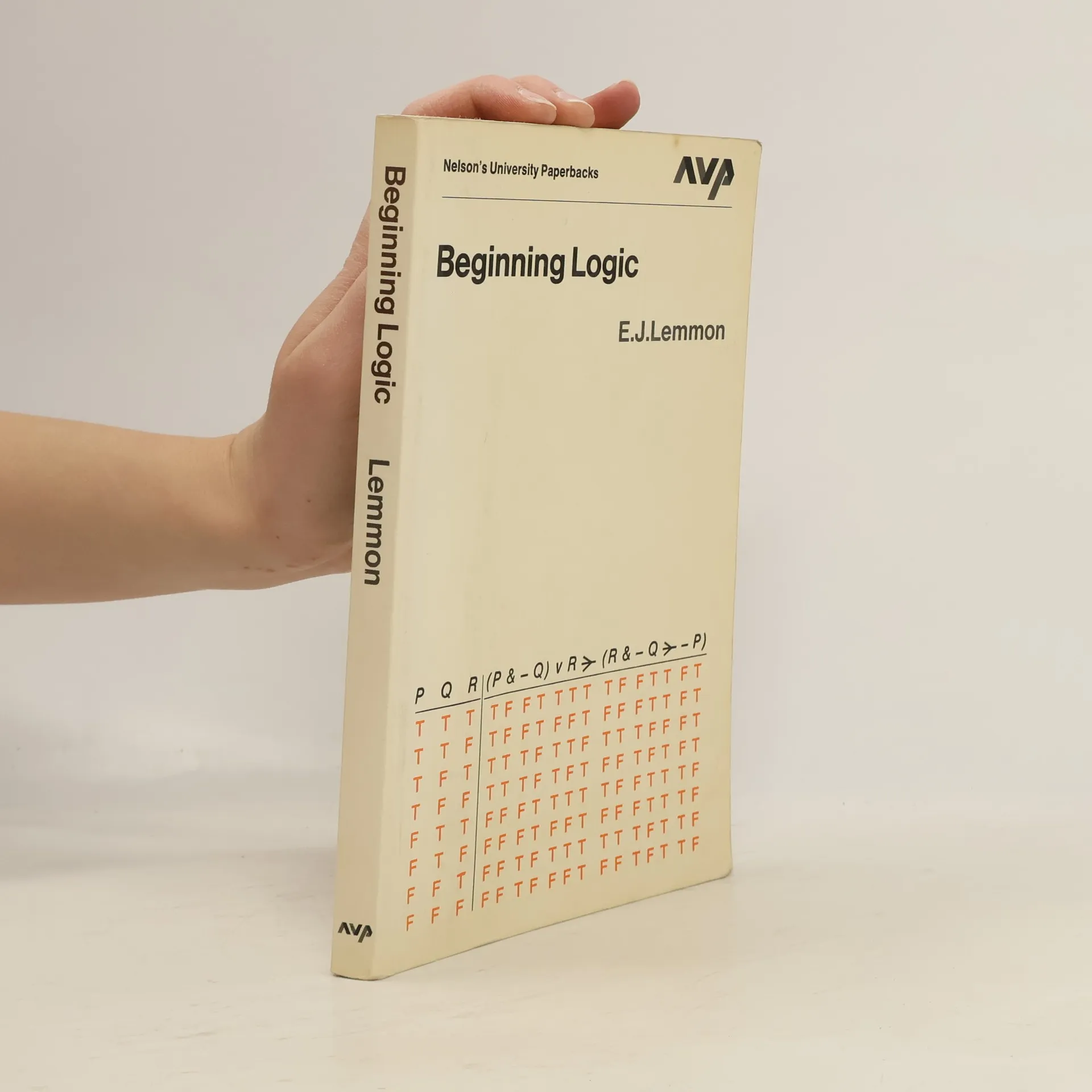
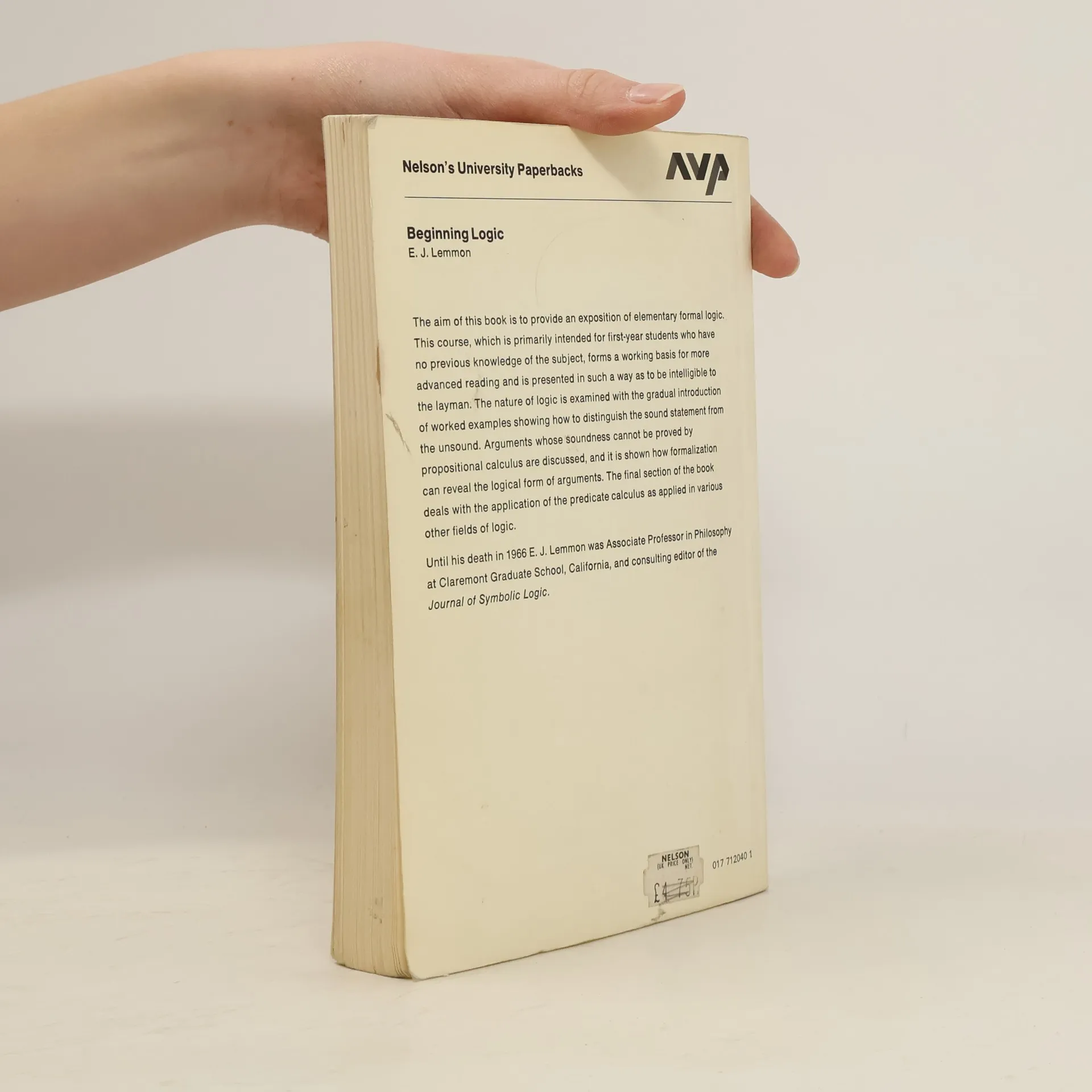
The aim of this book is to provide an exposition of elementary formal logic. The course, which is primarily intended for first-year students who have no previous knowledge of the subject, forms a working basis for more advanced reading and is presented in such a way as to be intelligible to the layman. The nature of logic is examined with the gradual introduction of worked samples showing how to distinguish the sound statement from the unsound. Arguments whose soundness cannot be proved by propositional calculus are discussed, and it is shown how formalization can reveal the logical form of arguments. The final section of the book deals with the application of the predicate calculus as applied in various other fields of logic.
Publication

Book purchase
Beginning Logic, E. J. Lemmon
- Language

- Released
- 1971
- Binding
- (Paperback)
Payment methods
We’re missing your review here.
- Title
- Beginning Logic
- Language
- English
- Authors
- E. J. Lemmon
- Publisher
- Nelson, Thomas Sons Ltd
- Released
- 1971
- Format
- Paperback
- Pages
- 225
- ISBN10
- 0177120401
- ISBN13
- 9780177120404
- Series
- Rating
- 3.8 out of 5
- Description
- The aim of this book is to provide an exposition of elementary formal logic. The course, which is primarily intended for first-year students who have no previous knowledge of the subject, forms a working basis for more advanced reading and is presented in such a way as to be intelligible to the layman. The nature of logic is examined with the gradual introduction of worked samples showing how to distinguish the sound statement from the unsound. Arguments whose soundness cannot be proved by propositional calculus are discussed, and it is shown how formalization can reveal the logical form of arguments. The final section of the book deals with the application of the predicate calculus as applied in various other fields of logic.