

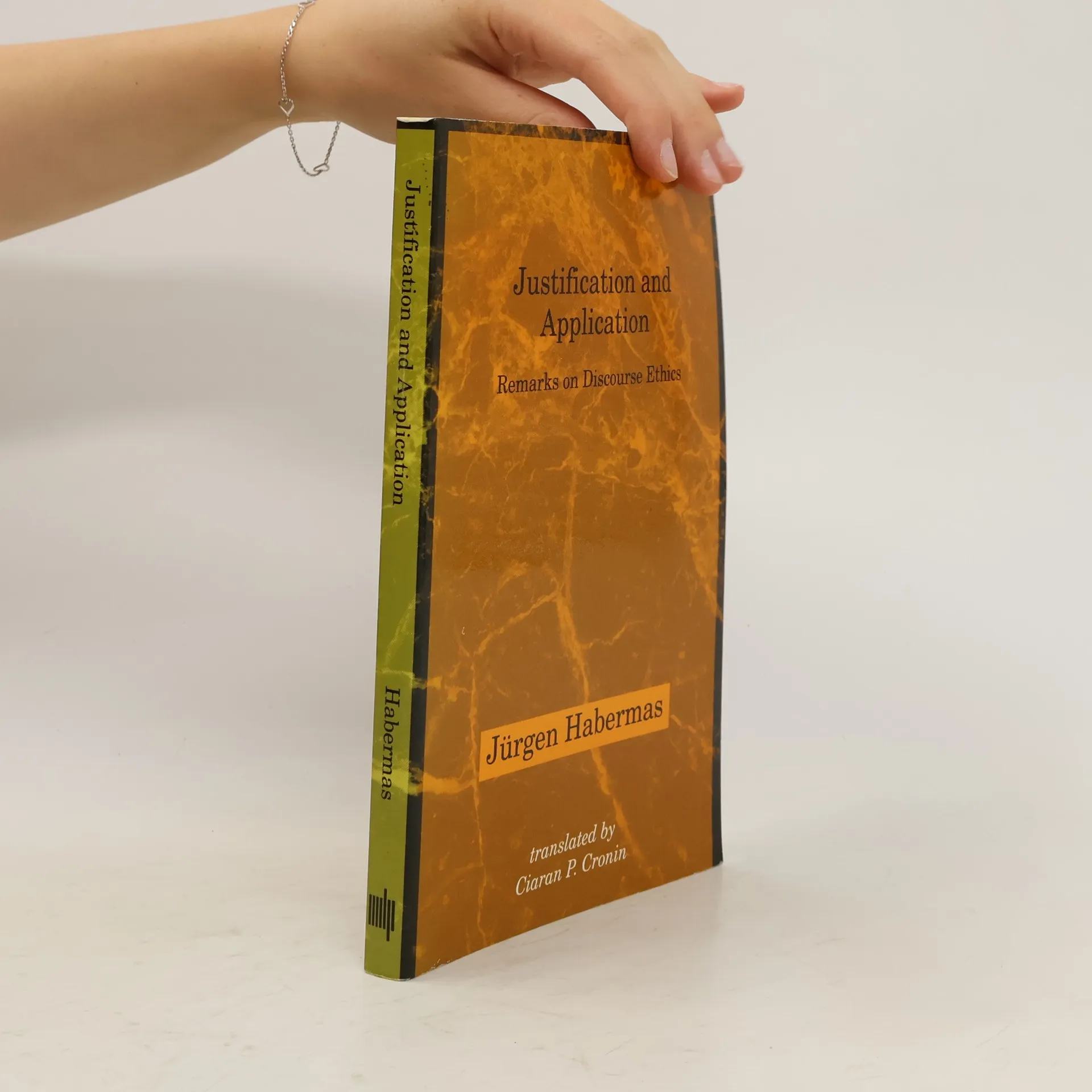


More about the book
This collection features four essays and an interview that present Habermas's latest contributions to ethical theory, building on his previous work on discourse ethics. In response to critiques from contemporary neo-Aristotelians, Habermas asserts the significance of discourse ethics in modern moral philosophy, refining key concepts of his theory, particularly regarding practical reason, application, and motivation. The first essay provides a thorough analysis of practical rationality, distinguishing between pragmatic, ethical, and moral questions, as well as different forms of volition and practical discourse. The core of the collection is a robust defense of discourse ethics, including critiques of major competing theories from thinkers like John Rawls, Bernard Williams, and Alasdair MacIntyre. Subsequent essays uphold the universalist moral theory against neo-Aristotelian ethics and Horkheimer's skepticism toward reason, which led to a religiously inspired ethic of compassion. The collection concludes with an interview where Habermas discusses the origins of discourse ethics, its controversial aspects, and its connections to communicative action theory. Jurgen Habermas is a Professor of Philosophy at the University of Frankfurt.



Book purchase
Justification and Application, Jürgen Habermas
- Language

- Released
- 1994
- Binding
- (Paperback)
Payment methods
We’re missing your review here.
- Title
- Justification and Application
- Language
- English
- Authors
- Jürgen Habermas
- Publisher
- MIT Press
- Released
- 1994
- Format
- Paperback
- Pages
- 229
- ISBN10
- 0262581361
- ISBN13
- 9780262581363
- Series
- Rating
- 3.9 out of 5
- Description
- This collection features four essays and an interview that present Habermas's latest contributions to ethical theory, building on his previous work on discourse ethics. In response to critiques from contemporary neo-Aristotelians, Habermas asserts the significance of discourse ethics in modern moral philosophy, refining key concepts of his theory, particularly regarding practical reason, application, and motivation. The first essay provides a thorough analysis of practical rationality, distinguishing between pragmatic, ethical, and moral questions, as well as different forms of volition and practical discourse. The core of the collection is a robust defense of discourse ethics, including critiques of major competing theories from thinkers like John Rawls, Bernard Williams, and Alasdair MacIntyre. Subsequent essays uphold the universalist moral theory against neo-Aristotelian ethics and Horkheimer's skepticism toward reason, which led to a religiously inspired ethic of compassion. The collection concludes with an interview where Habermas discusses the origins of discourse ethics, its controversial aspects, and its connections to communicative action theory. Jurgen Habermas is a Professor of Philosophy at the University of Frankfurt.