



Book rating
More about the book
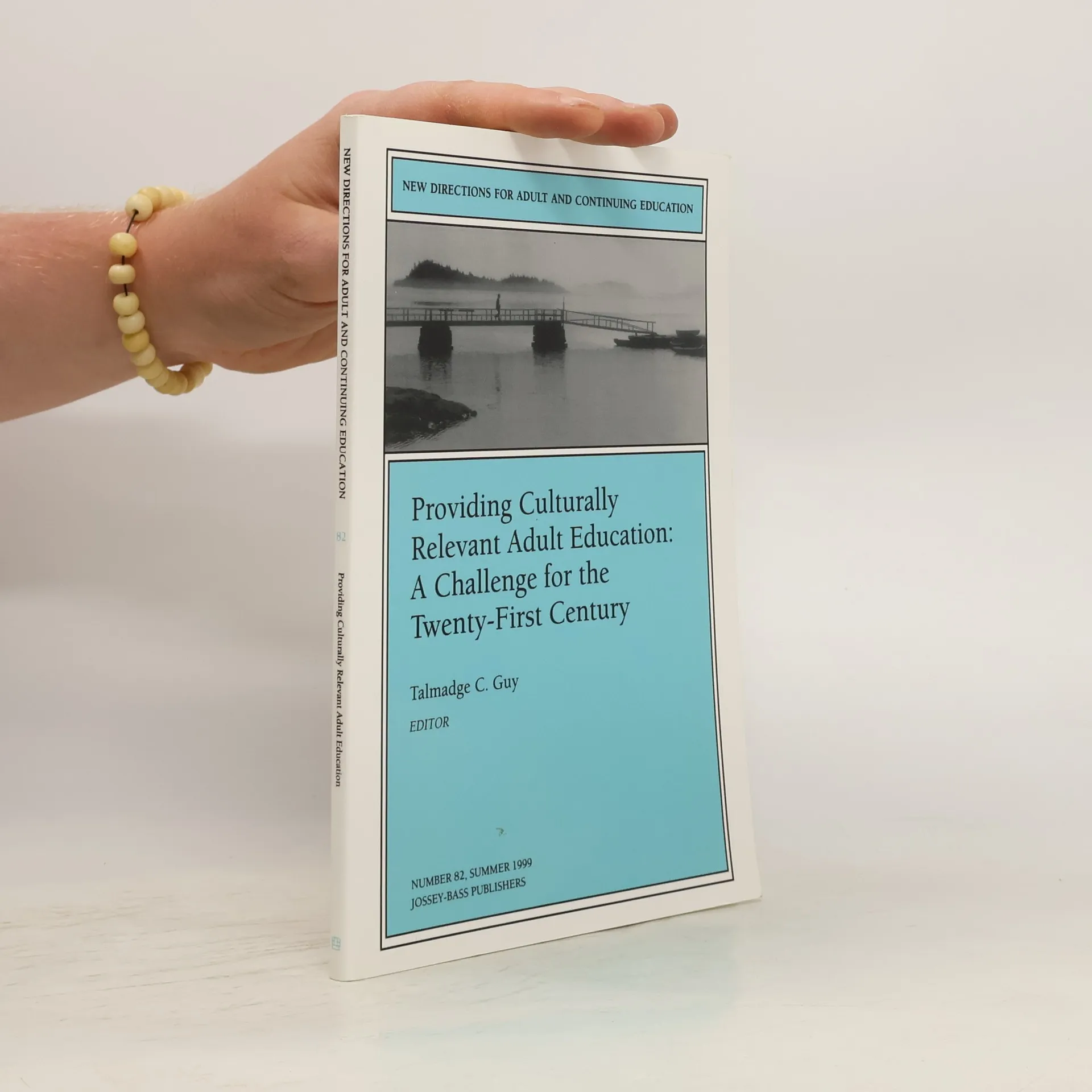
Traditional adult learning theory has not accounted for the many cultural differences manifested in adult education programs and in ethnic and racial communities. This issue of New Directions for Adult and Continuing Education offers more inclusive theories that focus on how learners construct meaning in a social and cultural context. The volume identifies ways that adult educators can work more effectively with racially, ethnically, and linguistically marginalized learners, and explores how adult education can be an effective tool for empowering marginalized learners to take control of their circumstances. The authors--who share the same cultural backgrounds as the populations they serve--provide ideas for enhancing the learning experiences of African Americans, Hispanic Americans, and Native Americans in adult education programs. This is the 82nd issue of the quarterly journal New Directions for Adult and Continuing Education.
Book purchase
Providing Culturally Relevant Adult Education. A Challenge for the Twenty-First Century, Talmadge C. Guy
- Language

- Released
- 1999
- Binding
- (Paperback)
Payment methods
We’re missing your review here.
- Title
- Providing Culturally Relevant Adult Education. A Challenge for the Twenty-First Century
- Language
- English
- Authors
- Talmadge C. Guy
- Publisher
- Jossey-Bass
- Released
- 1999
- Format
- Paperback
- Pages
- 112
- ISBN10
- 0787911674
- ISBN13
- 9780787911676
- Series
- Categories
- Tags
- World Literature
- Rating
- 3 out of 5
- Description
- Traditional adult learning theory has not accounted for the many cultural differences manifested in adult education programs and in ethnic and racial communities. This issue of New Directions for Adult and Continuing Education offers more inclusive theories that focus on how learners construct meaning in a social and cultural context. The volume identifies ways that adult educators can work more effectively with racially, ethnically, and linguistically marginalized learners, and explores how adult education can be an effective tool for empowering marginalized learners to take control of their circumstances. The authors--who share the same cultural backgrounds as the populations they serve--provide ideas for enhancing the learning experiences of African Americans, Hispanic Americans, and Native Americans in adult education programs. This is the 82nd issue of the quarterly journal New Directions for Adult and Continuing Education.