





More about the book
Eminent contributors examine the current and future landscape of cosmopolitanism and its interplay with nationalism. Nationalism and the nation-state are facing challenges from ethnic strife, religious fundamentalism, global capitalism, and significant population movements across cultures and cyberspace. In response, a revitalized cosmopolitanism has emerged as a compelling political alternative. This collection features a distinguished group of scholars and political theorists who provide a thorough analysis of this project, its inclusive claims, and its complex relationship with nationalism. While traditional cosmopolitanism has been critiqued for its perceived detachment from the obligations of nation-bound lives, the essays reveal that contemporary cosmopolitanism is rooted in specific cultural, historical, and political contexts. The contributors investigate the possibility of a feasible cosmopolitanism that may not only coexist with but potentially reshape nationalism, which warrants reexamination rather than dismissal. This intellectually stimulating and interdisciplinary volume offers a range of critical perspectives, evaluating both the aspirational goals and the current realities of the evolving cosmopolitical movement.
Book purchase
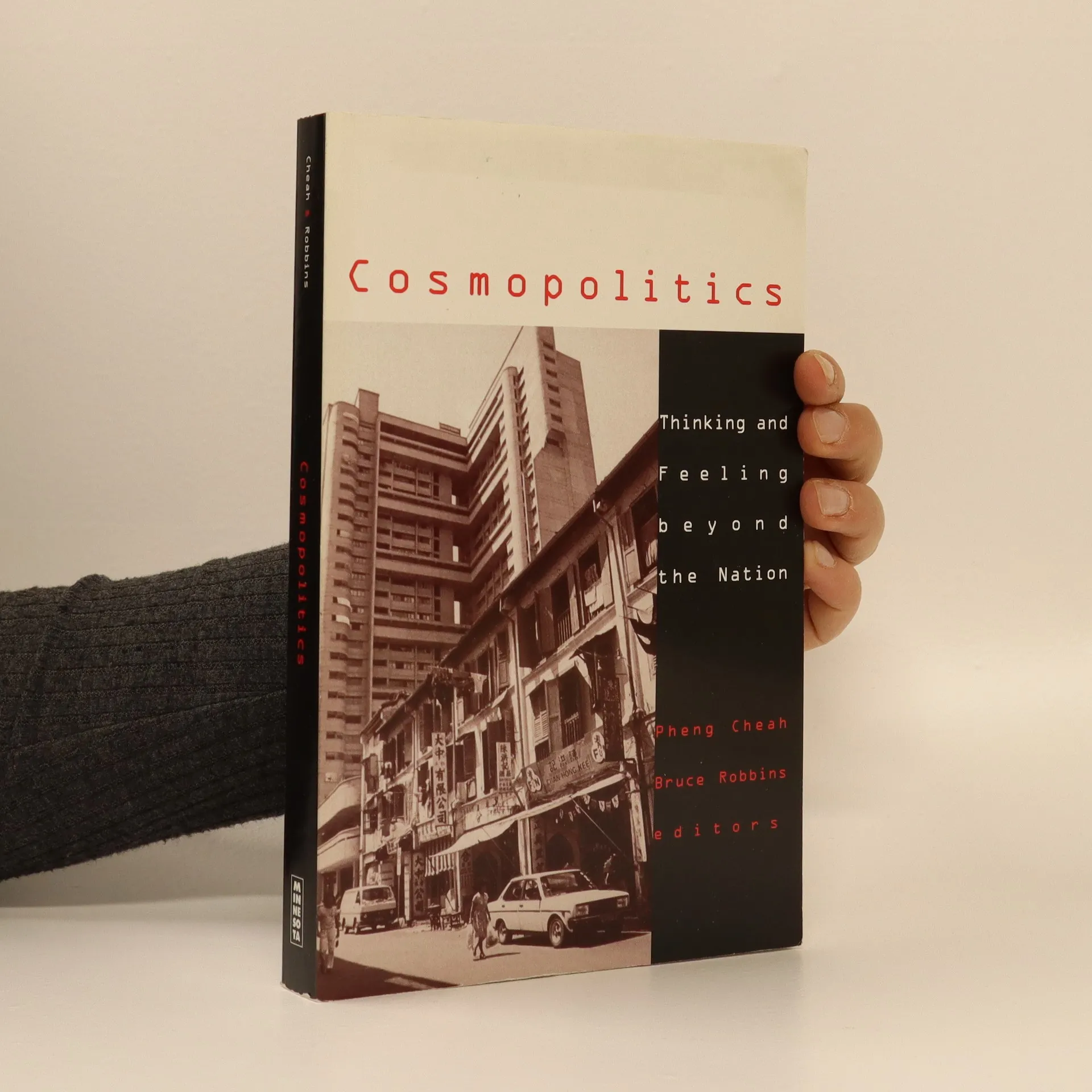
Cosmopolitics: Thinking and feeling beyond the nation, Pheng Cheah, Bruce Robbins
- Language

- Released
- 1998
- Binding
- (Hardcover)
Payment methods
We’re missing your review here.
- Title
- Cosmopolitics: Thinking and feeling beyond the nation
- Language
- English
- Authors
- Pheng Cheah, Bruce Robbins
- Publisher
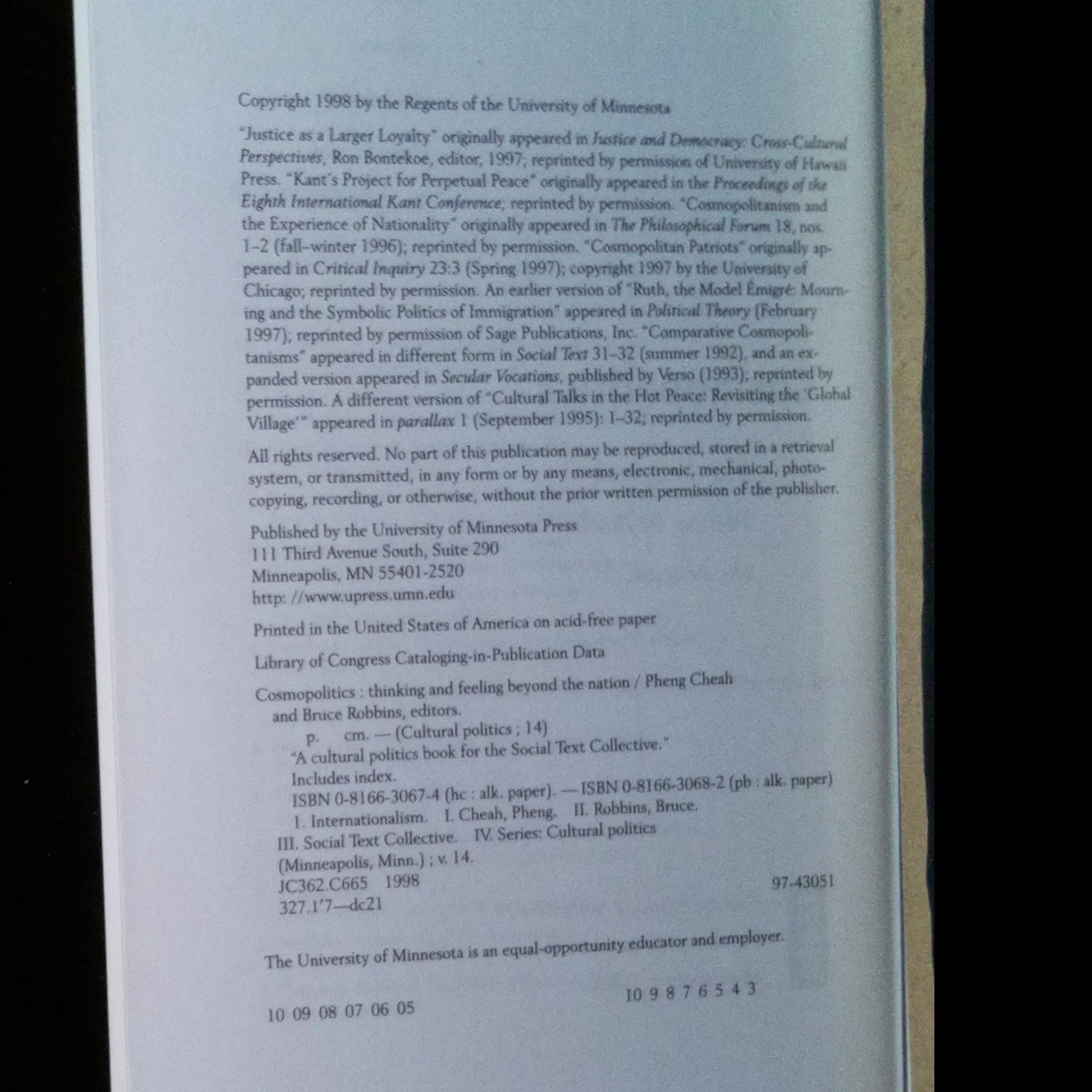
- University of Minnesota Press
- Released
- 1998
- Format
- Hardcover
- Pages
- 380
- ISBN10
- 0816630682
- ISBN13
- 9780816630684
- Series
- Collection
- Cultural politics
- Tags
- Criticism
- Rating
- 3.85 out of 5
- Description
- Eminent contributors examine the current and future landscape of cosmopolitanism and its interplay with nationalism. Nationalism and the nation-state are facing challenges from ethnic strife, religious fundamentalism, global capitalism, and significant population movements across cultures and cyberspace. In response, a revitalized cosmopolitanism has emerged as a compelling political alternative. This collection features a distinguished group of scholars and political theorists who provide a thorough analysis of this project, its inclusive claims, and its complex relationship with nationalism. While traditional cosmopolitanism has been critiqued for its perceived detachment from the obligations of nation-bound lives, the essays reveal that contemporary cosmopolitanism is rooted in specific cultural, historical, and political contexts. The contributors investigate the possibility of a feasible cosmopolitanism that may not only coexist with but potentially reshape nationalism, which warrants reexamination rather than dismissal. This intellectually stimulating and interdisciplinary volume offers a range of critical perspectives, evaluating both the aspirational goals and the current realities of the evolving cosmopolitical movement.