

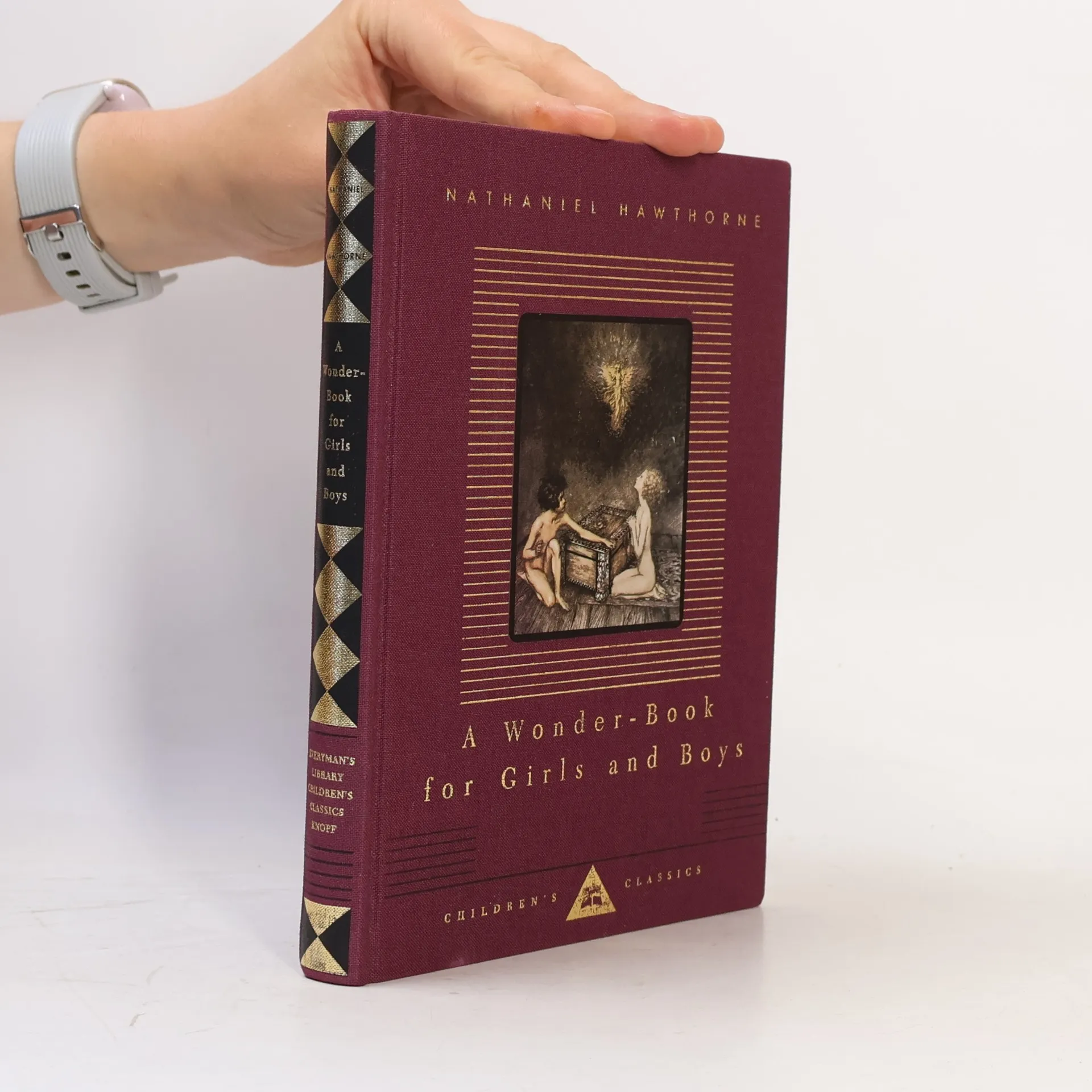
Everyman's Library Children's Classics: A Wonder-Book for Girls and Boys
Authors
Book rating
More about the book
Six legends of Greek mythology, retold for children by Nathaniel Hawthorne. Included are The Gorgon’s Head, The Golden Touch, The Paradise of Children, The Three Golden Apples, The Miraculous Pitcher, and The Chimaera. In 1838, Hawthorne suggested to Henry Wadsworth Longfellow that they collaborate on a story for children based on the legend of the Pandora’s Box, but this never materialized. He wrote A Wonder Book between April and July 1851, adapting six legends most freely from Charles Anton’s A Classical Dictionary (1842). He set out deliberately to “modernize” the stories, freeing them from what he called “cold moonshine” and using a romantic, readable style that was criticized by adults but proved universally popular with children. With full-color illustrations throughout by Arthur Rackham.


Book purchase
Everyman's Library Children's Classics: A Wonder-Book for Girls and Boys, Nathaniel Hawthorne
- Language

- Released
- 1994
- Binding
- (Hardcover)
Payment methods
We’re missing your review here.
- Title
- Everyman's Library Children's Classics: A Wonder-Book for Girls and Boys
- Language
- English
- Authors
- Nathaniel Hawthorne
- Publisher
- Everyman's Library
- Released
- 1994
- Format
- Hardcover
- Pages
- 270
- ISBN10
- 067943643X
- ISBN13
- 9780679436430
- Series
- Tags
- Short Stories, Mythology
- Rating
- 3.75 out of 5
- Description
- Six legends of Greek mythology, retold for children by Nathaniel Hawthorne. Included are The Gorgon’s Head, The Golden Touch, The Paradise of Children, The Three Golden Apples, The Miraculous Pitcher, and The Chimaera. In 1838, Hawthorne suggested to Henry Wadsworth Longfellow that they collaborate on a story for children based on the legend of the Pandora’s Box, but this never materialized. He wrote A Wonder Book between April and July 1851, adapting six legends most freely from Charles Anton’s A Classical Dictionary (1842). He set out deliberately to “modernize” the stories, freeing them from what he called “cold moonshine” and using a romantic, readable style that was criticized by adults but proved universally popular with children. With full-color illustrations throughout by Arthur Rackham.