





More about the book
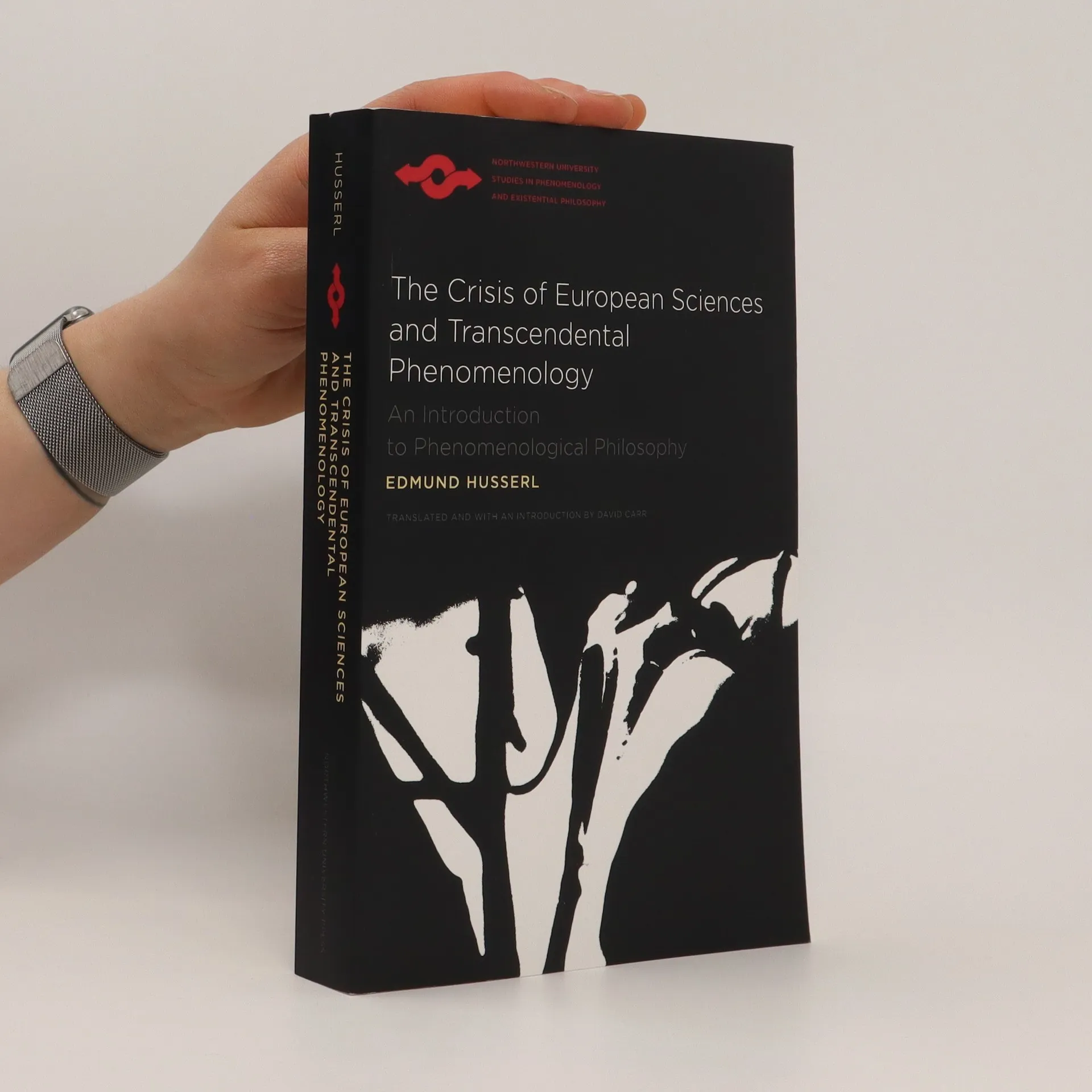
The Crisis of European Sciences and Transcendental Phenomenology, Husserl's last great work, is important both for its content and for the influence it has had on other philosophers. In this book, which remained unfinished at his death, Husserl attempts to forge a union between phenomenology and existentialism. Husserl provides not only a history of philosophy but a philosophy of history. As he says in Part I, "The genuine spiritual struggles of European humanity as such take the form of struggles between the philosophies, that is, between the skeptical philosophies--or nonphilosophies, which retain the word but not the task--and the actual and still vital philosophies. But the vitality of the latter consists in the fact that they are struggling for their true and genuine meaning and thus for the meaning of a genuine humanity."


Book purchase
The Crisis of European Sciences and Transcendental Phenomenology, Edmund Husserl
- Language

- Released
- 1970
- Binding
- (Paperback)
Payment methods
We’re missing your review here.
- Title
- The Crisis of European Sciences and Transcendental Phenomenology
- Language
- English
- Authors
- Edmund Husserl
- Publisher
- Northwestern University Press
- Released
- 1970
- Format
- Paperback
- Pages
- 405
- ISBN10
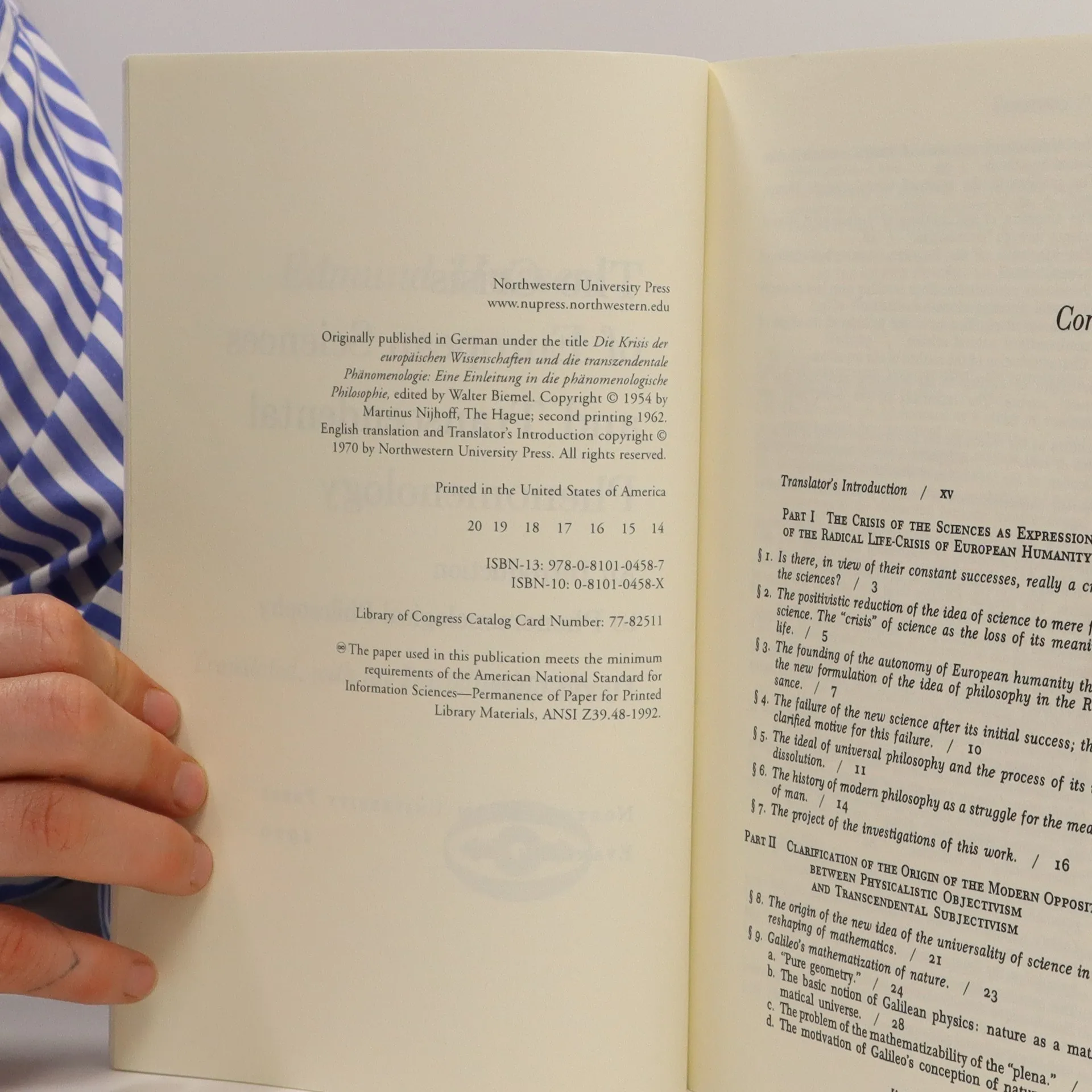
- 081010458x
- ISBN13
- 9780810104587
- Series
- Categories
- Tags
- Psychological Topics, Philosophical Topics, German Literature, Science, 20th century, History of Science, Methodology, Philosophy of Science, Phenomenology, Gnoseology, Epistemology, Science Critically
- First published
- 1936
- Original title
- Krisis der europäischen Wissenschaften und die transzendentale Phänomenologie
- Rating
- 4 out of 5
- Description
- The Crisis of European Sciences and Transcendental Phenomenology, Husserl's last great work, is important both for its content and for the influence it has had on other philosophers. In this book, which remained unfinished at his death, Husserl attempts to forge a union between phenomenology and existentialism. Husserl provides not only a history of philosophy but a philosophy of history. As he says in Part I, "The genuine spiritual struggles of European humanity as such take the form of struggles between the philosophies, that is, between the skeptical philosophies--or nonphilosophies, which retain the word but not the task--and the actual and still vital philosophies. But the vitality of the latter consists in the fact that they are struggling for their true and genuine meaning and thus for the meaning of a genuine humanity."