



More about the book
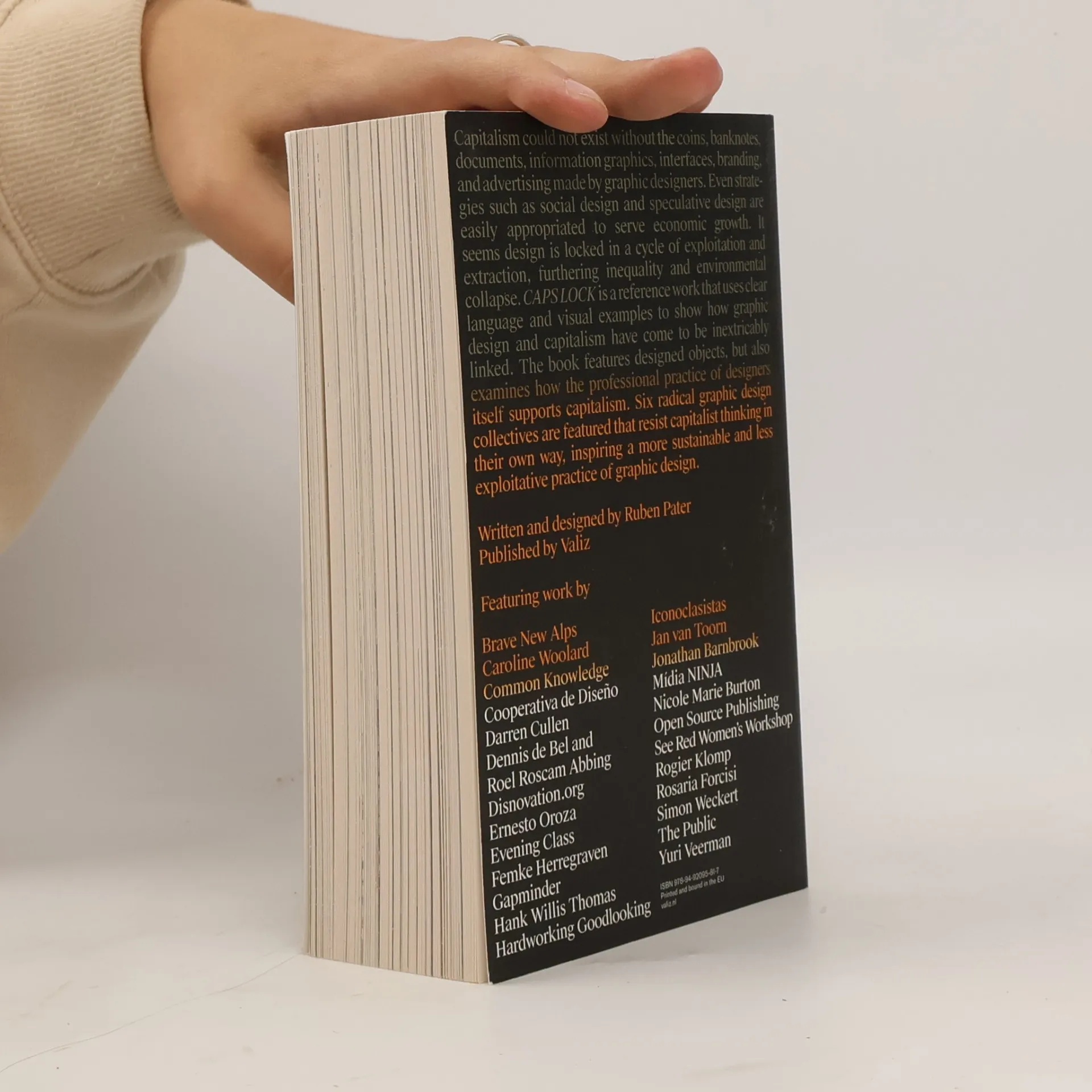
Capitalism could not exist without the coins, banknotes, documents, information graphics, interfaces, branding, and advertisements made by graphic designers. Even anti-consumerist strategies such as social design and speculative design are appropriated to serve economic growth. It seems design is locked in a cycle of exploitation and extraction, furthering inequality and environmental collapse. CAPS LOCK uses clear language and visual examples to show how graphic design and capitalism are inextricably linked. The book features designed objects and also examines how the study, work, and professional practice of designers support the market economy. Six radical design cooperatives are featured that resist capitalist thinking in their own way, hoping to inspire a more socially aware graphic design.
Book purchase
Caps Lock: How Capitalism Took Hold of Graphic Design, and How to Escape from It, Ruben Pater
- Language

- Released
- 2021
- Binding
- (Paperback)
Payment methods
We’re missing your review here.
- Title
- Caps Lock: How Capitalism Took Hold of Graphic Design, and How to Escape from It
- Language
- English
- Authors
- Ruben Pater
- Publisher
- VALIZ
- Released
- 2021
- Format
- Paperback
- Pages
- 528
- ISBN10
- 9492095815
- ISBN13
- 9789492095817
- Series
- Categories
- Tags
- Historical Themes, Business, Art, Politics
- Rating
- 4.2 out of 5
- Description
- Capitalism could not exist without the coins, banknotes, documents, information graphics, interfaces, branding, and advertisements made by graphic designers. Even anti-consumerist strategies such as social design and speculative design are appropriated to serve economic growth. It seems design is locked in a cycle of exploitation and extraction, furthering inequality and environmental collapse. CAPS LOCK uses clear language and visual examples to show how graphic design and capitalism are inextricably linked. The book features designed objects and also examines how the study, work, and professional practice of designers support the market economy. Six radical design cooperatives are featured that resist capitalist thinking in their own way, hoping to inspire a more socially aware graphic design.