

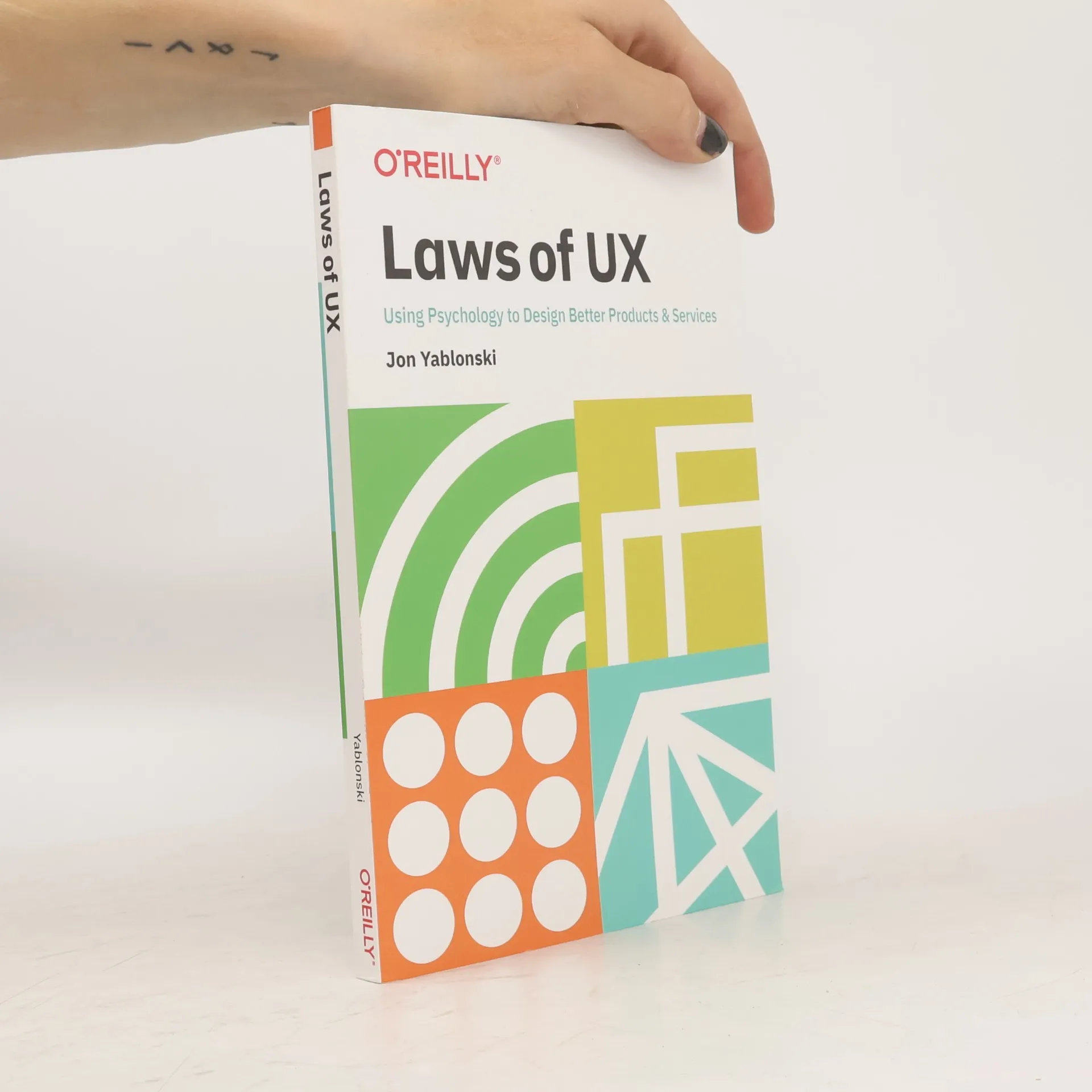

More about the book
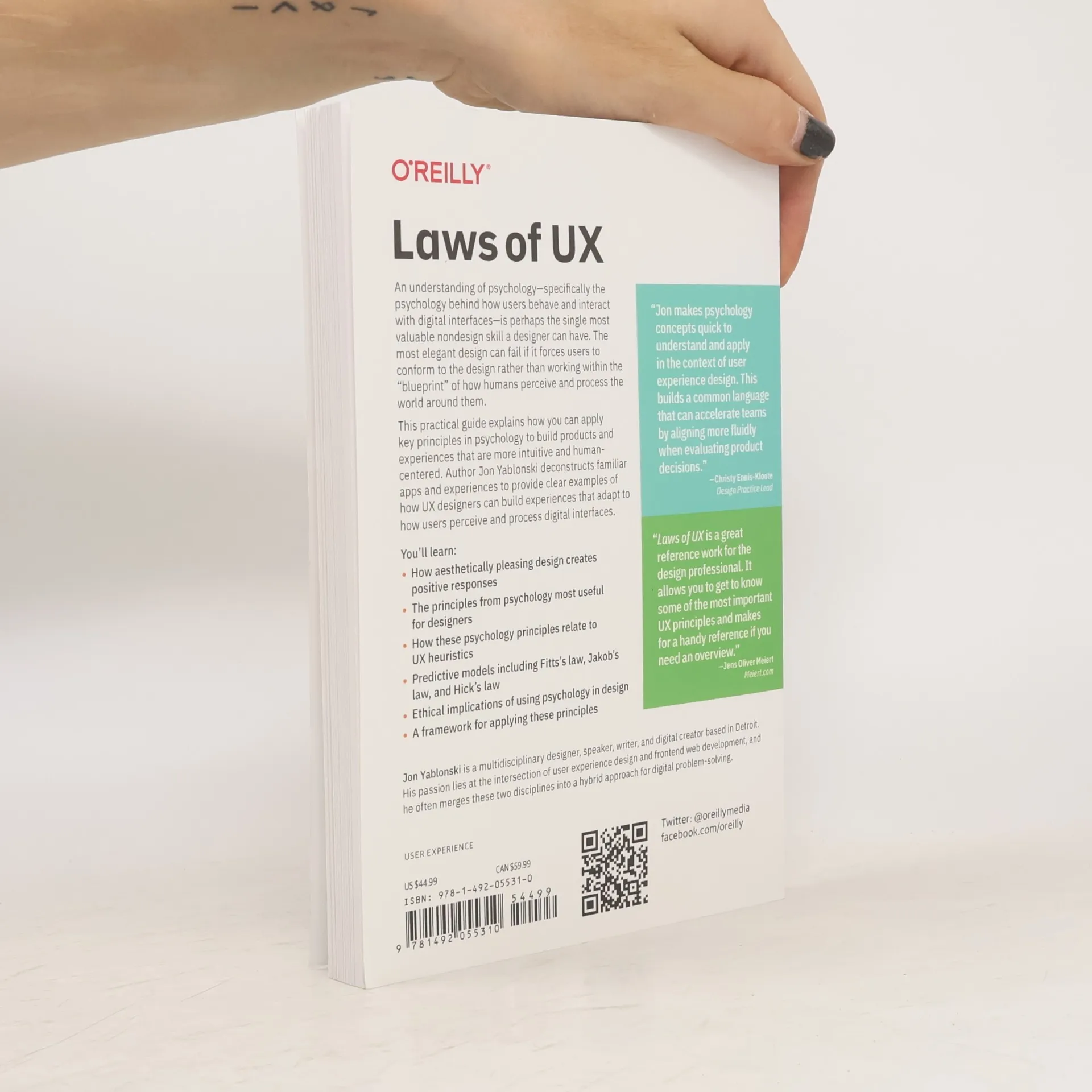
An understanding of psychology—specifically the psychology behind how users behave and interact with digital interfaces—is perhaps the single most valuable nondesign skill a designer can have. The most elegant design can fail if it forces users to conform to the design rather than working within the "blueprint" of how humans perceive and process the world around them. This practical guide explains how you can apply key principles in psychology to build products and experiences that are more intuitive and human-centered. Author Jon Yablonski deconstructs familiar apps and experiences to provide clear examples of how UX designers can build experiences that adapt to how users perceive and process digital interfaces. You’ll .

Publication

Book purchase
Laws of UX, Jon Yablonski
- Language

- Released
- 2020
- Binding
- (Paperback)
Payment methods
We’re missing your review here.
- Title
- Laws of UX
- Subtitle
- Using Psychology to Design Better Products & Services
- Language
- English
- Authors
- Jon Yablonski
- Publisher
- O'Reilly Media
- Released
- 2020
- Format
- Paperback
- Pages
- 150
- ISBN10
- 149205531X
- ISBN13
- 9781492055310
- Series
- Rating
- 4.4 out of 5
- Description
- An understanding of psychology—specifically the psychology behind how users behave and interact with digital interfaces—is perhaps the single most valuable nondesign skill a designer can have. The most elegant design can fail if it forces users to conform to the design rather than working within the "blueprint" of how humans perceive and process the world around them. This practical guide explains how you can apply key principles in psychology to build products and experiences that are more intuitive and human-centered. Author Jon Yablonski deconstructs familiar apps and experiences to provide clear examples of how UX designers can build experiences that adapt to how users perceive and process digital interfaces. You’ll .