



More about the book
The 1930s were a time of growing tension for the smaller states of Eastern Europe. Since the end of the First World War they had enjoyed an independence which most of them had not known for centuries, but this was now threatened by the growing power of Nazi Germany and Soviet Russia. Instead of combining for self defence, they were bitterly divided. The Munich crisis of 1938, which served as the prelude to World War II, showed how little reliance could be placed on the Western democracies, whose power to intervene militarily in Eastern Europe was negligible. In effect this left the smaller East European states with little alternative but to become clients of either Germany or Russia.
Book purchase
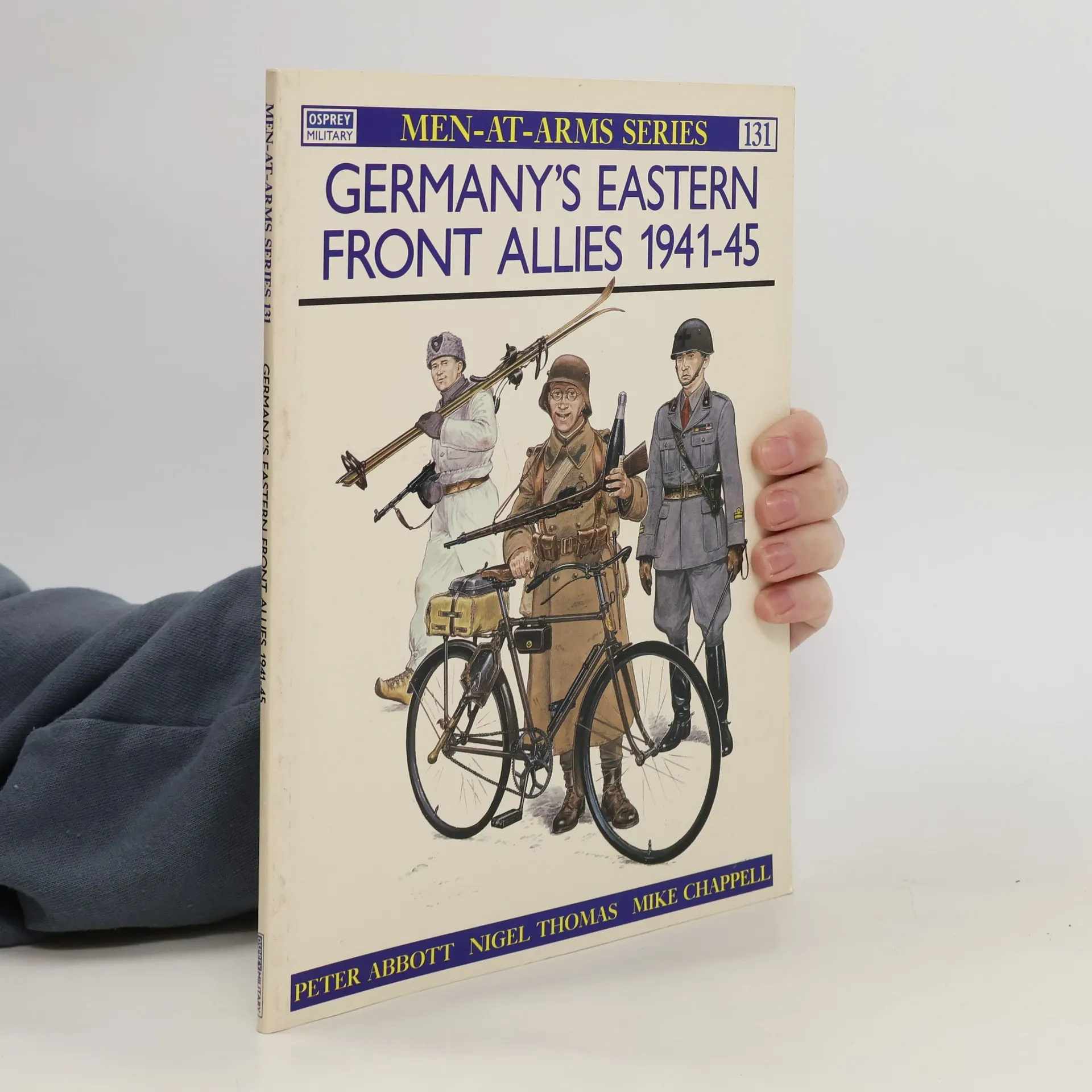
Germany's Eastern Front Allies 1941–45, Nigel Thomas, Peter Abbott
- Language

- Released
- 1982
- Binding
- (Paperback)
Payment methods
We’re missing your review here.
- Title
- Germany's Eastern Front Allies 1941–45
- Language
- English
- Authors
- Nigel Thomas, Peter Abbott
- Publisher
- Osprey Publishing
- Released
- 1982
- Format
- Paperback
- Pages
- 48
- ISBN10
- 0850454751
- ISBN13
- 9780850454758
- Series
- Rating
- 3.5 out of 5
- Description
- The 1930s were a time of growing tension for the smaller states of Eastern Europe. Since the end of the First World War they had enjoyed an independence which most of them had not known for centuries, but this was now threatened by the growing power of Nazi Germany and Soviet Russia. Instead of combining for self defence, they were bitterly divided. The Munich crisis of 1938, which served as the prelude to World War II, showed how little reliance could be placed on the Western democracies, whose power to intervene militarily in Eastern Europe was negligible. In effect this left the smaller East European states with little alternative but to become clients of either Germany or Russia.