

Series
- The Red Wheel1 of 2
Parameters
- 622 pages
- 22 hours of reading
More about the book
The author conceived the general concept of this novel in 1936, viewing it as the chief artistic design of his life. He considers his previous works minor in comparison, shaped by the peculiarities of his life story. The first part, set in August 1914, coincides with the outbreak of the First World War, focusing on the responsibility for Russia’s defeat at Tannenberg. The narrative is confined to the initial two weeks of the war, detailing the Russian offensive into East Prussia, which culminated in the encirclement and defeat of General Samsonov's Second Army by Hindenburg. This catastrophe exposed the decay within Tsarism and hastened its decline. The main theme is enriched by a diverse array of characters, both fictional and historical, representing various facets of Russian life. Colonel Vorotyntsev, an enlightened and ironic young staff officer, serves as a bridge between different elements of the story. Solzhenitsyn portrays Samsonov sympathetically, highlighting his role as a victim of military blunders and personal conflicts, culminating in a poignant depiction of his suicide. The novel excels in historical reconstruction and creative imagination, revealing that the guilty will evade accountability through their influence, and suggesting that Russia must ultimately undergo a rebirth. The work reflects the author's profound love for his country and concern for its people. Its English publication, translated by Michael G





Book purchase
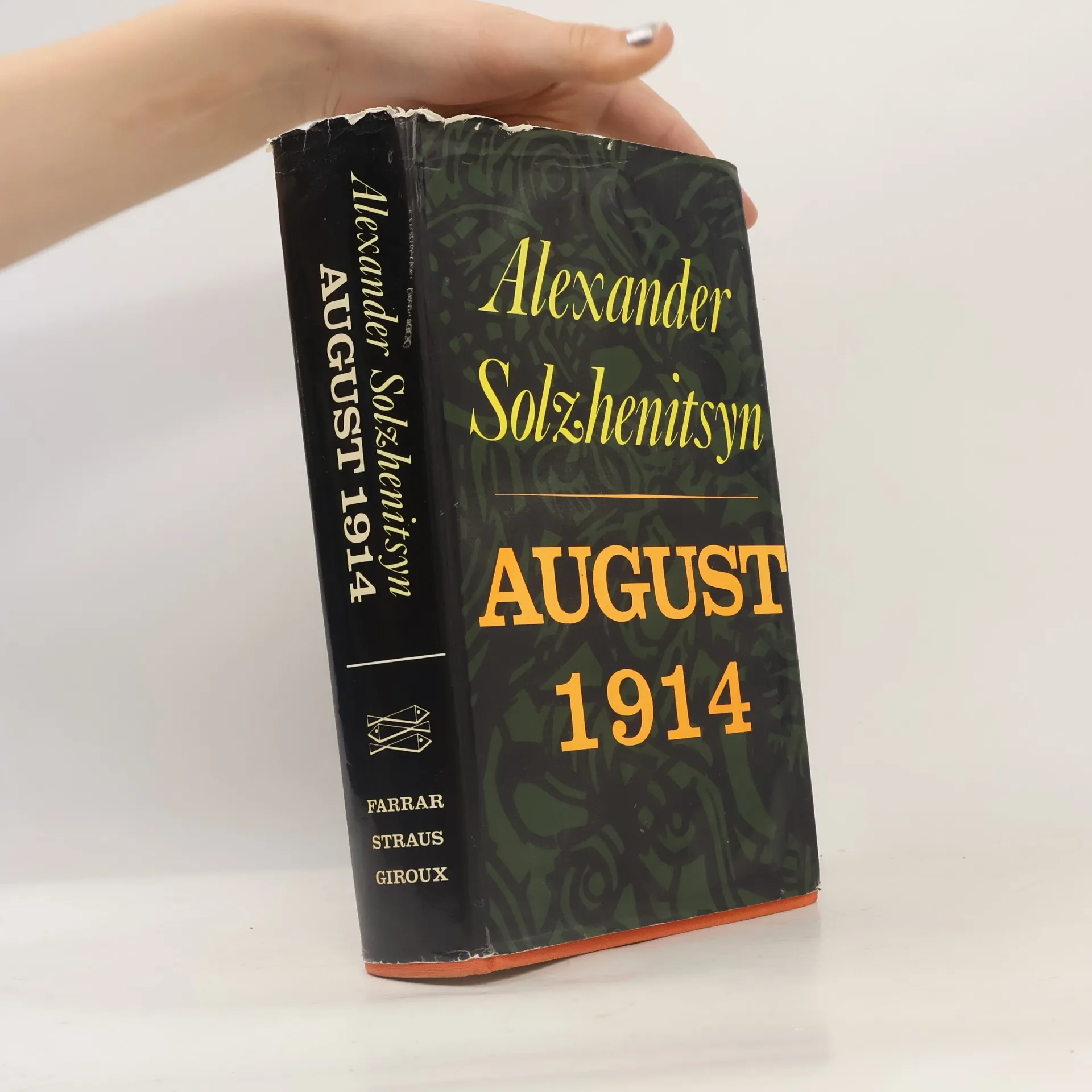
August 1914, Alexander Issajewitsch Solschenizyn, Michael Glenny
- Language

- Released
- 1972
- Binding
- (Hardcover)
Payment methods
We’re missing your review here.
- Title
- August 1914
- Subtitle
- A Novel
- Language
- English
- Publisher
- Farrar, Straus and Giroux
- Released
- 1972
- Format
- Hardcover
- Pages
- 622
- ISBN10
- 0374106843
- ISBN13
- 9780374106843
- Series
- The Red Wheel
- Categories
- Original title
- Avgust četyrnadcatogo
- Rating
- 3.9 out of 5
- Description
- The author conceived the general concept of this novel in 1936, viewing it as the chief artistic design of his life. He considers his previous works minor in comparison, shaped by the peculiarities of his life story. The first part, set in August 1914, coincides with the outbreak of the First World War, focusing on the responsibility for Russia’s defeat at Tannenberg. The narrative is confined to the initial two weeks of the war, detailing the Russian offensive into East Prussia, which culminated in the encirclement and defeat of General Samsonov's Second Army by Hindenburg. This catastrophe exposed the decay within Tsarism and hastened its decline. The main theme is enriched by a diverse array of characters, both fictional and historical, representing various facets of Russian life. Colonel Vorotyntsev, an enlightened and ironic young staff officer, serves as a bridge between different elements of the story. Solzhenitsyn portrays Samsonov sympathetically, highlighting his role as a victim of military blunders and personal conflicts, culminating in a poignant depiction of his suicide. The novel excels in historical reconstruction and creative imagination, revealing that the guilty will evade accountability through their influence, and suggesting that Russia must ultimately undergo a rebirth. The work reflects the author's profound love for his country and concern for its people. Its English publication, translated by Michael G