

More about the book
I. Additives Which Modify Physical Properties.- 1 Plasticizers.- 1.1 Thermodynamic Basis of Macromolecular Mixtures, including solubility of polymers, Flory-Huggins interaction parameter, solubility parameter, and phase separation phenomena.- 1.2 Reversible Gelation.- 1.3 Theory of Plasticization, covering effects on thermal mechanical deformation, Tb and Tg values, free volume in amorphous polymers, and types of plasticizers.- 1.4 Classification of Plasticizers by chemical structure and characteristics.- 1.5 Plasticizer anomalies and antiplasticization.- 1.6 Loss of plasticizers.- References.- 2 Lubricants and Mold-Release Agents.- 2.1 Lubricants, including principles of action, classifications for PVC and polyolefins, and necessary properties.- 2.2 Mold-Release Agents, with principles of action and examples.- References.- 3 Macromolecular Modifiers.- 3.1 Introduction.- 3.2 Homogenization of polymer systems.- 3.3 Two-phase microheterogeneous systems, including effects on impact strength and toughness.- 3.4 Impact modifiers for glassy polymers, such as CPE, EVA, and various elastomers.- 3.5 Macromolecular modifiers as processing aids.- References.- 4 Reinforcing Fillers, Agents, and Coupling Agents.- 4.1 General characteristics of fillers and composites, including types for thermosetting resins and plastomers.- 4.2 Effects of fillers on composite properties.- 4.3 Types of fillers and reinforcing agents, including glass and oth
Book purchase
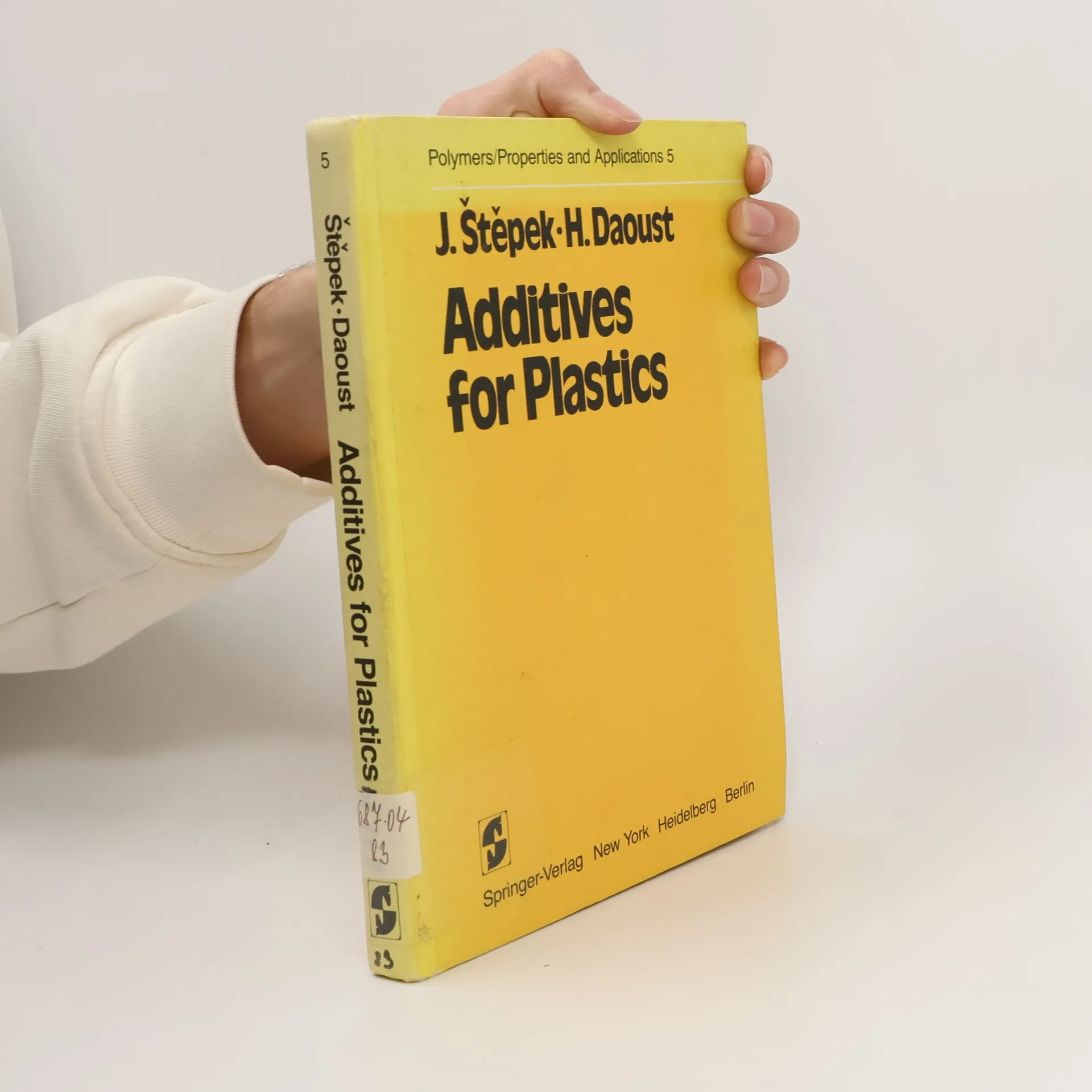
Polymers/Properties and Applications - 5: Additives for Plastics, Jiří Štěpek, Hubert Daoust
- Language

- Released
- 1983
- Binding
- (Hardcover)
Payment methods
No one has rated yet.
- Title
- Polymers/Properties and Applications - 5: Additives for Plastics
- Language
- English
- Authors
- Jiří Štěpek, Hubert Daoust
- Publisher
- Springer
- Released
- 1983
- Format
- Hardcover
- Pages
- 243
- ISBN10
- 038790753X
- ISBN13
- 9780387907536
- Series
- Categories
- Description
- I. Additives Which Modify Physical Properties.- 1 Plasticizers.- 1.1 Thermodynamic Basis of Macromolecular Mixtures, including solubility of polymers, Flory-Huggins interaction parameter, solubility parameter, and phase separation phenomena.- 1.2 Reversible Gelation.- 1.3 Theory of Plasticization, covering effects on thermal mechanical deformation, Tb and Tg values, free volume in amorphous polymers, and types of plasticizers.- 1.4 Classification of Plasticizers by chemical structure and characteristics.- 1.5 Plasticizer anomalies and antiplasticization.- 1.6 Loss of plasticizers.- References.- 2 Lubricants and Mold-Release Agents.- 2.1 Lubricants, including principles of action, classifications for PVC and polyolefins, and necessary properties.- 2.2 Mold-Release Agents, with principles of action and examples.- References.- 3 Macromolecular Modifiers.- 3.1 Introduction.- 3.2 Homogenization of polymer systems.- 3.3 Two-phase microheterogeneous systems, including effects on impact strength and toughness.- 3.4 Impact modifiers for glassy polymers, such as CPE, EVA, and various elastomers.- 3.5 Macromolecular modifiers as processing aids.- References.- 4 Reinforcing Fillers, Agents, and Coupling Agents.- 4.1 General characteristics of fillers and composites, including types for thermosetting resins and plastomers.- 4.2 Effects of fillers on composite properties.- 4.3 Types of fillers and reinforcing agents, including glass and oth