

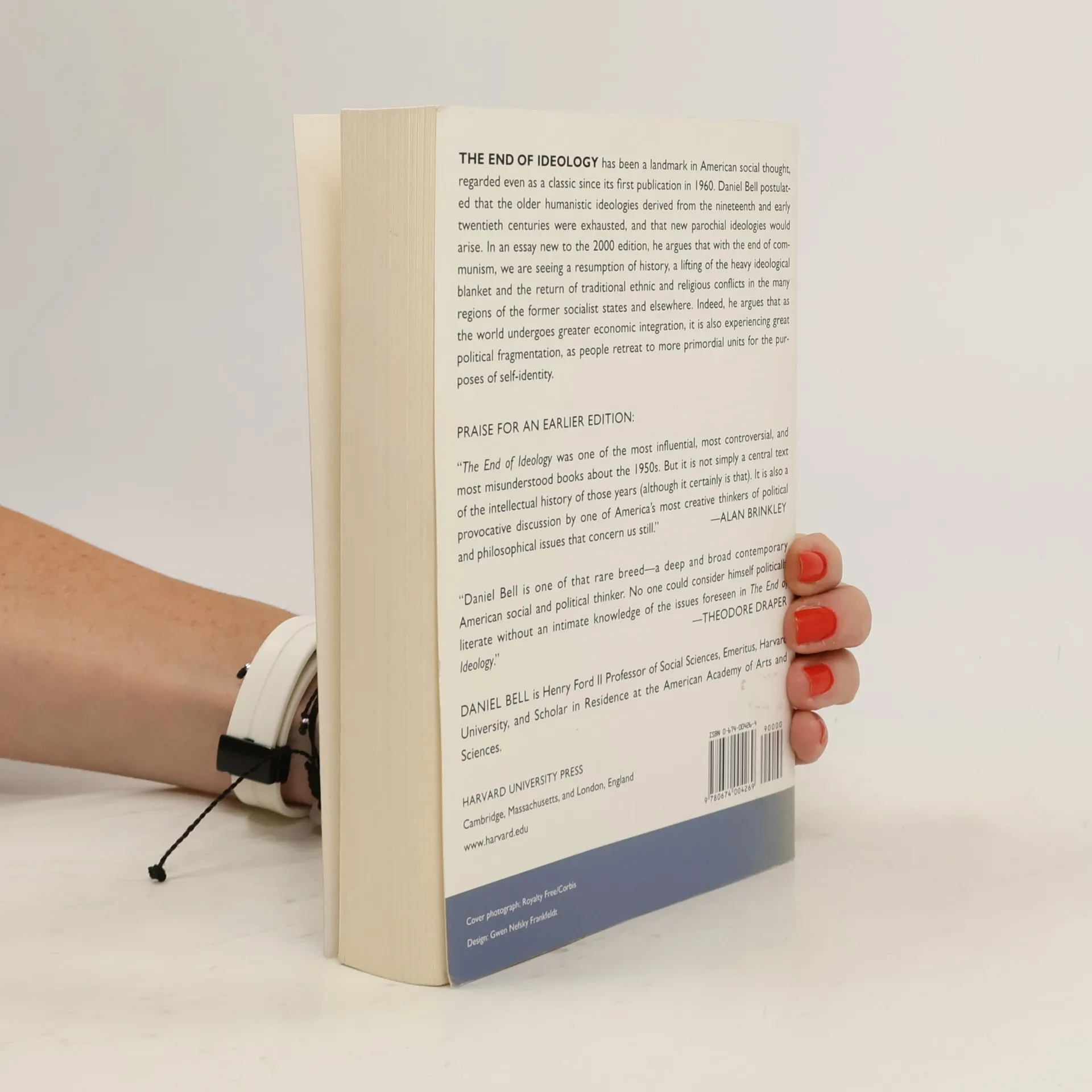
You'll get the exact copy in the photo
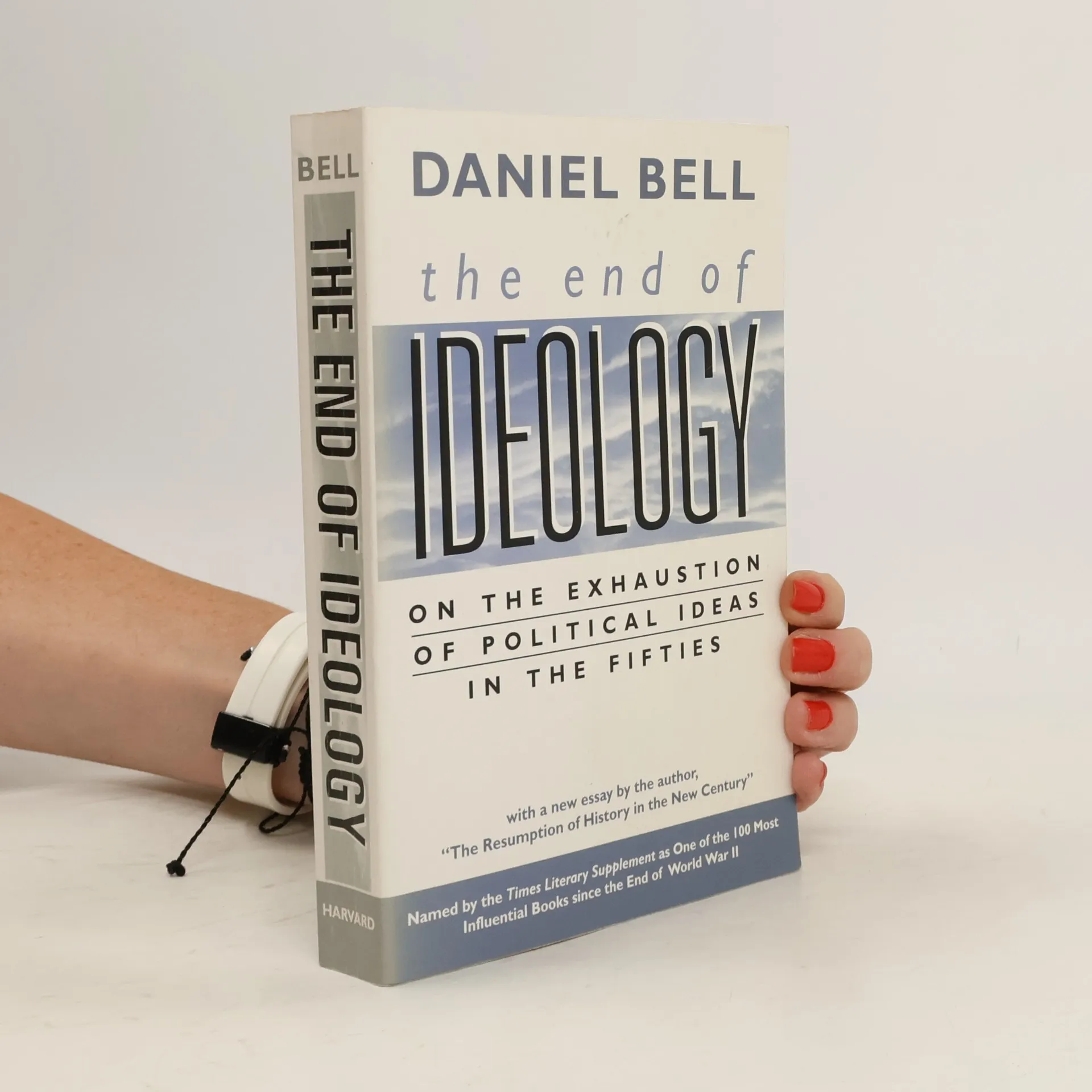

The End of Ideology
On the exhaustion of political ideas in the fifties, with "The Resumption of History in the New Century"
Authors
Book rating
Parameters
- 540 pages
- 19 hours of reading
More about the book
This work first argued that the older humanistic ideologies from the 19th and early 20th centuries were exhausted, and that new parochial ideologies would arise. This 2000 edition argues that there is a resumption of history with the end of communism and the return of traditional conflicts. schovat popis
Publication

Book purchase
The End of Ideology, Daniel Bell
- Language

- Released
- 2000
- Binding
- (Paperback),
- Book condition
- Good
- Price
- €16.99
Payment methods
We’re missing your review here.
- Title
- The End of Ideology
- Subtitle
- On the exhaustion of political ideas in the fifties, with "The Resumption of History in the New Century"
- Language
- English
- Authors
- Daniel Bell
- Publisher
- Harvard University Press
- Released
- 2000
- Format
- Paperback
- Pages
- 540
- ISBN10
- 0674004264
- ISBN13
- 9780674004269
- Series
- Tags
- Historical Themes, Philosophical Topics, Political Theories, Scientific Theories, Democracy, Ideology
- Rating
- 3.6 out of 5
- Description
- This work first argued that the older humanistic ideologies from the 19th and early 20th centuries were exhausted, and that new parochial ideologies would arise. This 2000 edition argues that there is a resumption of history with the end of communism and the return of traditional conflicts. schovat popis