

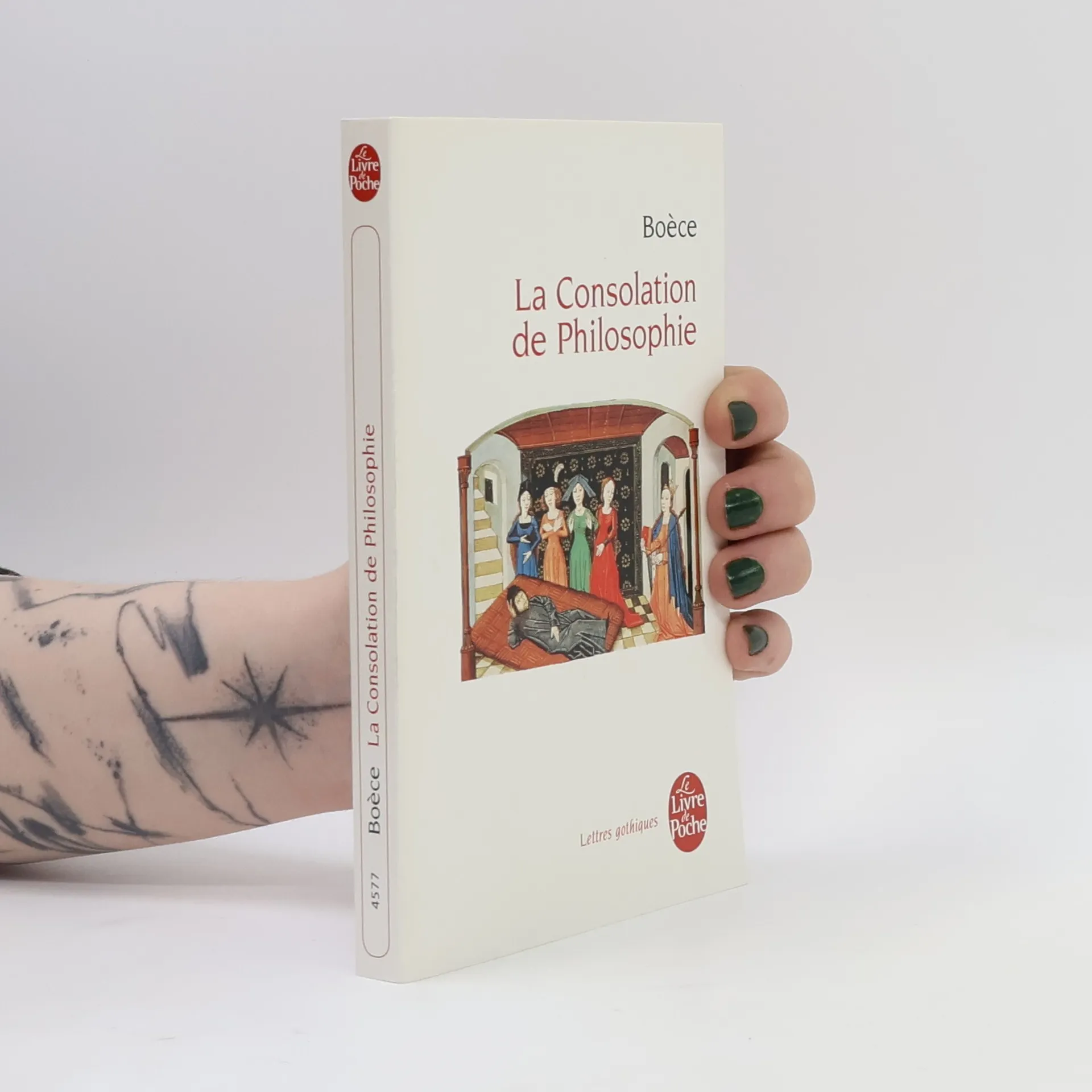

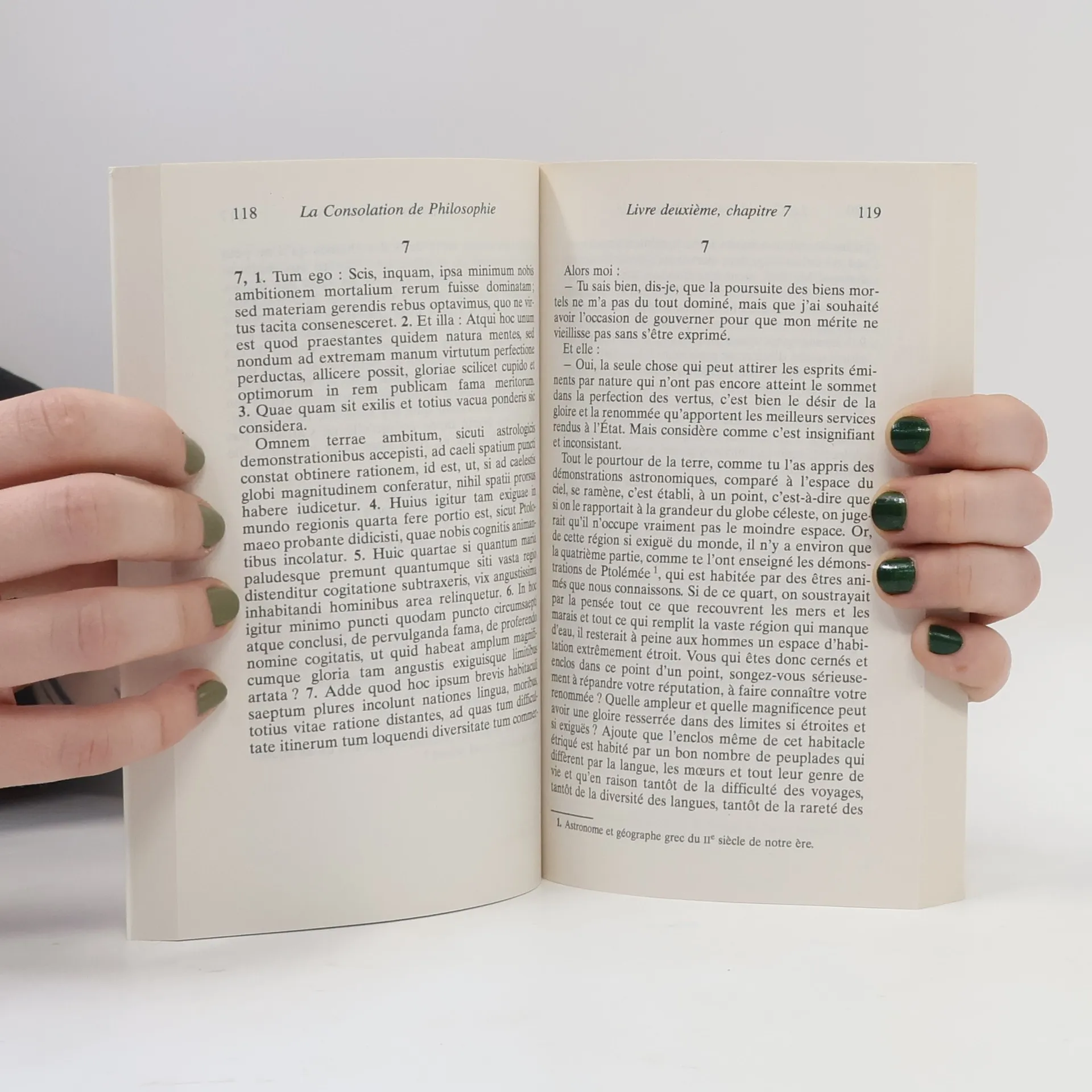
La consolation de la philosophie
Book rating
Parameters
- 320 pages
- 12 hours of reading
More about the book
Boethius composed De Consolation Philosophiae in the 6th century while awaiting death by torture, condemned on a charge of plotting against Gothic rule, which he protested as manifestly unjust. Though a Christian, Boethius details the true end of life as the soul's knowledge of God, and consoles himself with the tenets of Greek philosophy, not with Christian precepts. Written in a form called Meippean Satire that alternates between prose & verse, Boethius' work often consists of a story told by Ovid or Horace to illustrate the philosophy being expounded. The Consolation of Philosophy dominated the intellectual world of the Middle Ages. It inspired writers as diverse Thomas Aquinas, Jean de Meun & Dante. In England it was rendered into Old English by Alfred the Great, into Middle English by Geoffrey Chaucer. Later Queen Elizabeth I made her own translation. The circumstances of composition, the heroic demeanor of the author, and the Meippean texture of part prose, part verse have been a fascination for students of philosophy, literature and religion ever since.
Language


Publication

Book purchase
La consolation de la philosophie, Anitius Manlius Torquatus Severinus Boëthius, Claudio Moreschini, Jean-Yves Tilliette, Eric Vanpeteghem
- Language

- Released
- 2008
- Binding
- (Paperback)
Payment methods
We’re missing your review here.
- Title
- La consolation de la philosophie
- Language
- French
- Authors
- Anitius Manlius Torquatus Severinus Boëthius, Claudio Moreschini, Jean-Yves Tilliette, Eric Vanpeteghem
- Publisher
- LGF
- Released
- 2008
- Format
- Paperback
- Pages
- 320
- ISBN10
- 2253082473
- ISBN13
- 9782253082477
- Series
- Tags
- Religious Topics, Philosophical Topics, Spirituality, Christian Themes, Theology, Philosophy and Religion, Consolation, Dialogue, Ancient Literature, Ancient Philosophy, Early Middle Ages, Scholasticism
- Original title
- De consolatione philosophiae, 524
- Rating
- 4 out of 5
- Description
- Boethius composed De Consolation Philosophiae in the 6th century while awaiting death by torture, condemned on a charge of plotting against Gothic rule, which he protested as manifestly unjust. Though a Christian, Boethius details the true end of life as the soul's knowledge of God, and consoles himself with the tenets of Greek philosophy, not with Christian precepts. Written in a form called Meippean Satire that alternates between prose & verse, Boethius' work often consists of a story told by Ovid or Horace to illustrate the philosophy being expounded. The Consolation of Philosophy dominated the intellectual world of the Middle Ages. It inspired writers as diverse Thomas Aquinas, Jean de Meun & Dante. In England it was rendered into Old English by Alfred the Great, into Middle English by Geoffrey Chaucer. Later Queen Elizabeth I made her own translation. The circumstances of composition, the heroic demeanor of the author, and the Meippean texture of part prose, part verse have been a fascination for students of philosophy, literature and religion ever since.