

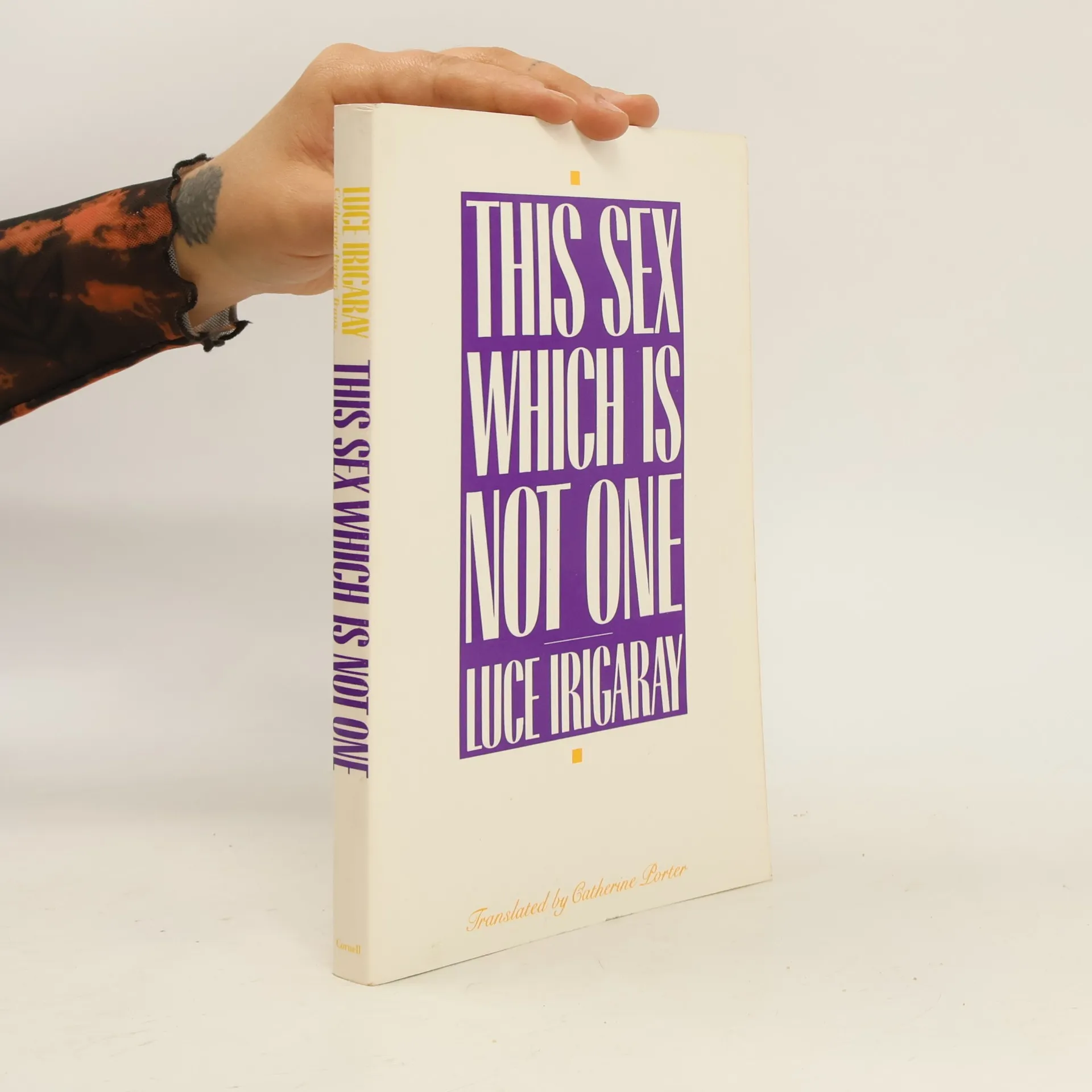

More about the book
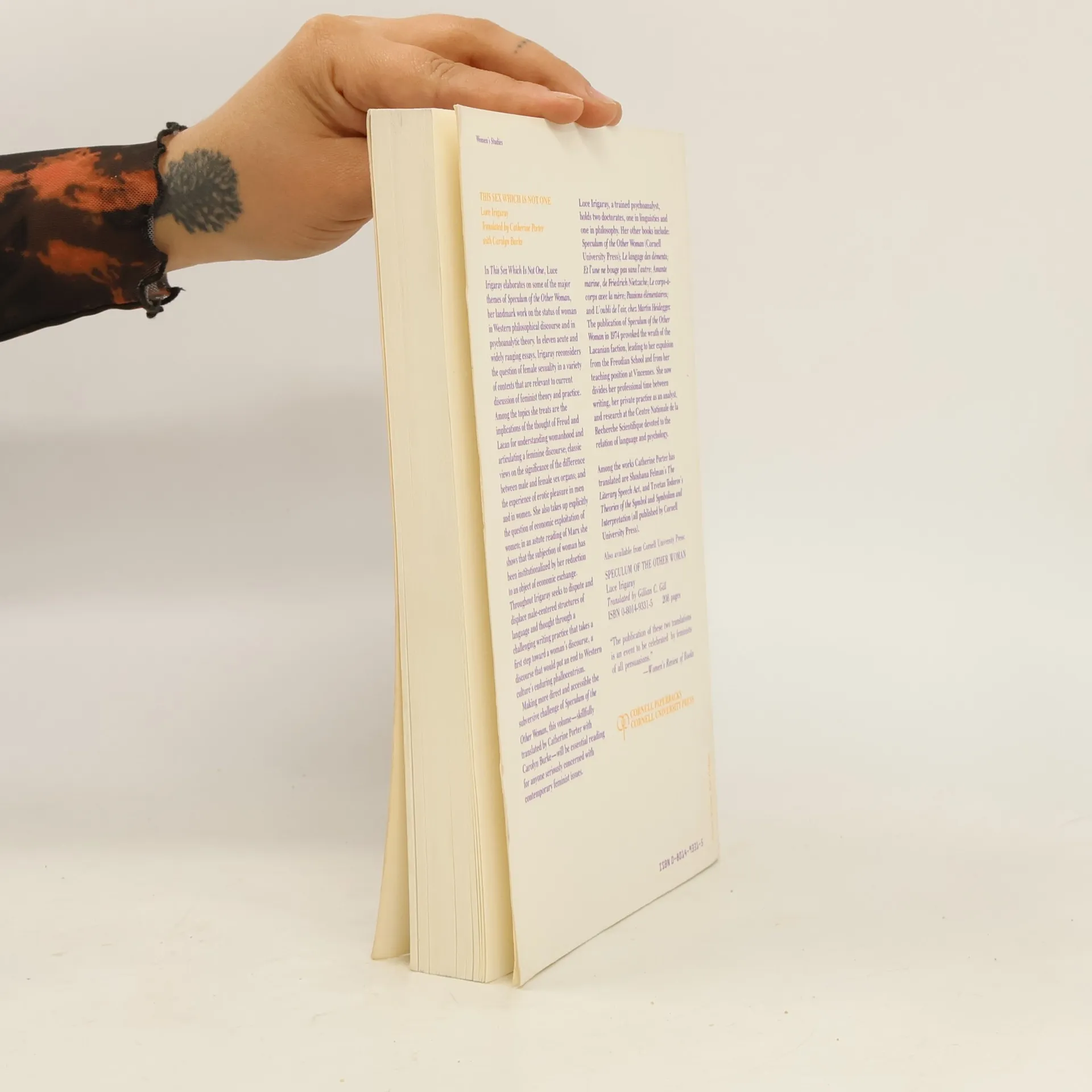
In this collection of eleven insightful essays, Luce Irigaray expands on key themes from her earlier work, addressing the status of women in Western philosophical and psychoanalytic discourse. She reexamines female sexuality across various contexts relevant to current feminist theory and practice. Topics include the implications of Freud and Lacan for understanding womanhood, the significance of differences between male and female sex organs, and the experiences of erotic pleasure in both genders. Irigaray also addresses the economic exploitation of women, presenting a nuanced interpretation of Marx that highlights how women's subjection has been institutionalized through their reduction to objects of economic exchange. Throughout her work, she challenges male-centered structures of language and thought, advocating for a woman's discourse that counters the phallocentrism embedded in Western culture. This volume, translated skillfully by Catherine Porter and Carolyn Burke, makes the subversive arguments of her earlier work more accessible and will be essential for those engaged with contemporary feminist issues.

Book purchase
This Sex Which Is Not One, Luce Irigaray, Catherine Porter, Carolyn Burke
- Language

- Released
- 1985
- Binding
- (Paperback)
Payment methods
We’re missing your review here.
- Title
- This Sex Which Is Not One
- Language
- English
- Authors
- Luce Irigaray, Catherine Porter, Carolyn Burke
- Publisher
- Cornell University Press
- Released
- 1985
- Format
- Paperback
- Pages
- 222
- ISBN10
- 0801493315
- ISBN13
- 9780801493317
- Series
- Tags
- Psychological Topics, Philosophical Topics, Feminism, Scientific Theories, Psychoanalysis, Gender
- Rating
- 4.6 out of 5
- Description
- In this collection of eleven insightful essays, Luce Irigaray expands on key themes from her earlier work, addressing the status of women in Western philosophical and psychoanalytic discourse. She reexamines female sexuality across various contexts relevant to current feminist theory and practice. Topics include the implications of Freud and Lacan for understanding womanhood, the significance of differences between male and female sex organs, and the experiences of erotic pleasure in both genders. Irigaray also addresses the economic exploitation of women, presenting a nuanced interpretation of Marx that highlights how women's subjection has been institutionalized through their reduction to objects of economic exchange. Throughout her work, she challenges male-centered structures of language and thought, advocating for a woman's discourse that counters the phallocentrism embedded in Western culture. This volume, translated skillfully by Catherine Porter and Carolyn Burke, makes the subversive arguments of her earlier work more accessible and will be essential for those engaged with contemporary feminist issues.