


Parameters
- 632 pages
- 23 hours of reading
More about the book
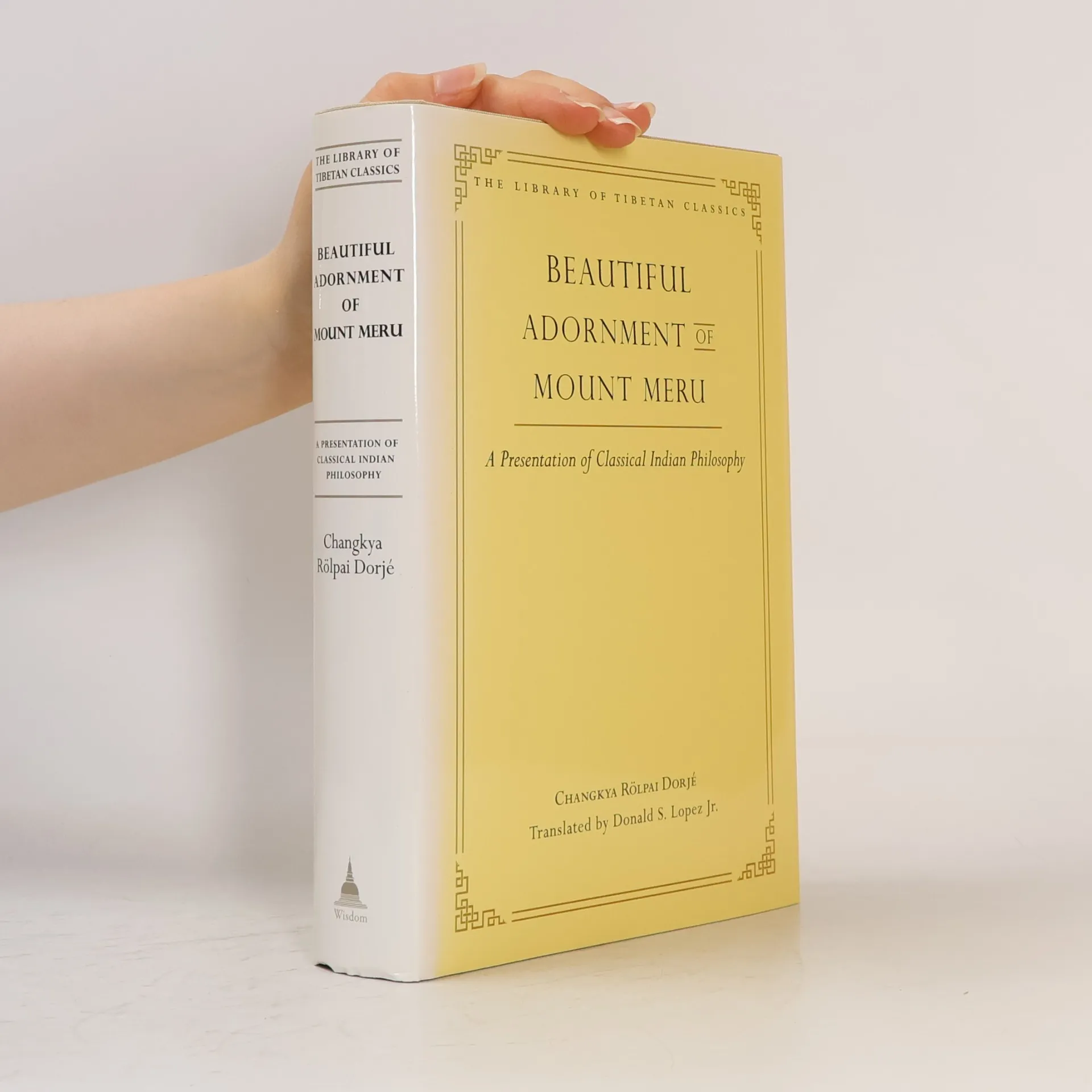
This work offers a clear and insightful survey of classical Indian philosophy in Tibetan. Beautiful Adornment of Mount Meru by Changkya Rölpai Dorjé (1717–86) serves as a doxography, systematically presenting the philosophical tenets of both Indian Buddhist and non-Buddhist schools, progressing through increasingly subtle views. The title refers to the Buddha’s teachings, with Changkya excelling in his treatment of the Mahayana Buddhist schools, particularly the Yogacara (Vijñaptimatra) and Madhyamaka. Unlike Jamyang Shepa’s longer Great Exposition of Tenets, which inspired Changkya, this work is noted for its clarity and economical citations from Indian texts. It goes beyond merely cataloging assertions, skillfully examining core philosophical issues and including intriguing ancillary discussions. Like Jamyang Shepa’s text, Changkya’s work is rooted in the Geluk tradition, drawing heavily on Tsongkhapa and his disciples. Its manageable size and lucid style have made it a classic source for studying Indian thought within the Tibetan cultural sphere. In contemporary academia, it remains a key resource for understanding the Tibetan interpretation of classical Indian philosophical systems.
Book purchase
The Library of Tibetan Classics - 24: Beautiful Adornment of Mount Meru, Changkya Rölpai Dorjé, Donald Sewell Lopez Jr.
- Language

- Released
- 2019
- Binding
- (Hardcover)
Payment methods
No one has rated yet.
- Title
- The Library of Tibetan Classics - 24: Beautiful Adornment of Mount Meru
- Subtitle
- A Presentation of Classical Indian Philosophy
- Language
- English
- Publisher
- Wisdom Publications,U.S.
- Released
- 2019
- Format
- Hardcover
- Pages
- 632
- ISBN10
- 0861714636
- ISBN13
- 9780861714636
- Series
- Tags
- Description
- This work offers a clear and insightful survey of classical Indian philosophy in Tibetan. Beautiful Adornment of Mount Meru by Changkya Rölpai Dorjé (1717–86) serves as a doxography, systematically presenting the philosophical tenets of both Indian Buddhist and non-Buddhist schools, progressing through increasingly subtle views. The title refers to the Buddha’s teachings, with Changkya excelling in his treatment of the Mahayana Buddhist schools, particularly the Yogacara (Vijñaptimatra) and Madhyamaka. Unlike Jamyang Shepa’s longer Great Exposition of Tenets, which inspired Changkya, this work is noted for its clarity and economical citations from Indian texts. It goes beyond merely cataloging assertions, skillfully examining core philosophical issues and including intriguing ancillary discussions. Like Jamyang Shepa’s text, Changkya’s work is rooted in the Geluk tradition, drawing heavily on Tsongkhapa and his disciples. Its manageable size and lucid style have made it a classic source for studying Indian thought within the Tibetan cultural sphere. In contemporary academia, it remains a key resource for understanding the Tibetan interpretation of classical Indian philosophical systems.