

You'll get the exact copy in the photo
More about the book
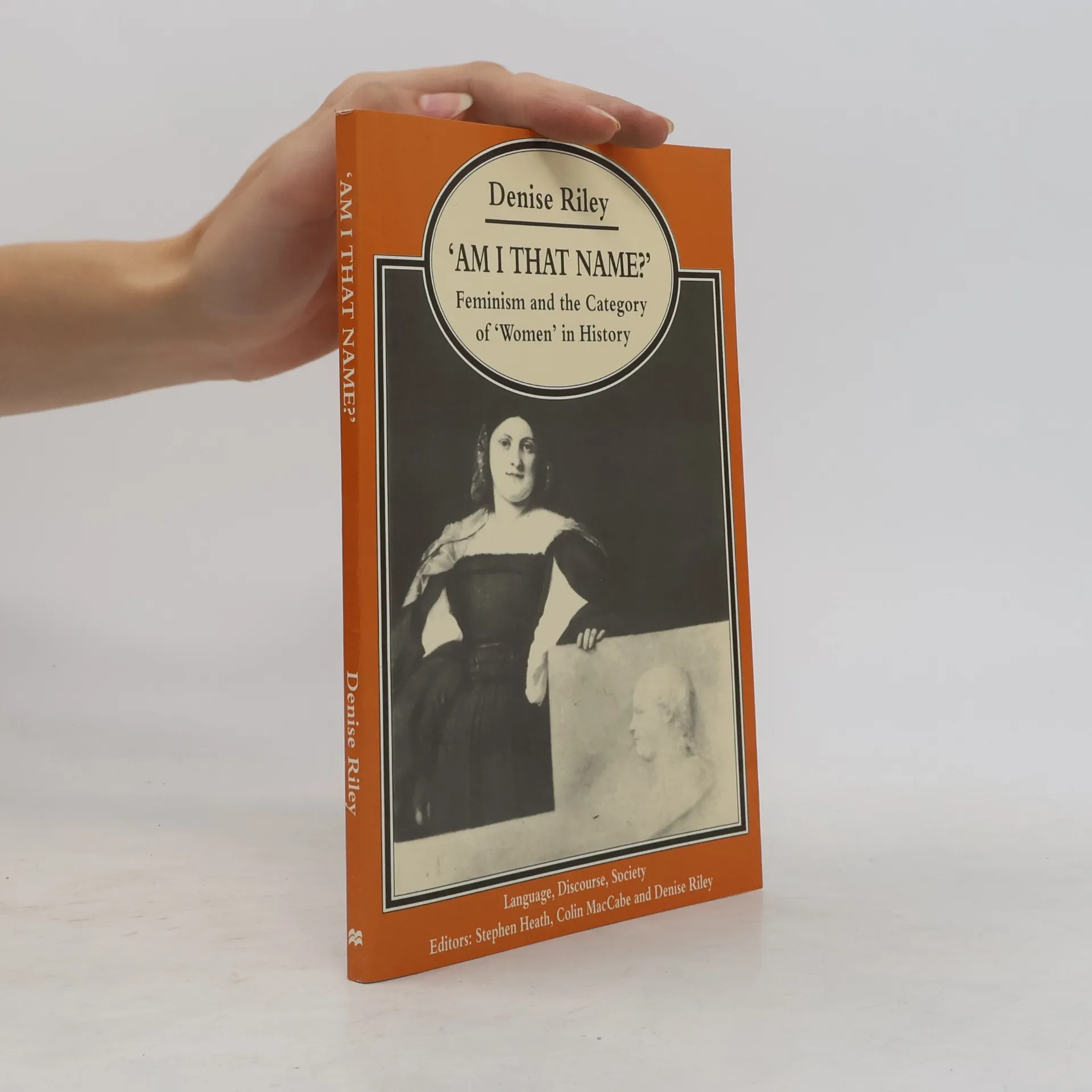
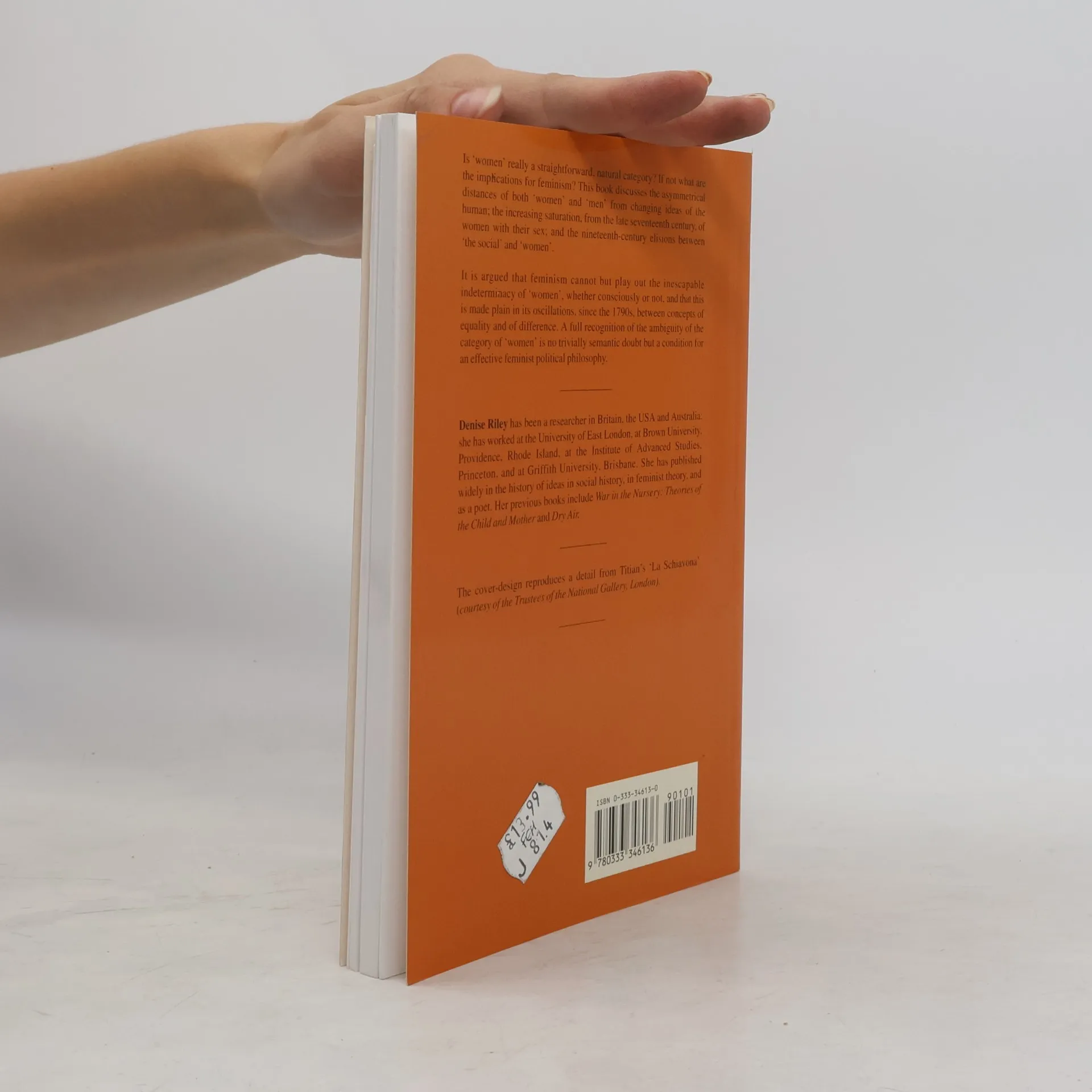
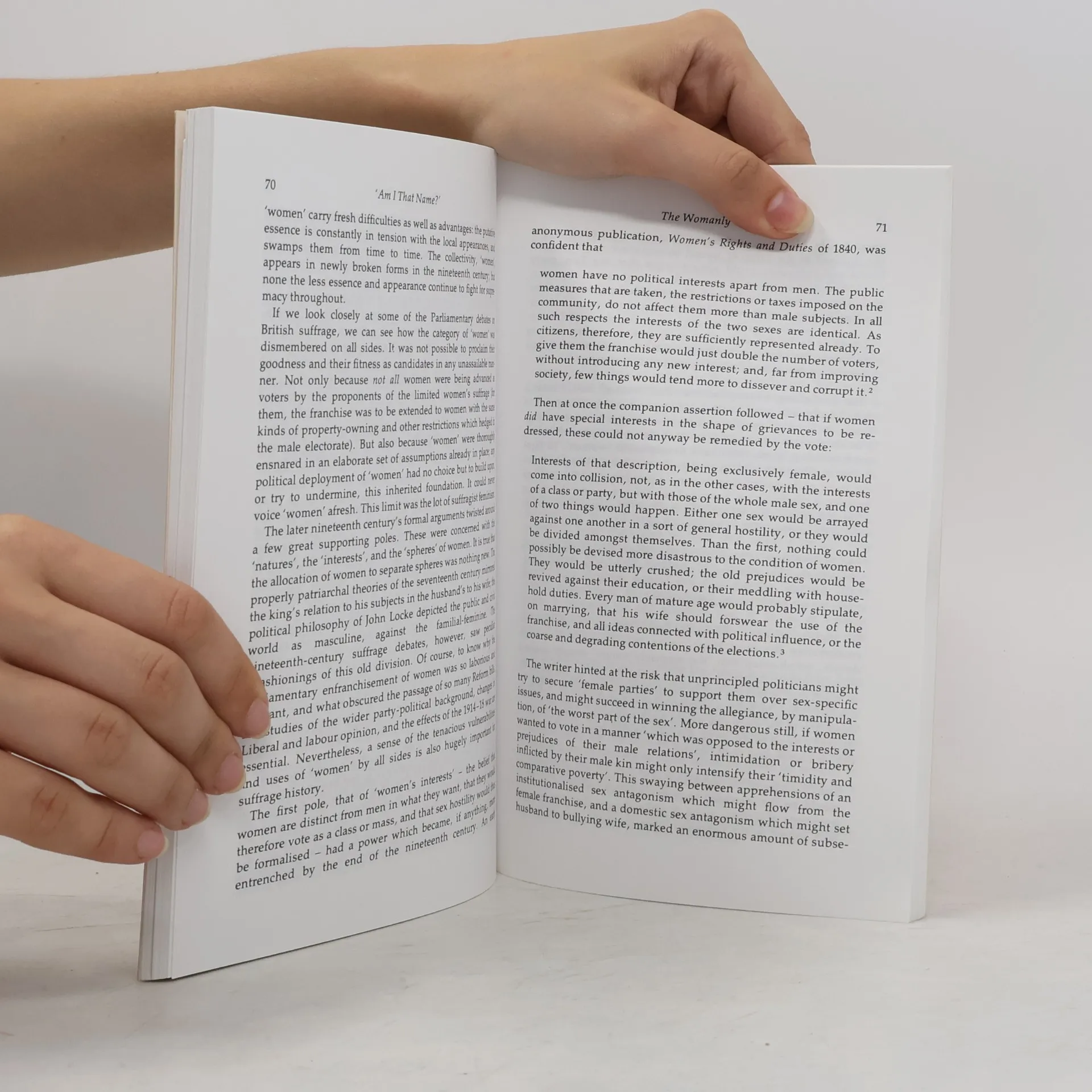
Writing about changes in the notion of womanhood, Denise Riley examines, in the manner of Foucault, shifting historical constructions of the category of "women" in relation to other categories central to concepts of personhood: the soul, the mind, the body, nature, the social. Feminist movements, Riley argues, have had no choice but to play out this indeterminacy of women. This is made plain in their oscillations, since the 1790s, between concepts of equality and of difference. To fully recognize the ambiguity of the category of "women" is, she contends, a necessary condition for an effective feminist political philosophy.
Book purchase
Language, Discourse, Society: Am I That Name?, Denise Riley, Stephen Heath, Colin MacCabe
- Language

- Released
- 1988
- Binding
- (Paperback),
- Book condition
- Good
- Price
- €9.99
Payment methods
No one has rated yet.
- Title
- Language, Discourse, Society: Am I That Name?
- Subtitle
- Feminism and the Category of 'Women' in History
- Language
- English
- Authors
- Denise Riley, Stephen Heath, Colin MacCabe
- Publisher
- Palgrave Macmillan
- Released
- 1988
- Format
- Paperback
- Pages
- 132
- ISBN10
- 0333346130
- ISBN13
- 9780333346136
- Series
- Tags
- Historical Themes, Nature, Philosophical Topics, Women, Politics, Science, Culture and Society, Feminism, Local History, Literary Criticism, Political Theories, Writing, Cultural History, Scientific Theories, Gender, Required Reading, Social History, Civil Law, Literary Theory, Political Philosophy, Human Mind, Social Policy, Welfare State
- Description
- Writing about changes in the notion of womanhood, Denise Riley examines, in the manner of Foucault, shifting historical constructions of the category of "women" in relation to other categories central to concepts of personhood: the soul, the mind, the body, nature, the social. Feminist movements, Riley argues, have had no choice but to play out this indeterminacy of women. This is made plain in their oscillations, since the 1790s, between concepts of equality and of difference. To fully recognize the ambiguity of the category of "women" is, she contends, a necessary condition for an effective feminist political philosophy.