

More about the book
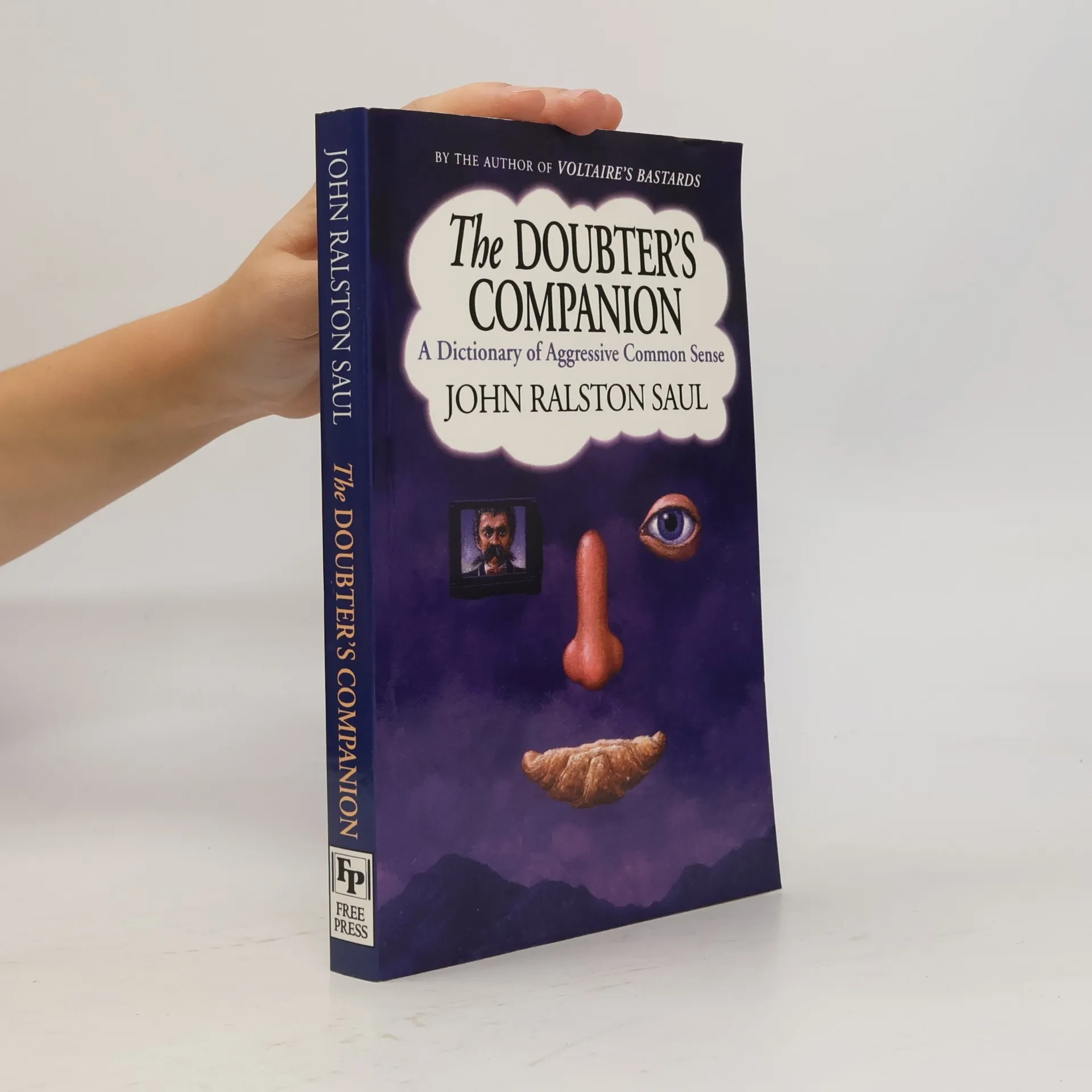
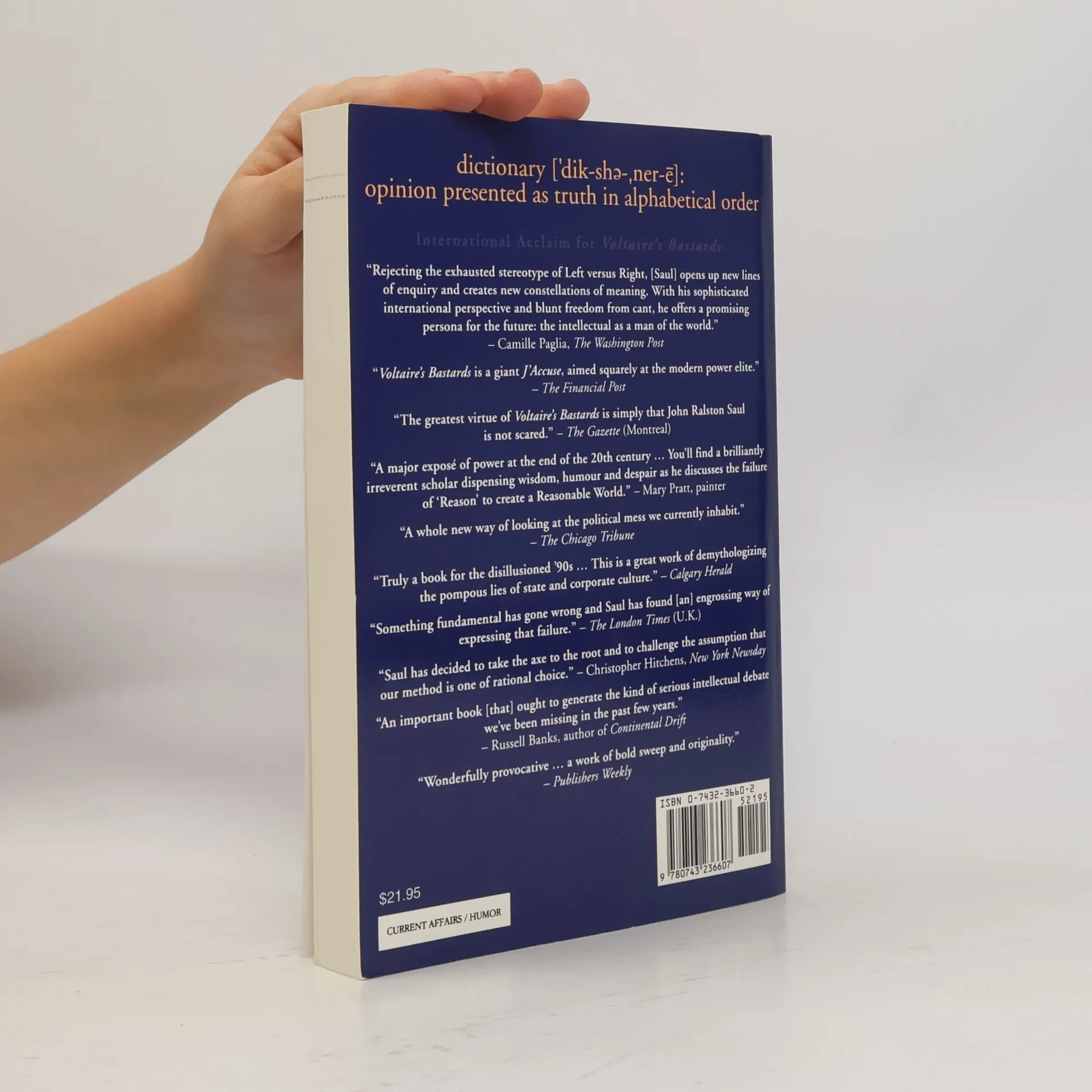
A long tradition of writers has employed satirical dictionaries to challenge the prevailing ideas of their times. Figures like Voltaire and Samuel Johnson used this form to critique societal norms and expose half-truths, advocating for humanistic enlightenment against orthodoxy. However, John Ralston Saul argues that modern dictionaries have succumbed to a new form of orthodoxy—rationalist in nature. Today's language is predictable and fragmented, divided into specialized dialects that alienate the general public. In this subversive work, Saul critiques accepted definitions of common terms such as Advertising, Academics, and Air Conditioning—describing it as "an efficient means for spreading disease in enclosed public spaces"—as well as Cannibal, Conservative, Croissant, and many others. He offers provocative definitions like Biography as "a respectable form of pornography," Museum as "safe storage for stolen objects," and Manners as "people are always splendid when they're dead." This volume is designed to stimulate, offend, and entertain while aiming to reclaim public language from the constraining dialects of contemporary expertise.
Language

Book purchase
The Doubter's Companion, John R. Saul
- Language

- Released
- 1994
- Binding
- (Paperback)
Payment methods
No one has rated yet.
- Title
- The Doubter's Companion
- Subtitle
- A Dictionary of Aggressive Common Sense
- Language
- English
- Authors
- John R. Saul
- Publisher
- Free Press
- Released
- 1994
- Format
- Paperback
- Pages
- 352
- ISBN10
- 0743236602
- ISBN13
- 9780743236607
- Series
- Description
- A long tradition of writers has employed satirical dictionaries to challenge the prevailing ideas of their times. Figures like Voltaire and Samuel Johnson used this form to critique societal norms and expose half-truths, advocating for humanistic enlightenment against orthodoxy. However, John Ralston Saul argues that modern dictionaries have succumbed to a new form of orthodoxy—rationalist in nature. Today's language is predictable and fragmented, divided into specialized dialects that alienate the general public. In this subversive work, Saul critiques accepted definitions of common terms such as Advertising, Academics, and Air Conditioning—describing it as "an efficient means for spreading disease in enclosed public spaces"—as well as Cannibal, Conservative, Croissant, and many others. He offers provocative definitions like Biography as "a respectable form of pornography," Museum as "safe storage for stolen objects," and Manners as "people are always splendid when they're dead." This volume is designed to stimulate, offend, and entertain while aiming to reclaim public language from the constraining dialects of contemporary expertise.