

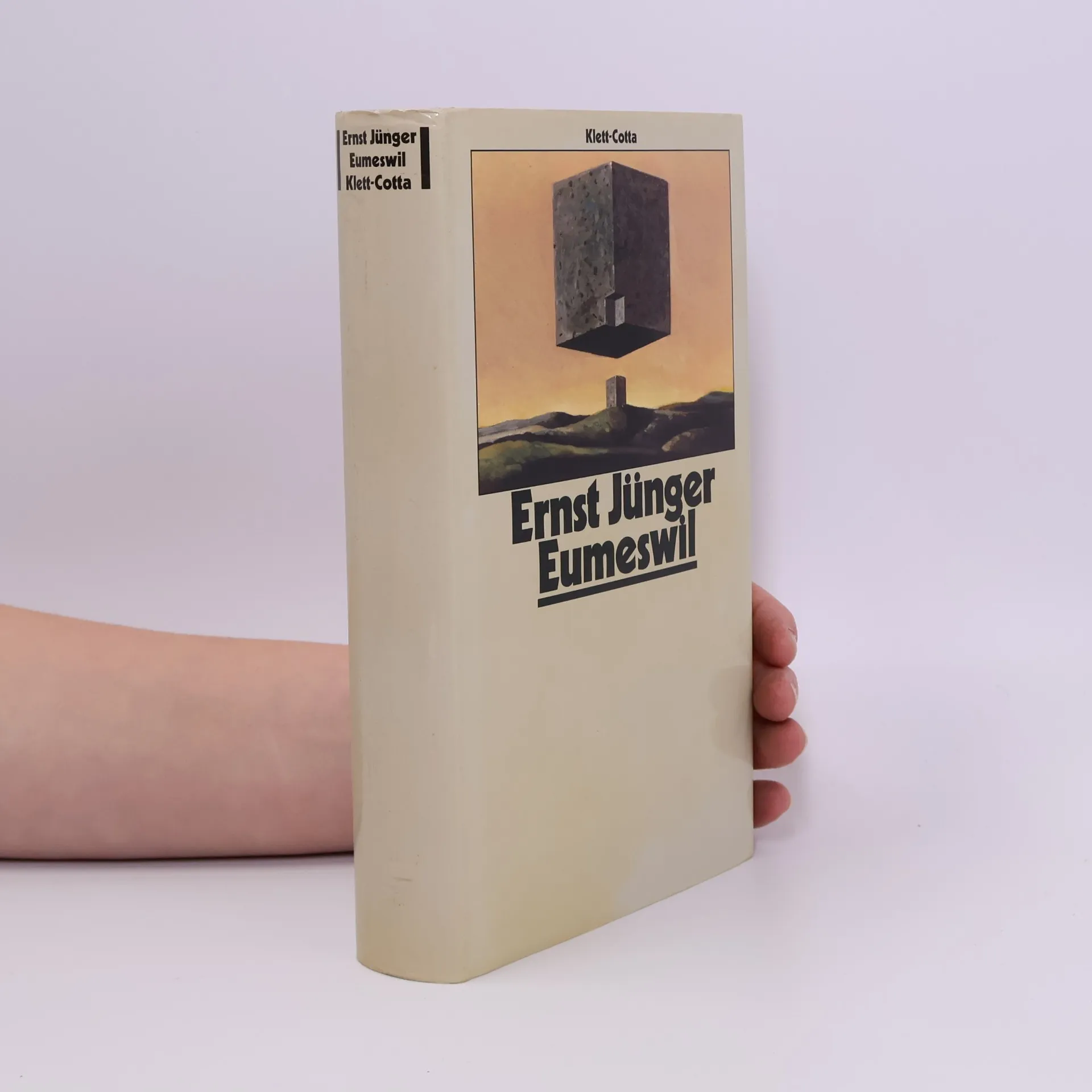


More about the book
Originally published in Germany in 1977, this novel represents Junger's creative maturity and stands as a masterpiece in modern German literature. Set in a utopian state ruled by the Condor, a dictator who controls the capital from a fortified citadel, the story unfolds through the eyes of Venator, a historian and the Condor's night steward. Venator's position grants him access to the inner workings of power, where he discreetly records the conversations of the Condor and his guests in a secret journal. This journal not only captures the diverse personalities within the Condor's circle but also serves as a platform for Venator's analysis of power dynamics. While he attends to the Condor, Venator spends his days constructing a hidden mountain refuge, aspiring for self-sufficiency. He also utilizes a remarkable holographic tool, the "luminar," to explore historical figures and events. Venator embodies Junger's ideal of the "anarch," a heroic individual marked by radical skepticism and distinct from mere anarchism. Through the contrasting figures of the dictator and the anarch, Junger crafts a poetic exploration of history and political power, offering a poignant assessment of totalitarianism shaped by his own experiences with its atrocities.


Book purchase
Eumeswil, Ernst Jünger
- Language
- Released
- 1977
- Binding
- (Hardcover)
Payment methods
We’re missing your review here.
- Title
- Eumeswil
- Authors
- Ernst Jünger
- Publisher
- Klett-Cotta
- Released
- 1977
- Format
- Hardcover
- Pages
- 434
- ISBN10
- 3129041702
- ISBN13
- 9783129041703
- Series
- Rating
- 4.25 out of 5
- Description
- Originally published in Germany in 1977, this novel represents Junger's creative maturity and stands as a masterpiece in modern German literature. Set in a utopian state ruled by the Condor, a dictator who controls the capital from a fortified citadel, the story unfolds through the eyes of Venator, a historian and the Condor's night steward. Venator's position grants him access to the inner workings of power, where he discreetly records the conversations of the Condor and his guests in a secret journal. This journal not only captures the diverse personalities within the Condor's circle but also serves as a platform for Venator's analysis of power dynamics. While he attends to the Condor, Venator spends his days constructing a hidden mountain refuge, aspiring for self-sufficiency. He also utilizes a remarkable holographic tool, the "luminar," to explore historical figures and events. Venator embodies Junger's ideal of the "anarch," a heroic individual marked by radical skepticism and distinct from mere anarchism. Through the contrasting figures of the dictator and the anarch, Junger crafts a poetic exploration of history and political power, offering a poignant assessment of totalitarianism shaped by his own experiences with its atrocities.