

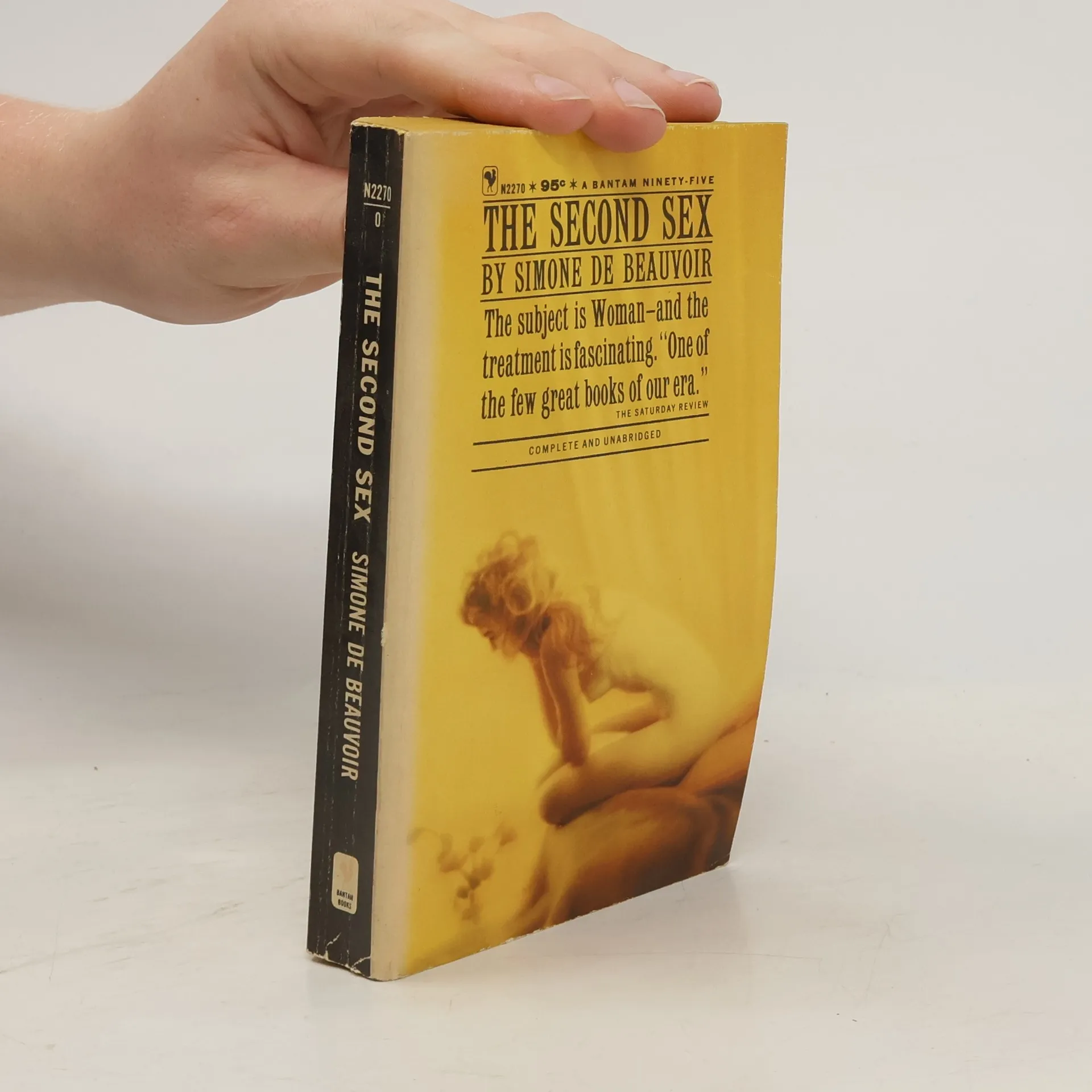
«Nous commencerons par discuter les points de vue pris sur la femme par la biologie, la psychanalyse, le matérialisme historique. Nous essaierons de montrer ensuite positivement comment la "réalité féminine" s'est constituée, pourquoi la femme a été définie comme l'Autre et quelles en ont été les conséquences du point de vue des hommes. Alors nous décrirons du point de vue des femmes le monde tel qu'il leur est proposé ; et nous pourrons comprendre à quelles difficultés elles se heurtent au moment où, essayant de s'évader de la sphère qui leur a été jusqu'à présent assignée, elles prétendent participer au mitsein humain.» Simone de Beauvoir.

The Second Sex Series
This series delves deeply into the essence of femininity, examining how women have been defined and often confined by societal, biological, and psychological constructs throughout history. The author analyzes patriarchal structures and their impact on the female experience, revealing the concept of woman as the "Other." The series calls for a reevaluation of traditional roles and a fight for full human participation, offering a critical perspective on inequalities and seeking a path toward liberation.


Recommended Reading Order
- 1
Related books
'Everyone who cares about freedom and justice for women should read The Second Sex' Guardian Simone de Beauvoir famously wrote, 'One is not born, but rather becomes, a woman'. In this groundbreaking work of feminism she examines the limits of female freedom and explodes our deeply ingrained beliefs about femininity. Liberation, she argues, entails challenging traditional perceptions of the social relationship between the sexes and, crucially, in achieving economic independence. Drawing on sociology, anthropology and biology, The Second Sex is as important and relevant today as when it was first published in 1949.
Picador Classics: The Second Sex
- 762 pages
- 27 hours of reading
Newly translated and unabridged in English for the first time, Simone de Beauvoir's masterwork is a powerful analysis of the Western notion of "woman," and a groundbreaking exploration of inequality and otherness. This long-awaited new edition reinstates significant portions of the original French text that were cut in the first English translation. Vital and groundbreaking, Beauvoir's pioneering and impressive text remains as pertinent today as it was sixty years ago, and will continue to provoke and inspire generations of men and women to come.