El interes de Collingwood por las cuestiones esteticas fue uno de los mas persistentes a lo largo de toda su obra. Asi pues, todo lo expuesto en este libro tiene una aplicacion practica, directa o indirectamente, a la condicion del arte en la actualidad.
Robin G. Collingwood Book order (chronological)
This author delves into the intricate relationship between history and philosophy. Their work centers on the nature of historical knowledge and how the past shapes the present. They explore the ways in which we interpret historical events and how these interpretations influence our understanding of the world.





Roman Britain and the English Settlements
- 542 pages
- 19 hours of reading
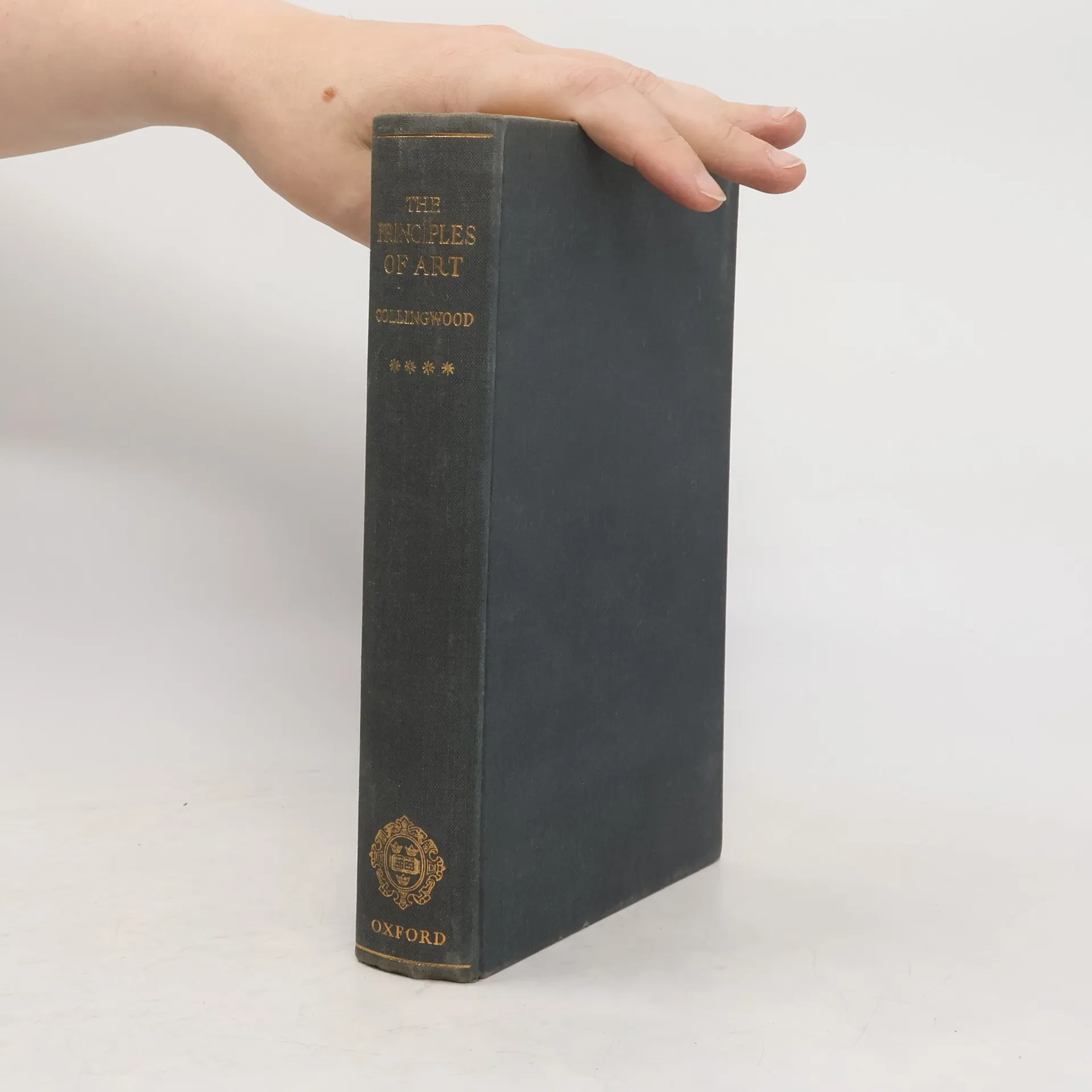
Very rare in dust jacket ! This is the 1937 second edition (the first edition was 1936). This is a reprint of the 1937 second edition from 1949. Retired library copy, which is why the thin dust jacket is still attached to the blue and gold book. Very nice shape on the jacket, with all the library markings but also a nice mylar cover
Schöninghs Philosophische Quellenhefte: Texte zur Wissenschaftstheorie
- 135 pages
- 5 hours of reading
The Idea of History
- 368 pages
- 13 hours of reading
The Idea of History is the renowned work of R.G. Collingwood, an Oxford philosopher, historian, and archaeologist. Originally published posthumously in 1946, it was reconstructed from his manuscripts, many of which are now lost. The book explores the philosophy of history, addressing its nature, object, method, and value. It begins with an analysis of Greco-Roman historiography, highlighting the transition from myth to scientific history initiated by Herodotus and the limitations of Greek thought. Collingwood examines key figures such as Thucydides, Polybius, Livy, and Tacitus, emphasizing the humanistic and substantialist character of their work. The influence of Christianity is then discussed, detailing its impact on medieval historiography and the Renaissance, alongside thinkers like Descartes and Vico. The text delves into the Enlightenment and the development of the science of human nature. Collingwood further addresses the threshold of scientific history, engaging with Romanticism and notable philosophers such as Kant, Hegel, and Marx, before exploring the emergence of scientific history across England, Germany, France, and Italy. In the epilogue, he reflects on human nature and history, the historical imagination, and the concept of history as a reenactment of past experiences, ultimately linking historical thinking to notions of freedom and progress.
The Idea of Nature
- 192 pages
- 7 hours of reading
Collingwood's theory of philosophical method applied to the problem of the philosophy of nature.