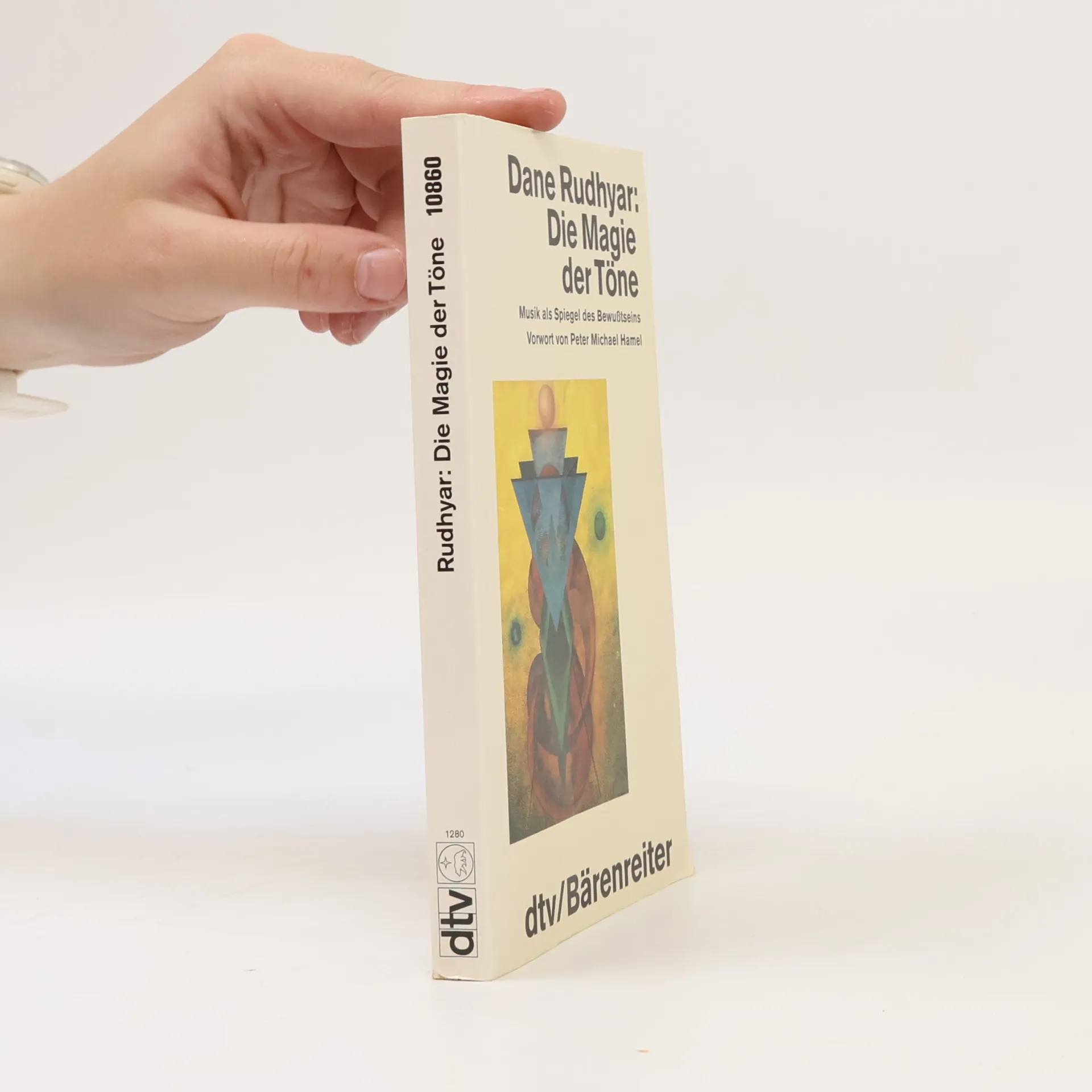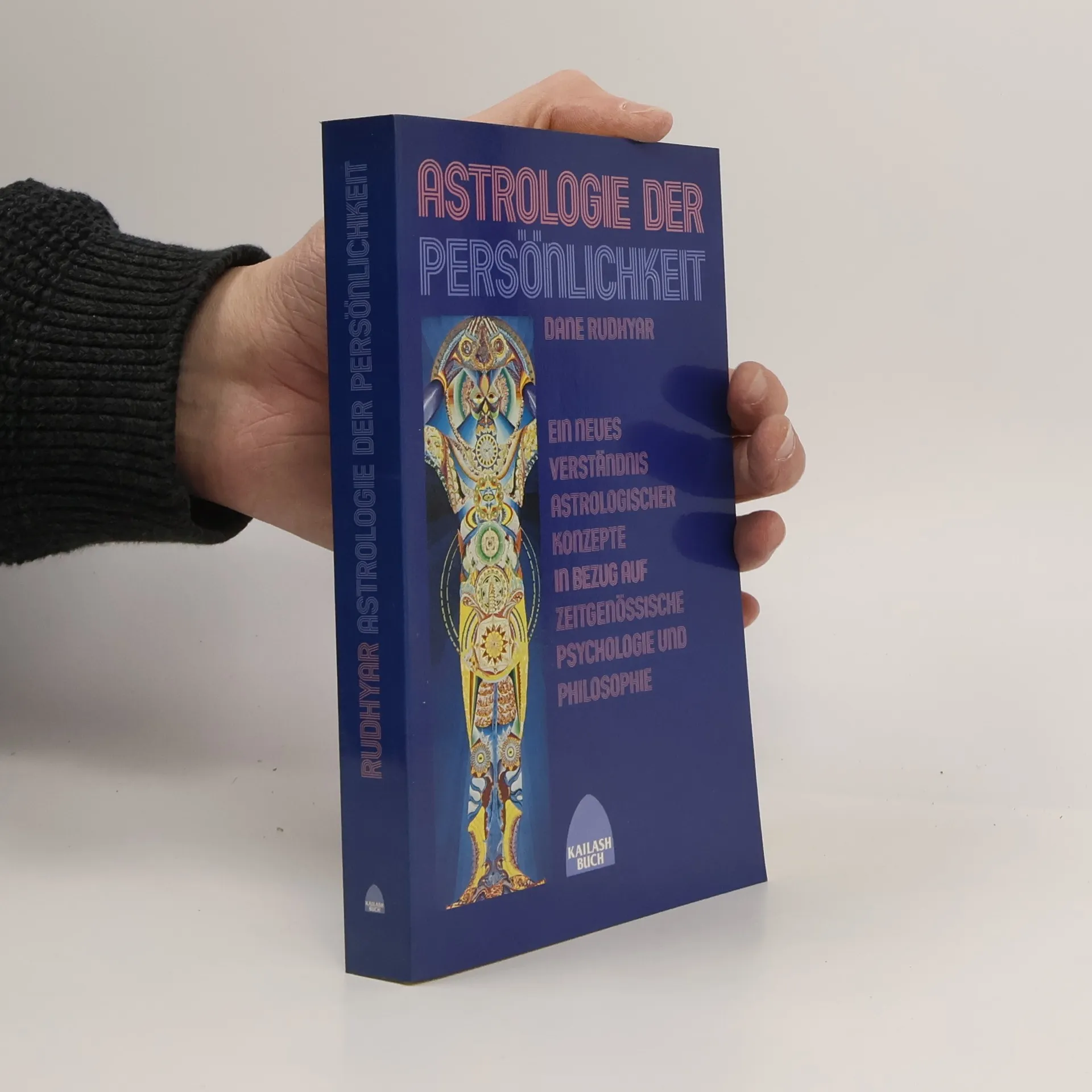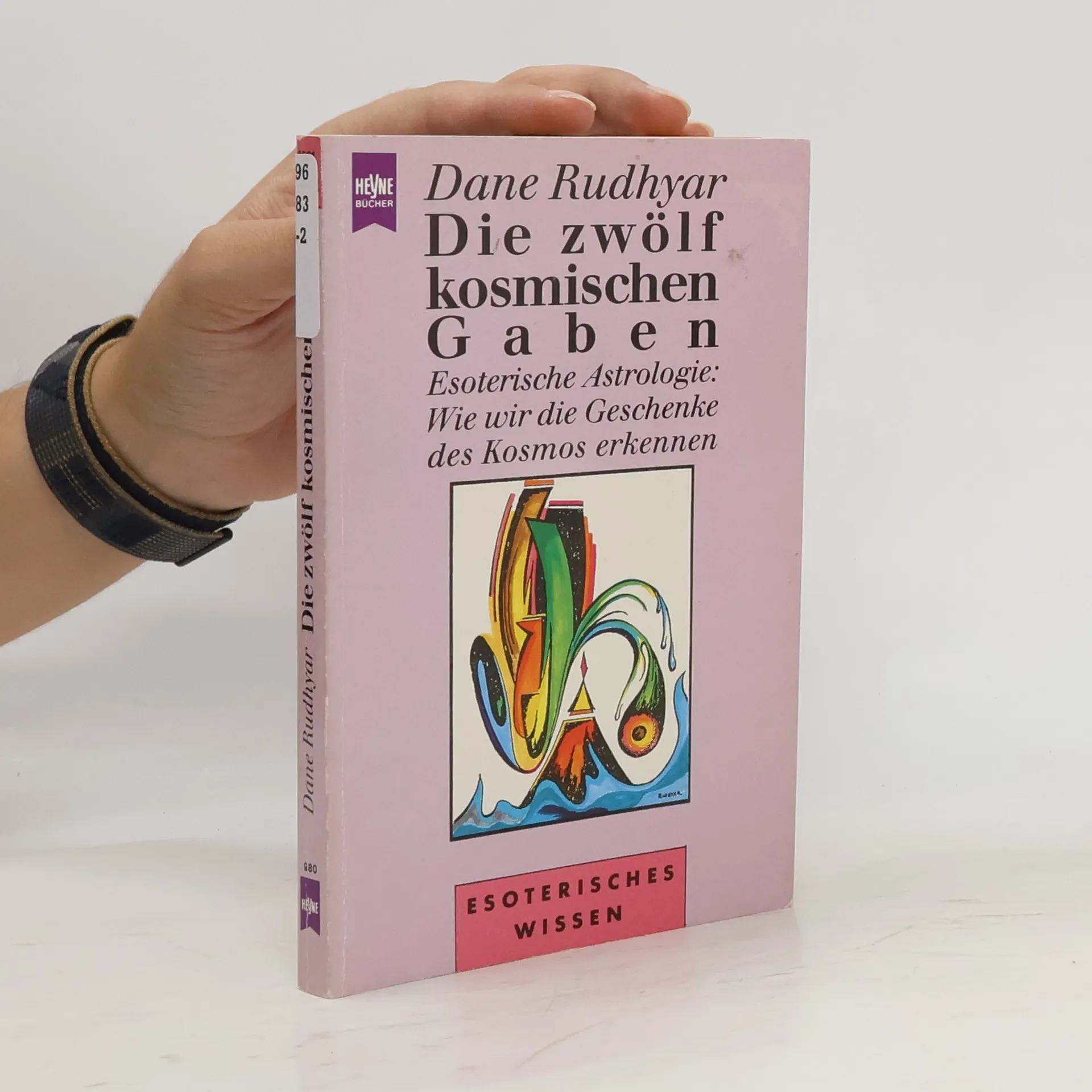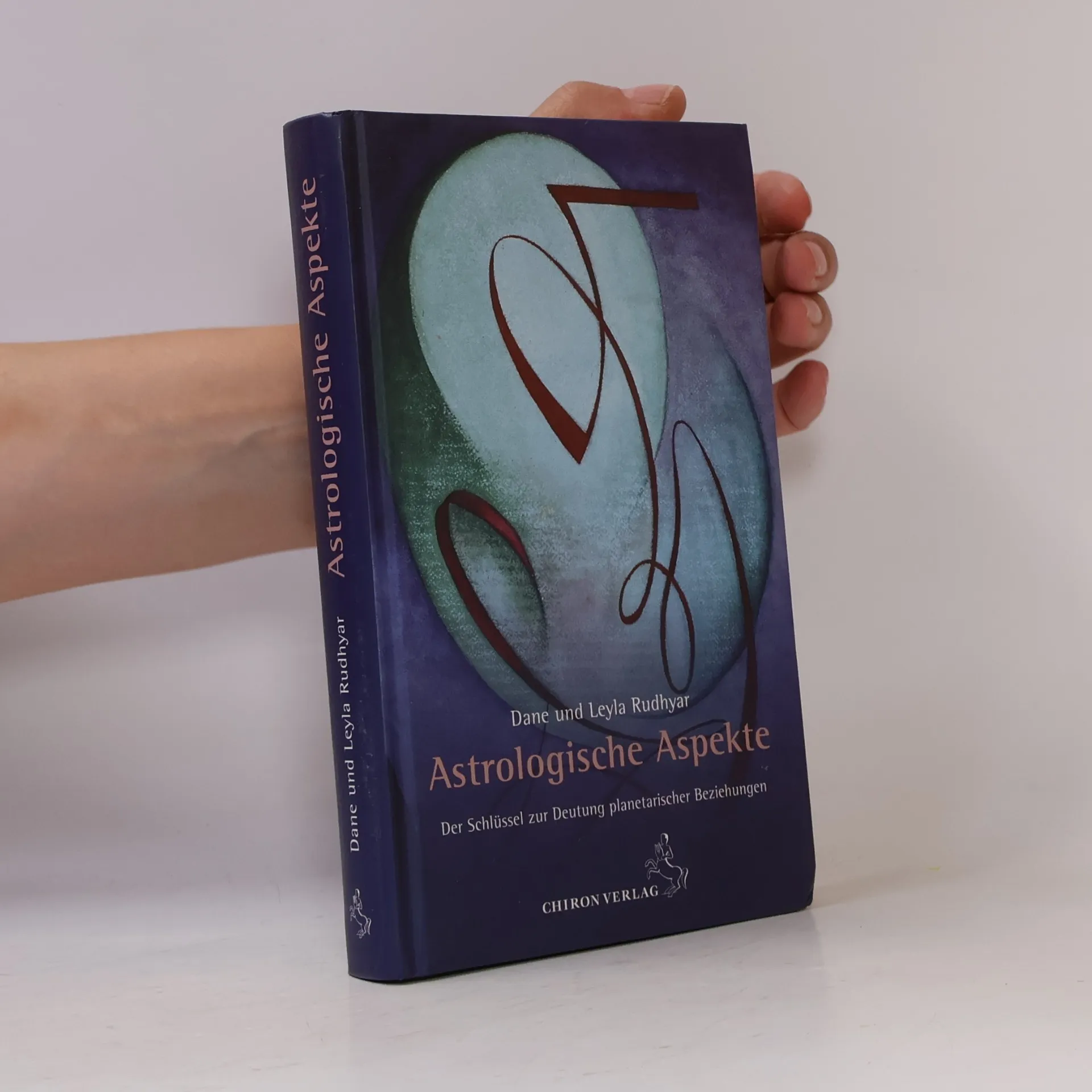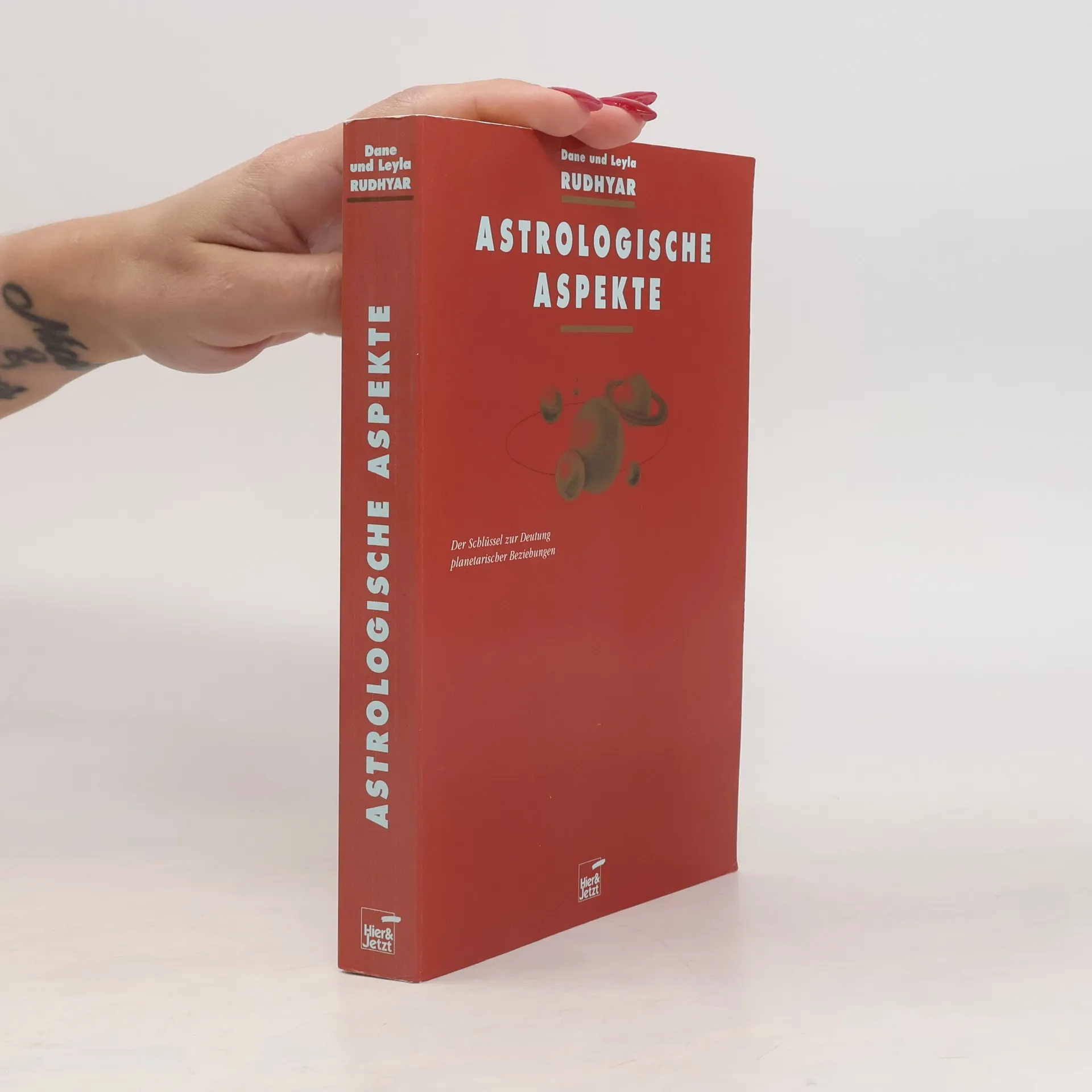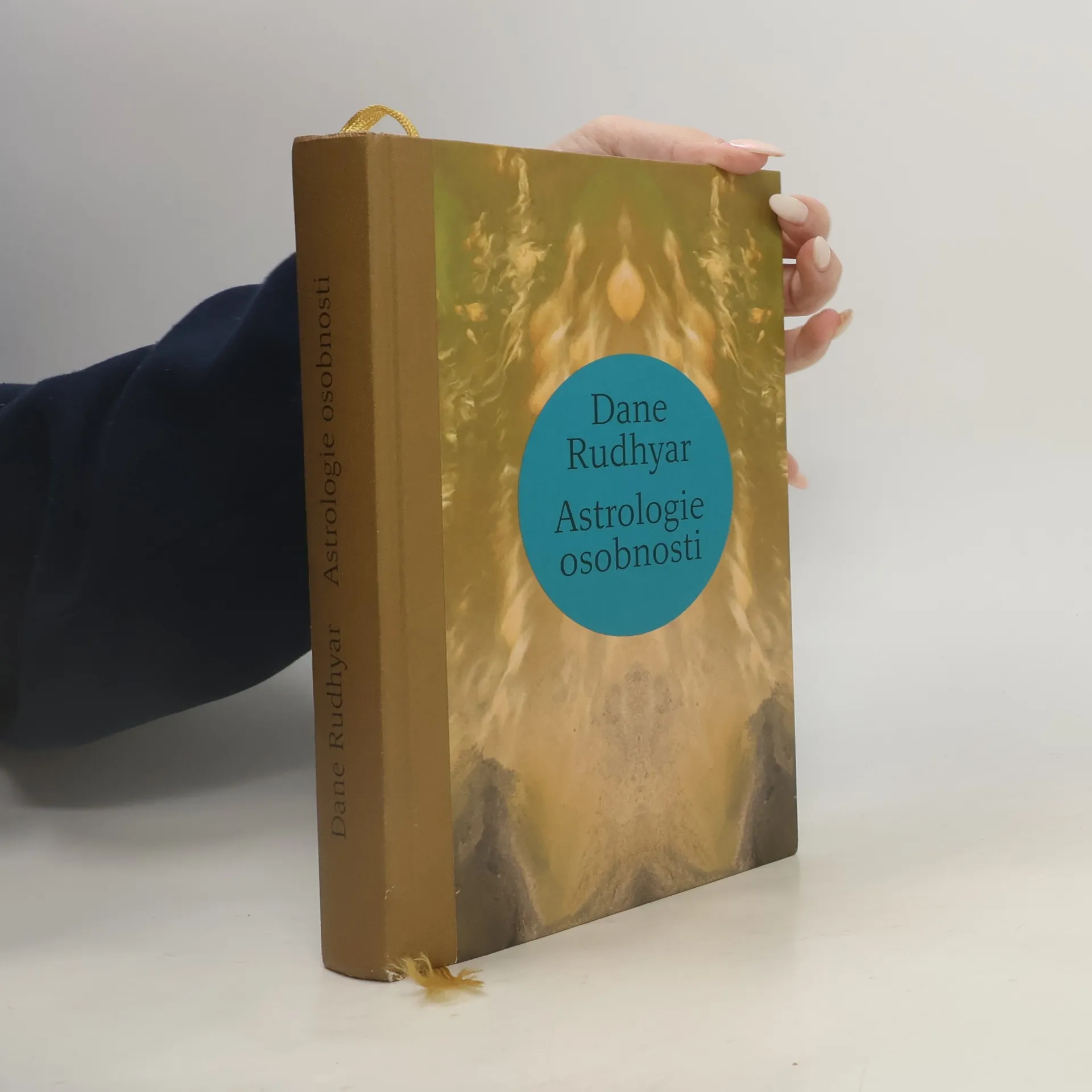

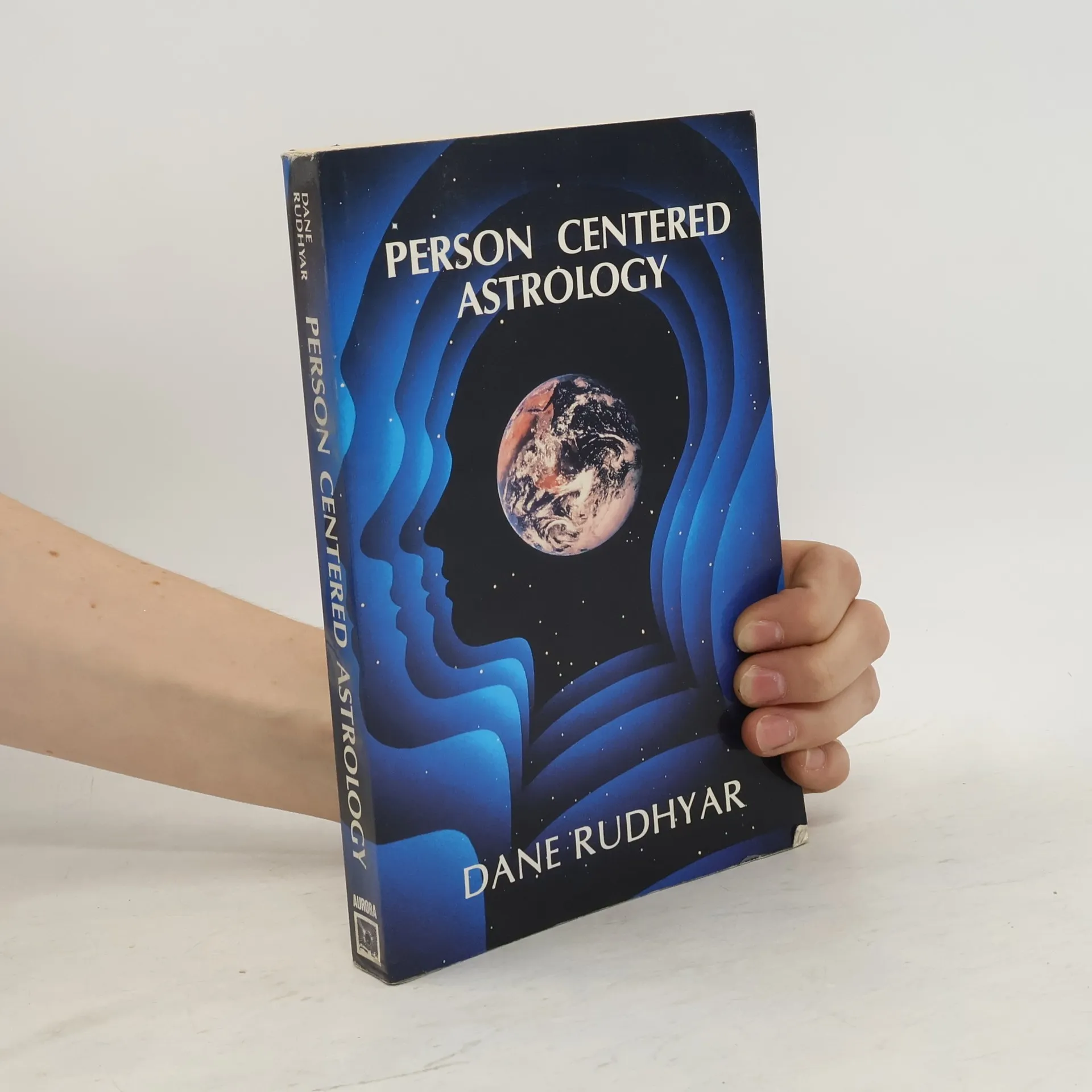
Rudhyar's expansive vision finds its ideal complement in Leyla Rael's straightforward approach and clear applications. Together they have outlined a cyclic dynamic view of aspects which goes far beyond the static, cookbook tabulations so prevalent today. Their approach provides the foundation for a meaning - revealing chart interpretation and inspiring life interpretation. Included in this holistic textbook are chapters on retrogradation, rectangular and triangular aspect patterns, seeing the horoscope as a whole, Yods, an explanation of three types of every planetary aspect, examined step by step in depth. Included are numerous examples and practical applications. "Astrological Aspects" is truly a key to holistic Astrological understanding to read for enjoyment, study for lasting insight and keep for future reference.
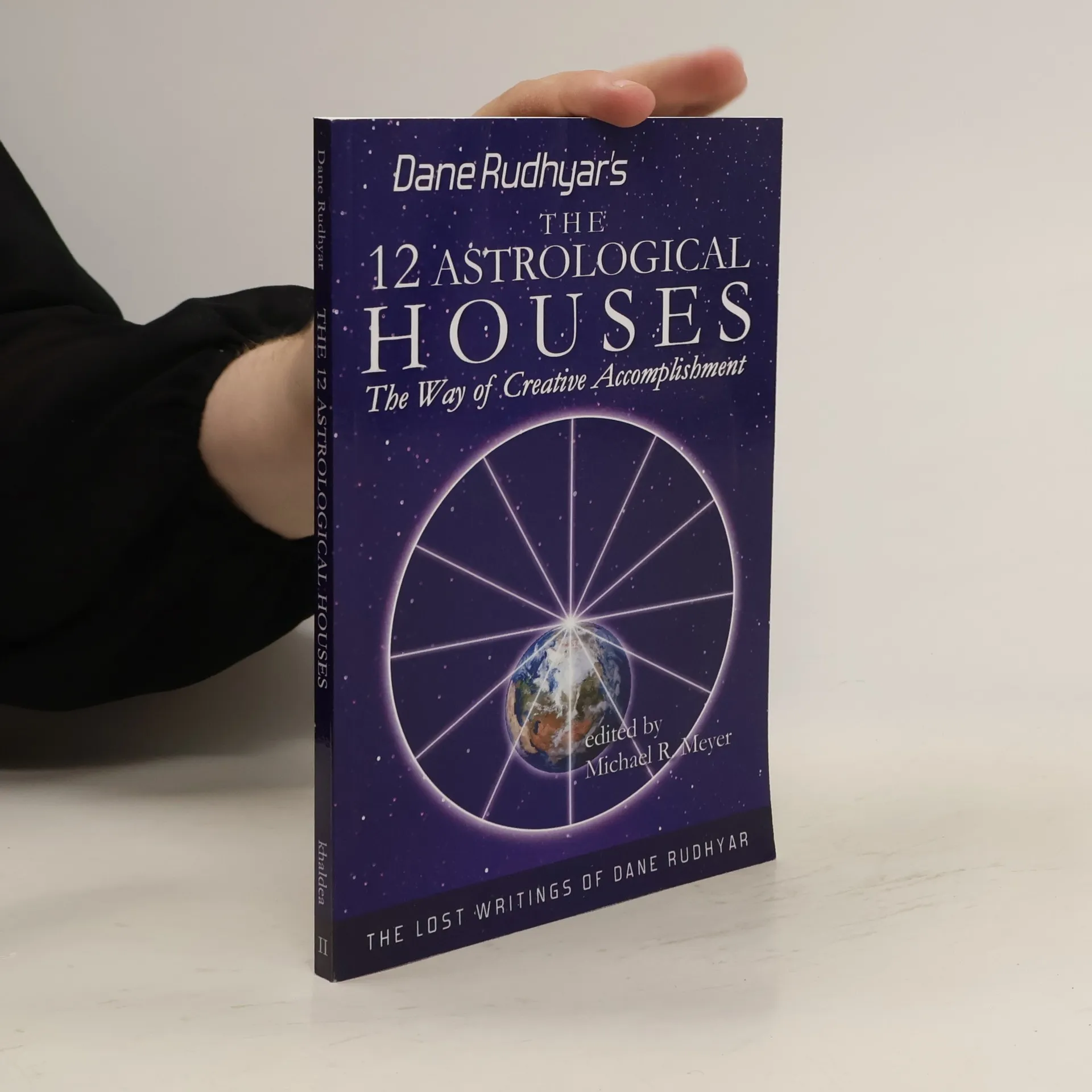
The material for THE TWELVE ASTROLOGICAL HOUSES: The Way of Creative
Accomplishment, was written in 1943-44, immediately following THE ZODIAC as
THE UNIVERSAL MATRIX. Like its companion book, it is one of Rudhyar's most
accessible and easy-to-read works. It provides comprehensive descriptions of
each of the ten astrological planets in each of the twelve astrological
houses. In common with THE UNIVERSAL MATRIX, the astrological interpretations
are more striking, psychological and critical than what we came to expect from
Rudhyar during the second half of the 20th century. The electronic publication
includes hyperlinks to the birth charts of dozens of interesting example
nativities. This volume should not to be confused with Rudhyar's later works
-- THE ASTROLOGICAL HOUSES: The Spectrum of Individual Experience -- which is
currently out-of-print and available used at Amazon.com -- or with The Twelve
Houses as Problems We All Face. Some sample passages from THE TWELVE
ASTROLOGICAL HOUSES Every personality is the child of an individual vision
(Ascendant) and of a set of collective habits (second house), Rudhyar writes.
The great person is one who uses such habits to demonstrate the vision - and
thereby repolarizes them. The weak personality lets collective habits use the
vision which thereby becomes distorted and materialized. Every personality is
a field of integration for individual vision (first house) and collective
habits (second house) - our inner life is very often a battlefield! It is in
the third house that the issue . . . is determined; for it is the quality of
the person's environment and of his mentality (largely conditioned by
education) which will decide in the third house whether the fourth house
factors (ego, home, and so on) will be energized preponderantly either by
those developed in the first house or those belonging to the second house.
PLANETS IN THE FIFTH HOUSE When a strong planet or a group of planets are
located in the fifth house of a natal chart this does not mean the native will
necessarily be a particularly gifted artist, or a great lover, or the
progenitor of many children, and so on. It indicates, rather, that matters
related to this house will be insistently the focal point for the person's
attention. The native will be involved in fifth house issues and experiences
by apparent choice or by compulsion . . . They will create problems which will
demand a solution. Problems however constitute opportunities for growth and
for 'creative accomplishment' - thus the title of this series. Where there are
no problems, the mind and will of the individual are not roused into operation
. . . MOON IN THE ELEVENTH HOUSE The Moon in the eleventh house signifies a
person highly sensitive to social moods and changes, who is often the
mouthpiece of some great mass-movement seeking expression in a subterranean
manner. The spiritual-occult systems proclaimed by Rudolph Steiner are much
involved in personalized states of consciousness and dependent on personal
'revelations'. Indeed, it might be argued the 'revelations' of the seer could
merely be projections of his collective, national and personal 'hopes and
wishes' and fears and prejudices, rather than authentic and significantly
interpreted revelations of spiritual realities. The traditional chart of Joan
of Arc shows Moon conjunct Jupiter in the eleventh house - indeed an excellent
symbol for one whose Voices saved a Kingdom . . .
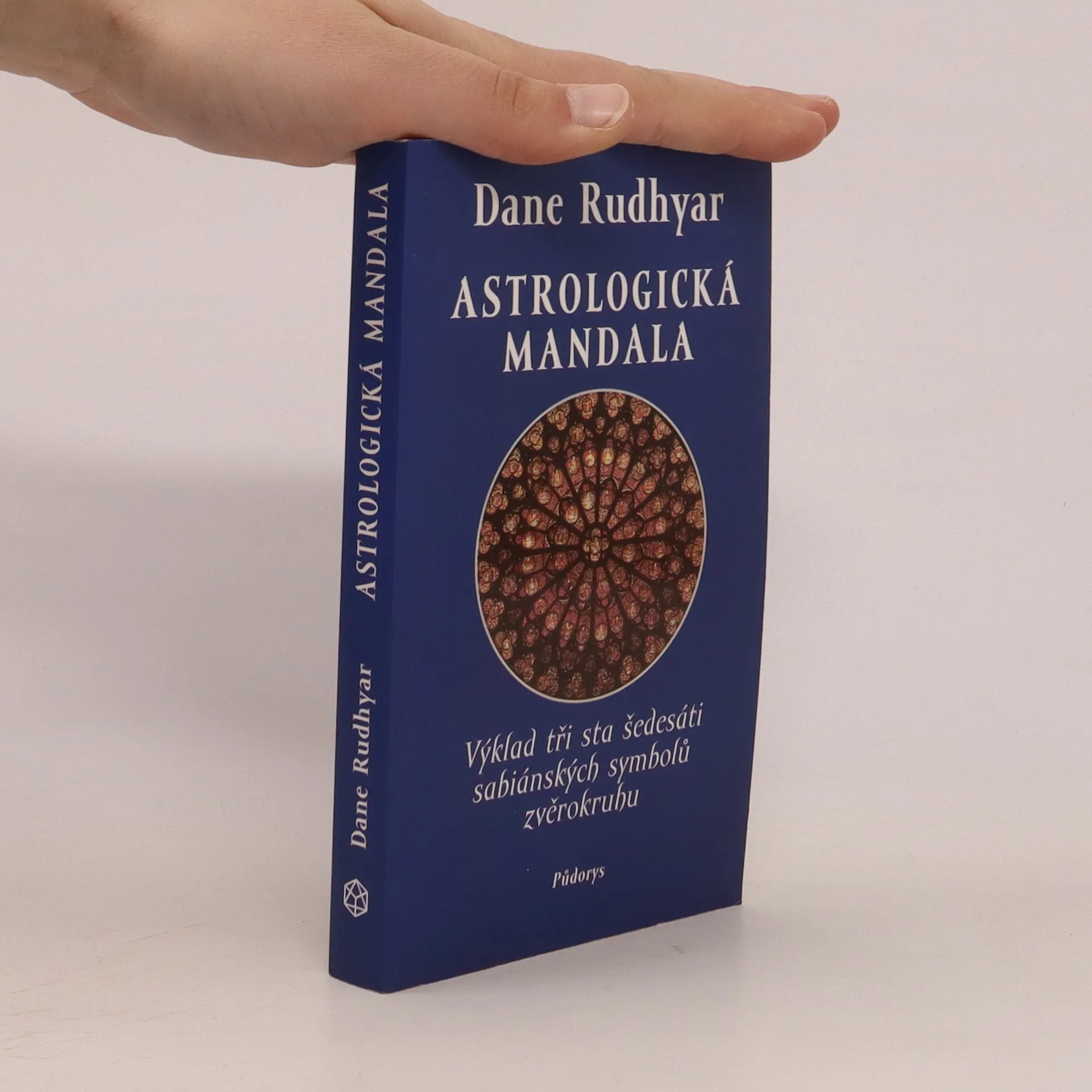
In the early 20th century, Marc Edmund Jones and a clairvoyant friend formulated the Sabian symbols in an attempt to produce a series of symbols for the degrees of the zodiac that would be relevant to contemporary students of astrology. Dane Rudhyar then expanded on the symbols, reinterpreting them to emphasize their character as a cyclic series. Rudhyar's model formalizes and reveals the archetypal meaning of 360 basic phases of human experience in a greater holistic context. Since the book was first published in 1973, it has become a staple in many professional astrologers' toolkits. The images cultivated by Rudhyar are used for further contemplation of every degree of the zodiac. The images for each degree can be used to add insight to the meaning of the planets, the lunar nodes, or any significant point in the horoscope. Many astrologers now consult the Sabian symbols when interpreting progressions in order to reflect on the degree of progressed New Moon. These symbols help expand astrological interpretation beyond the concrete and literal into the creative and imaginal realm, where meaning arises through image and story, opening us to the experience of conscious engagement with the creative unfolding of life. Part reference book, part instructional manual on a symbolic underpinning of the entire zodiac, this book will serve any astrology lover in unlocking more of its great mysteries.
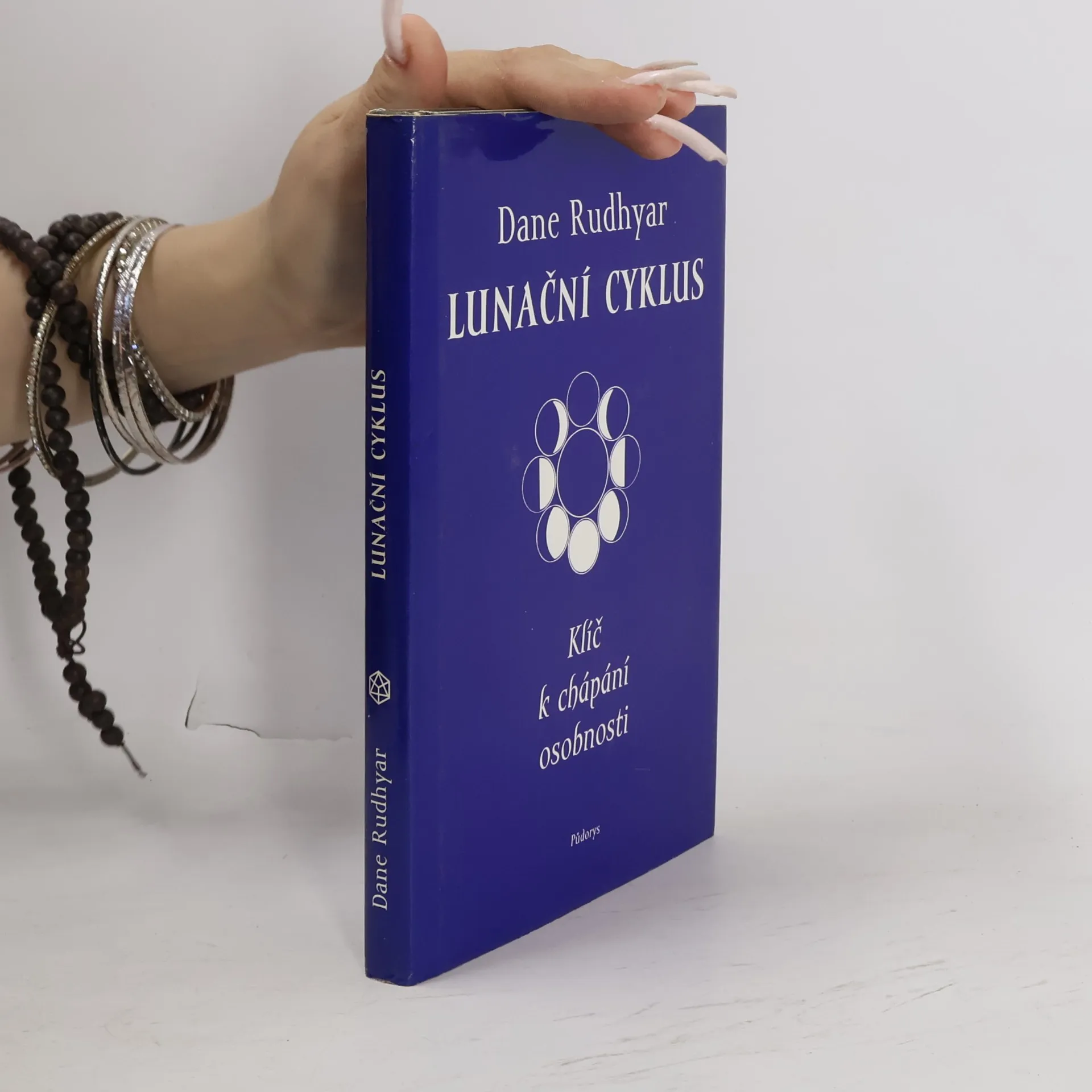
Dieser pionierhafte Klassiker erschliesst eine neue Dimension im Verständnis der Lebensmuster. Die zyklische Beziehung zwischen Sonne und Mond wird hier als Teil eines grossen Prozesses enthüllt und zu einem Schlüssel im Verständnis der Persönlichkeit. Der Mondzyklus ist der Zyklus der Mondphasen von Neumond zu Neumond. Dieses Buch von Dane Rudhyar ist bereits ein Klassiker. Nach dieser Methode können die Menschen entsprechend der symbolischen Bedeutung der verschiedenen Mondphasen ebenso unterschieden werden wie aufgrund der Sonnenstellung im Tierkreis.
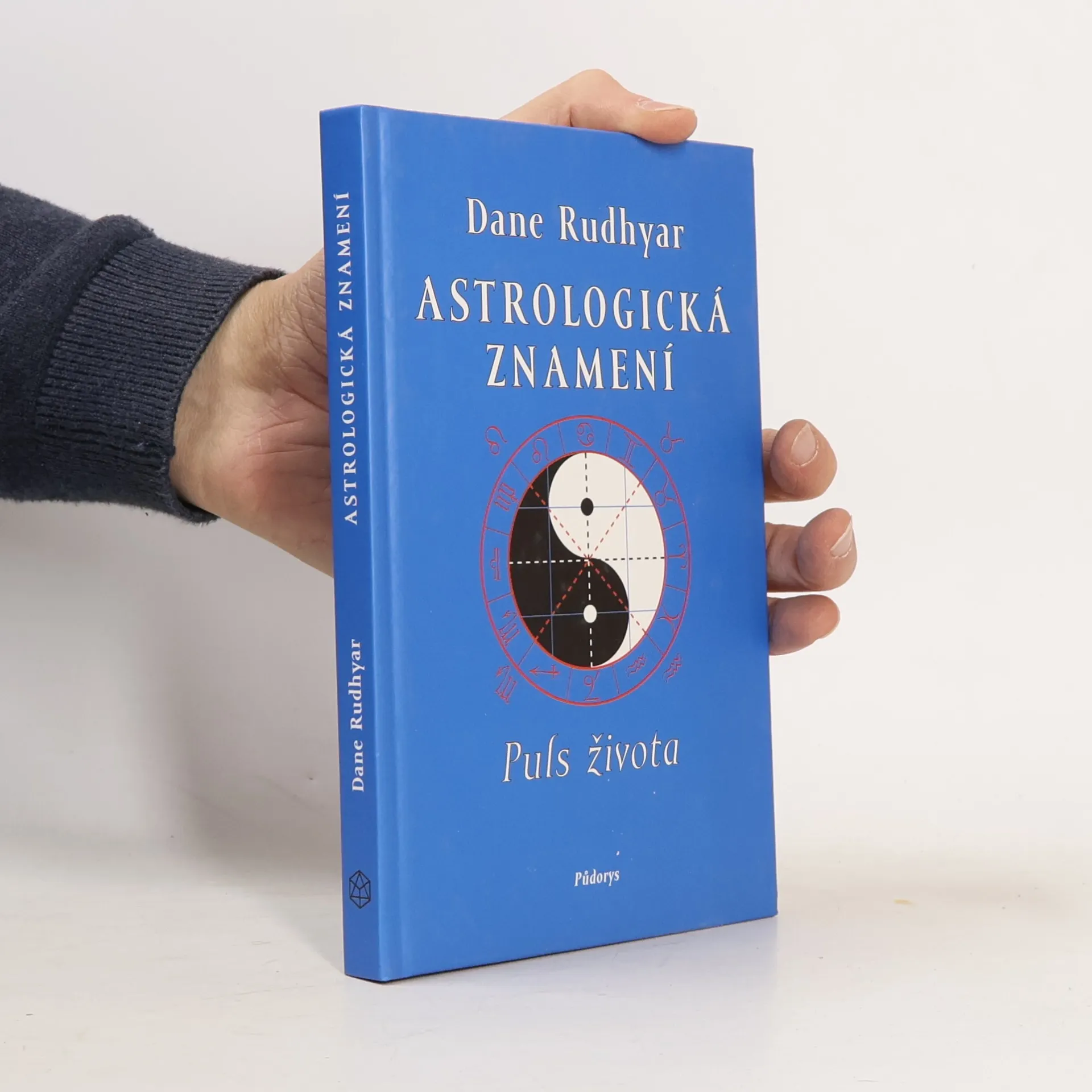
Ein Glas kann mit Gift oder einem süffigen Wein gefüllt sein, beide Flüssigkeiten werden von der Form des Glases gestaltet. Ähnlich verhält es sich mit der Psyche: selbst wenn die Struktur (z. B. im Horoskop) festgelegt ist, so muß dies noch lange nicht bedeuten, daß auch die Ereignisse, welche dieses Grundschema mit Leben erfüllen, ebenfalls schon vorherbestimmt sind. Mit ganzer Überzeugungskraft vermittelt der Autor seine Botschaft: das Horoskop ist eine Archetyp besonderer Art. Rudhyar deckt auf, daß die Astrolgie sehr wohl bei der Entwicklung der Persönlichkeit Pate stehen kann. Gleichzeitig versäumt er es aber auch nicht, auf die darin verborgenen Gefahren hinzuweisen. Besonders wertvoll sind seine Ausblicke auf die Mysterien von Schlaf und Traum, die sexuellen Faktoren der Persönlichkeit, die großen Wendepunkte im Leben und den erfolgreichen Umgang mit Krisen. Hier gibt er nicht nur Hilfestellungen zur Lösung von Problemen, sondern demonstriert anhand grundmenschlicher Erfahrungen die Einheit von Individuum und Universum. Meridian: „Dieses Buch läßt sich auch in Phasen persönlicher Krisen gut lesen, man wird verstärkt daraus hervorgehen, weil die Sinnfrage gezielt angesprochen wird - im Gegensatz zu vielen “Deutungs-Kochbüchern„, deren Lektüre in diesem Fall beinahe “tödliche„ sein kann.“
Die Astrologie liefert Strukturen, mit denen wir eine Landkarte des Seelenlebens erstellen können. Die Inhalte dieser Strukturmuster sind psychologischer oder sozialer Natur. Es gibt vier Grundbedürfnisse, auf denen die vielfältigen Prozesse des organischen Lebens beruhen. Dane Rudhyar zeigt in diesem Buch auf sehr eindrückliche Weise, dass die menschlichen Grundfunktionen mit den Planetenpaaren Saturn und Mond, Jupiter und Merkur sowie Venus und Mars in Beziehung stehen. Betrachten Sie die Planeten als eine symbolische Entsprechung dieser Grundprinzipien, dann werden Sie sehr schnell erkennen, wo die Bedeutung, der Sinn und die Aufgabe des Individuums in unserem Universum liegt.