Explore the latest books of this year!
Bookbot

David E. Nye

    January 1, 1946

    David E. Nye is a professor of American history whose work delves into the profound social and cultural impacts of technology in America. He explores how technological advancements have shaped American identity and narratives, particularly examining the emergence of new energy forms and their societal influence. Nye's analyses reveal the ways Americans have grappled with and integrated new technologies into their daily lives, uncovering the complex relationship between innovation and everyday existence. His scholarship offers critical insights into how technology becomes woven into the fabric of society and individual experience.
    Seven Sublimes
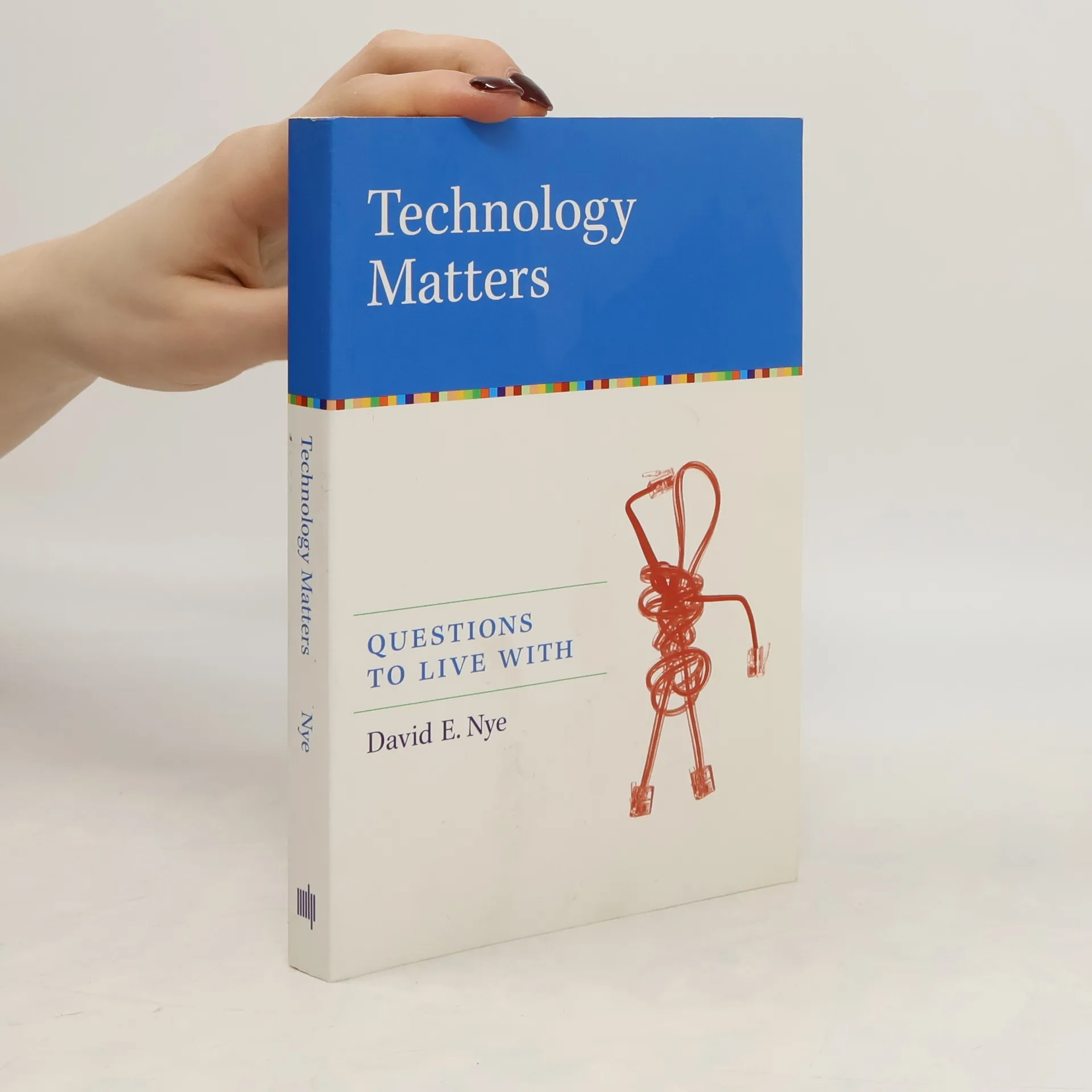
    Technology Matters
    American Illuminations
    Conflicted American Landscapes
    • Conflicted American Landscapes

      • 280 pages
      • 10 hours of reading

      How conflicting ideas of nature threaten to fracture America's identity. Amber waves of grain, purple mountain majesties: American invest much of their national identity in sites of natural beauty. And yet American lands today are torn by conflicts over science, religion, identity, and politics. Creationists believe that the Biblical flood carved landscapes less than 10,000 years ago; environmentalists protest pipelines; Western states argue that the federal government's land policies throttle free enterprise; Native Americans demand protection for sacred sites. In this book, David Nye looks at Americans' irreconcilably conflicting ideas about nature. A landscape is conflicted when different groups have different uses for the same location—for example, when some want to open mining sites that others want to preserve or when suburban development impinges on agriculture. Some landscapes are so degraded from careless use that they become toxic “anti-landscapes.” Nye traces these conflicts to clashing conceptions of nature—ranging from pastoral to Native American to military–industrial—that cannot be averaged into a compromise. Nye argues that today’s environmental crisis is rooted in these conflicting ideas about land. Depending on your politics, global warming is either an inconvenient truth or fake news. America’s contradictory conceptions of nature are at the heart of a broken national consensus.

      Conflicted American Landscapes
    • American Illuminations

      Urban Lighting, 1800-1920

      • 292 pages
      • 11 hours of reading

      The book explores how Americans transformed European royal illuminations into vibrant displays for patriotic events, grand expositions, and commercial lighting, leading to the creation of some of the most dazzling cities in the world. It highlights the cultural adaptation and innovation that fueled this evolution, showcasing the intersection of art, celebration, and urban development.

      American Illuminations
    • Seven Sublimes

      • 232 pages
      • 9 hours of reading

      A reconception of the sublime to include experiences of disaster, war, outer space, virtual reality, and the Anthropocene.We experience the sublime—overwhelming amazement and exhilaration—in at least seven different forms. Gazing from the top of a mountain at a majestic vista is not the same thing as looking at a city from the observation deck of a skyscraper; looking at images constructed from Hubble Space Telescope data is not the same as living through a powerful earthquake. The varieties of sublime experience have increased during the last two centuries, and we need an expanded terminology to distinguish between them. In this book, David Nye delineates seven forms of the natural, technological, disastrous, martial, intangible, digital, and environmental, which express seven different relationships to space, time, and identity.These forms of the sublime can be experienced at historic sites, ruins, cities, national parks, or on the computer screen. We find them in beautiful landscapes and gigantic dams, in battle and on battlefields, in images of black holes and microscopic particles. The older forms are tangible, when we are physically present and our senses are fully engaged; increasingly, others are intangible, mediated through technology. Nye examines each of the seven sublimes, framed by philosophy but focused on historical examples.

      Seven Sublimes